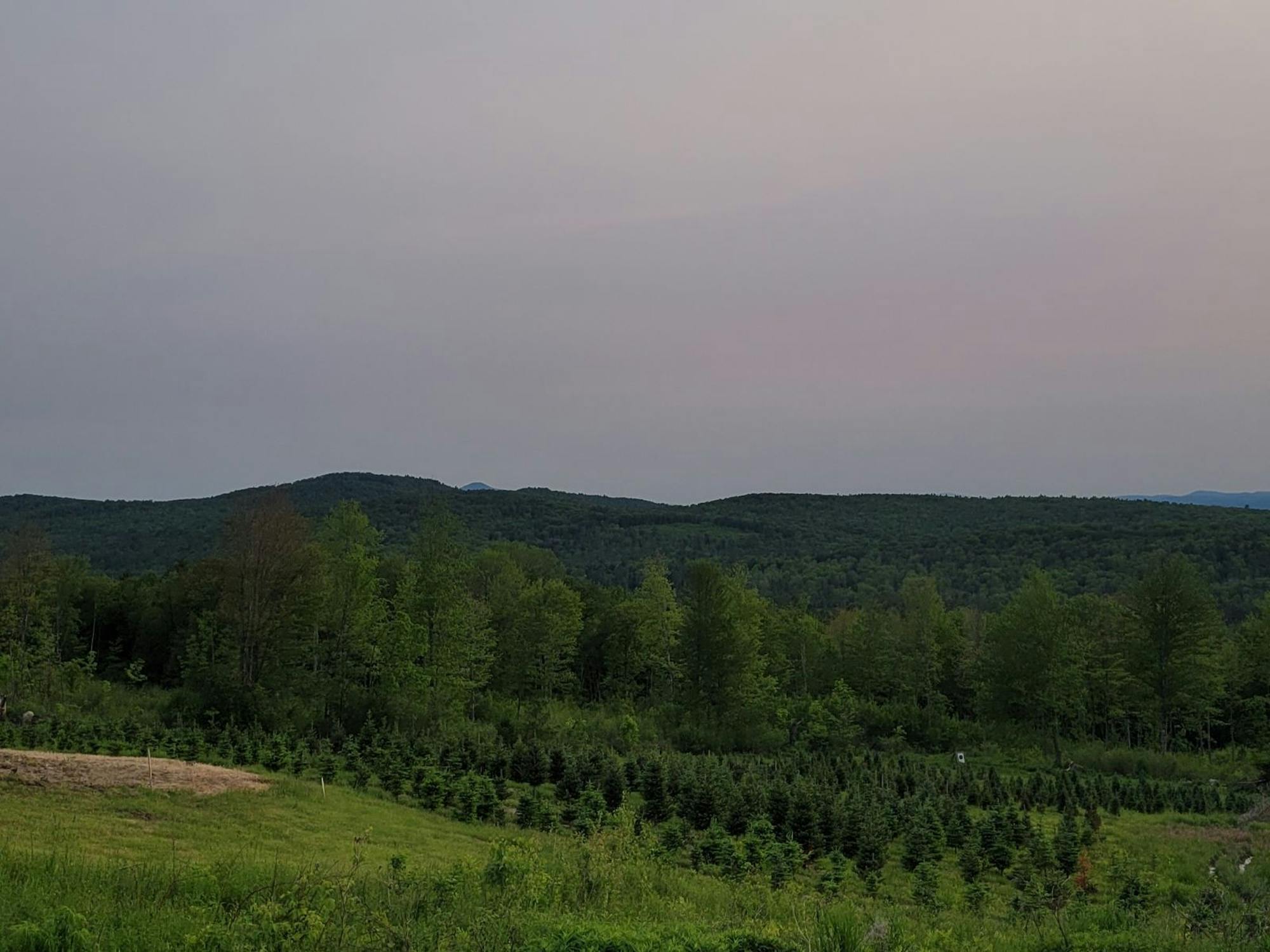
On April 3, the U.S. Forest Service announced that it will close 57 out of 77 forestry research facilities nationwide — centers that conduct research on national forests — including the Bartlett Experimental Forest site in the White Mountain National Forest near Durham, N.H., two hours south-east of Hanover.
Established in 1931, the Bartlett Experimental Forest hosts research projects, including some conducted by Dartmouth professors in past years, the outcomes of which guide management of all northern hardwood forests — the predominant forest type in New England. The experiments at Bartlett are “among the longest running studies in this forest type,” according to the U.S. Department of Agriculture website.
The closures follow President Donald Trump’s executive orders to increase domestic timber production. In April 2025, the USDA designated an emergency situation in 112 million acres of public forests, including most of the White Mountain National Forest, removing bureaucratic barriers for logging public forests. The Forestry Service reorganization prioritizes “common sense” research that will support timber production and lower costs for consumers, according to the USDA press release.
In an email statement to The Dartmouth, a USDA spokesperson wrote that the “‘closures’ refer only to individual buildings” and that staff will be moving into “fewer facilities.”
“Reorganization changes do not eliminate scientists, end research programs or reduce our broader geographic presence; research will continue across the country,” they wrote.
Bartlett lead scientist and University of Massachusetts Amherst biology professor David King told The Dartmouth that forestry research is essential amidst “emerging and accelerating threats” to forest ecosystems, such as infestations of the invasive emerald ash borer, a beetle that kills ash trees, and Beech bark disease, microscopic roundworms that kill beech trees.
“The thought of downsizing or abandoning the kind of research that is going to present and develop solutions to protect our forests from these threats — it’s just craziness,” he said.
King said the Forest Service has not reached out to him about the closure.
Dartmouth biology professor Matthew Ayres, who previously researched Beech bark disease at Bartlett, said closing Bartlett and other research stations “compromises our abilities to manage the priceless natural resources that are in national forests” by disrupting long-term studies.
For example, data collection about behavior and adaptations of small mammals at the center, which began in 1994, will end as a result of the closing.
“There’s no other data set like it in the world,” Ayres said.
Furthermore, the dormitories at Bartlett — which provide a place for scientists with ongoing research to sleep — are “very key,” King said. King used the dormitories during intensive study on forest birds when he visited every individual bird nest in the research center every few days.
Environmental studies professor Shersingh Tumber-Davila said Bartlett has provided early career exposure to forestry for many young people, including himself.
Bartlett “was my first introduction to forest ecology and studying roots, and that is now my career,” he said. “I don’t know how different things would have been if Bartlett wasn’t there and I didn’t have this research project and this job that I thought was just a work-study job to make a paycheck.”
King said support for forest research centers “depends on the values of the current [presidential] administration.”
“Some administrations have shown more concern for the environment and others more for production,” King said.
Tumber-Davila said the Forest Service’s shift away from forest ecology and towards the production of timber and resource extraction under the Trump administration is “against the ethos of the Forest Service.”
“Many of my colleagues who are soil scientists, plant scientists, ecosystem scientists, are told that they can now only work on critical minerals in artificial intelligence,” Tumber-Davila said.
Tumber-Davila added that the Forest Service was initially created “to do as much good for as many people.”
“The whole ethos [of the Forest Service] is it’s not just forest for biomass, but it’s, ‘How many different people and how many different services and benefits can this one place provide?’” he explained.
Madeline Kahn Ehrlich '29 is a reporter from upstate New York. She is considering studying English and Public Policy. She enjoys creative writing, art and reading historical fiction.