
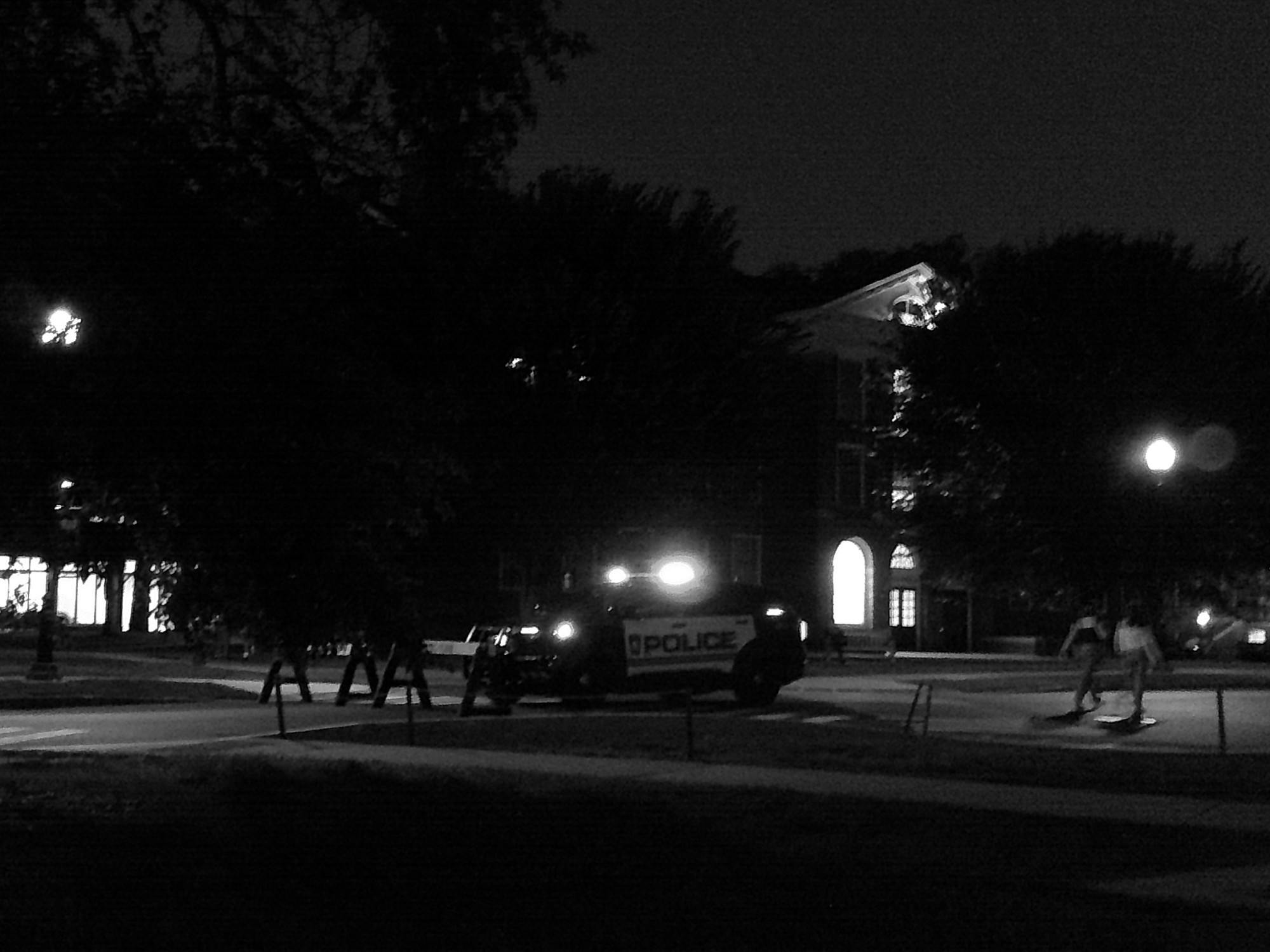
The College’s annual security and fire safety report, which was released on Oct. 1, is the first to include hazing statistics as mandated by the federal Stop Campus Hazing Act, which former President Joe Biden signed in December 2024.
The Jeanne Clery Campus Safety Act requires all colleges and universities that participate in federal aid programs to publish annual reports of safety policies and the past three years of crime statistics. This year’s report included data from Dartmouth’s Hanover and Lebanon campuses from 2023 to 2025. Federal standards are intended to make campus safety statistics comparable across institutions, according to Dartmouth Clery compliance officer Grace Alden ’91.
The report said there were five hazing incidents in “Hanover residential facilities” in 2025. Alden said Dartmouth does not disclose the specific residential location where the hazing occurred.
“That’s part of the anonymization of the data,” she explained.
Dartmouth’s Campus Hazing Transparency Report, a biannual report that is also mandated by the Stop Campus Hazing Act, reports findings from Title IX investigations of hazing instances. The CHTR did not report any investigations that found an organization “responsible” for a hazing violation in 2025.
The Clery report data includes only reported hazing that takes place on Dartmouth-owned property, public property adjacent to those properties and certain non-campus properties that are either owned or controlled by a College student organization or are outside of the core campus, according to Alden. Those restrictions do not limit the CHTR.
“Clery is geographically-based, and so the Clery count will only be hazings that happened within the reportable Clery geography,” Alden said.
Alden added that the Clery statistics reflect data reported to the College by students, rather than the result of disciplinary proceedings or legal convictions.
“This is about reported incidents, not incidents that were investigated or incidents that were adjudicated,” she said.
After The Dartmouth inquired on Oct. 2 about discrepancies between the individual category statistics and the total reported numbers in this year’s report, Alden said the College identified three errors in the initially published statistics. The 2025 Hanover burglary total was 16, rather than the 20 initially reported; the 2025 Lebanon drug law violation was one, rather than zero; and the total 2024 domestic violence offenses in Lebanon were 25, rather than one. Alden said Dartmouth has since amended the publicly available version of the report and added an additional error-checking read-through for next year.
Reports of rape increased in 2025, according to the College’s Fire and Safety Report, rising from three in 2024 to 19 in 2025. “All” 19 reports were repeated offenses over a period of time involving two people in a domestic relationship, according to the report’s footnotes.
“Our rape numbers actually haven’t really varied, except for one incident, and one incident can kind of overwhelm your numbers,” Alden said. “It’s important to understand that it’s a statistical outlier in the larger sense.”
Alden warned that at a “comparatively rural” school like Dartmouth, it can be “difficult” to interpret trends when the smaller school population affects statistical significance.
“Clery is a tool designed to give people information so that they can make safety decisions,” Alden said. “Whether or not we agree with [the statistical methods], we have to adhere to those standards and report exactly the way everyone else does to the best of our ability.”
Without the one report, Dartmouth would have recorded zero rape offenses on the Hanover campus under the Clery federal reporting criteria, Alden added.
“That’s not to say that we had zero sexual assaults,” Alden said. “We just had zero rapes reported, zero crimes that fulfilled the elements of the crime of rape as required by the [Clery Report’s] statistics.”
Fondling offenses — which are classified as sexual assault along with rape in the Clery report but differ based on the amount of information provided in the report — decreased from 21 in 2024 to 6 in 2025. Taken together, reported rape and fondling offenses only increased slightly, from 24 in 2024 to 25 in 2025.
“I don’t know that I would have distinguished rape from fondlings,” Alden said. “They’re both sexual assault.”
Domestic violence offenses also increased from 17 in 2024 to 28 in 2025, while stalking offenses increased from 23 to 28. Most of these reported offenses also came from the single report of repeat conduct between two people in a domestic relationship, according to the Clery report. Alden emphasized the point in the interview.
Alden declined to comment on any details, beyond the reported number, of these incidents.
Clery statistics can also differ from figures reported by Dartmouth’s Title IX office because of different reporting criteria. In the 2024-2025 academic year, Title IX received 26 reports of sexual or gender-based harassment and 20 reports of sexual assault.
“Different offices have to use different criteria legally for counting different numbers,” she said. “Someone will say, ‘Well, the Title IX reported 27 rapes and you’ve reported 16 rapes. You’re hiding something.’ No, Title IX has to count differently.”
Drug law disciplinary referrals — involving unlawful possession, sale, use, growing, manufacturing and making of narcotic drugs — rose 700%, from three in 2024 to 24 in 2025, though the report says that most or all of these referrals came from a single report involving repeat conduct. Liquor law disciplinary referrals — defined as the illegal manufacture, sale, transport, possession or furnishing of alcohol, including providing alcohol to minors — fell from 181 to 104 over the same period, returning to a level similar to that of 2023.
Burglaries increased from 15 in 2024 to 16 in 2025, while motor vehicle theft declined from 33 to 29. Aggravated assaults fell from five to three, robberies fell from three to one and arson remained unchanged at two offenses.
In addition to the crime statistics, Director of the Department of Safety and Security Keiselim Montas says he hopes more students will also look in the report for information on how to stay safe. He recommended that all students download the LiveSafe app, which allows students to contact Safety and Security, and sign up for emergency notifications from DartAlert.
LiveSafe “is the easiest way to get in touch with us, and it provides the beauty that you could do it anonymously, unless you dial 911,” Montas said.


