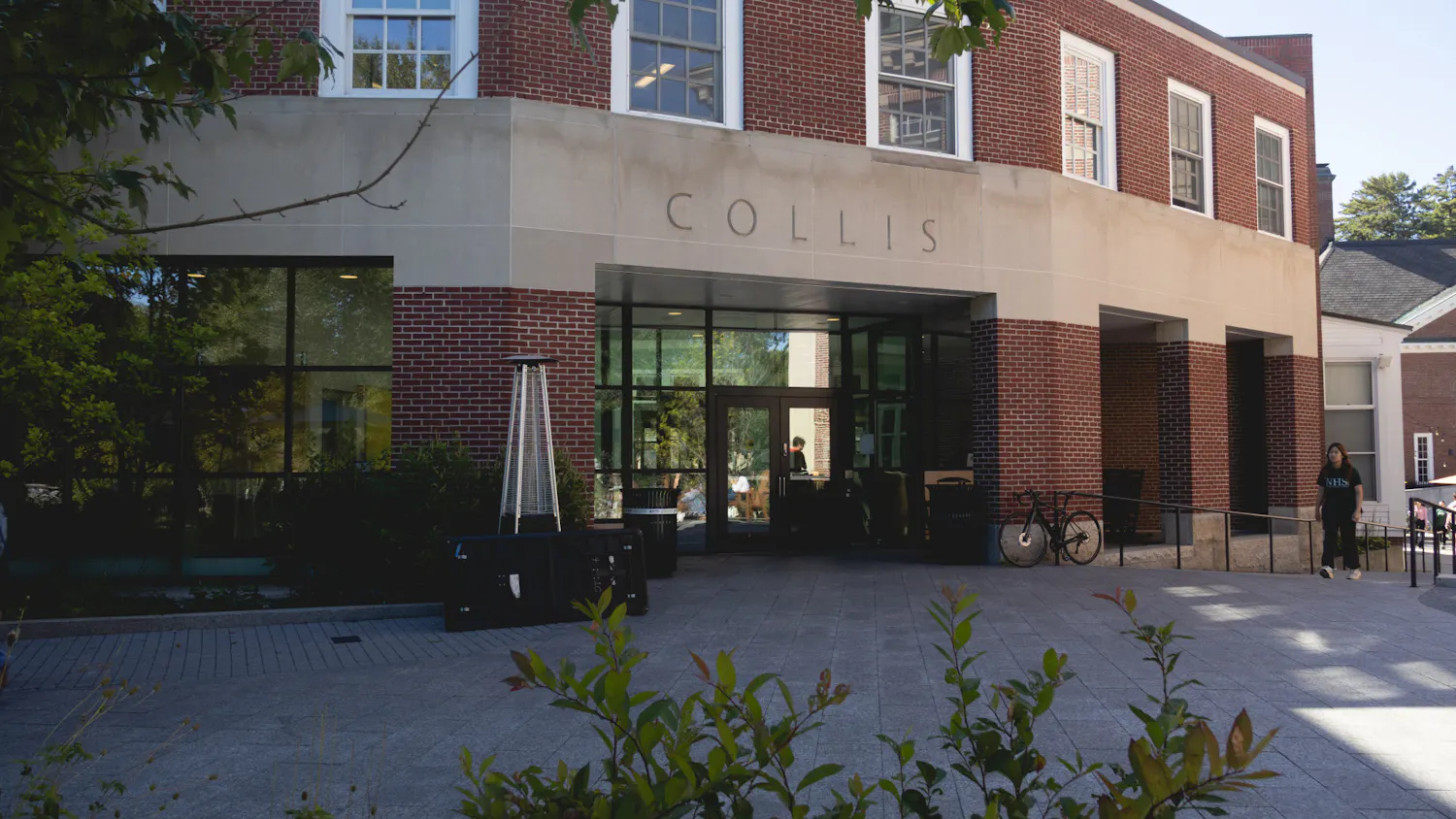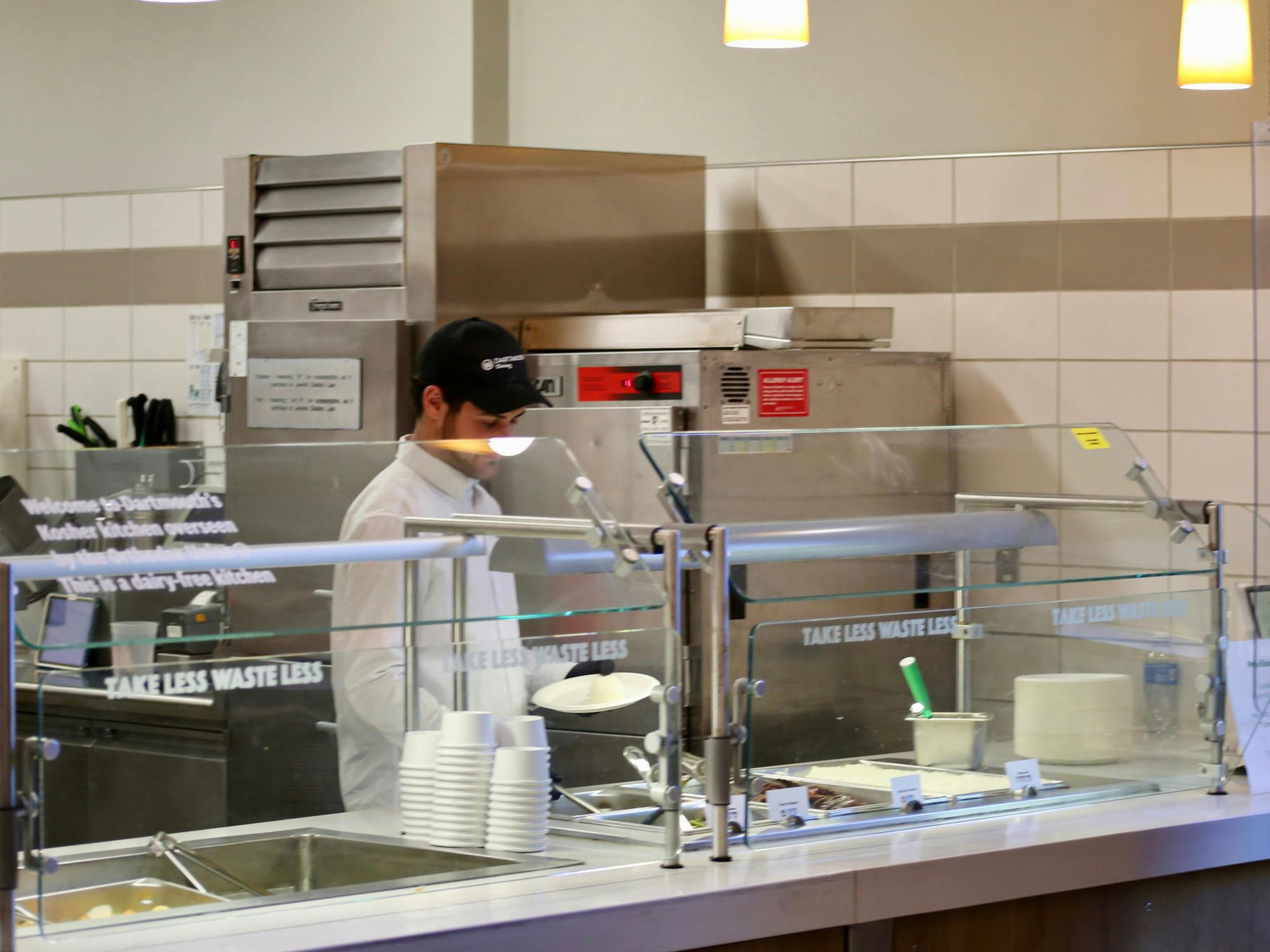
The Pavilion, one of 10 dining stations in Class of 1953 Commons, began operating under Orthodox Union certification this fall, introducing full-time kosher supervision and making its food accessible to students who follow Orthodox kosher standards.
Under the new certification, a trained kosher supervisor — known as a mashgiach — must be present while The Pavilion’s kitchen is operating. Their role will be to oversee ingredient processing and sourcing, food preparation and adherence to Jewish dietary law. The Pavilion previously operated under Tablet K certification, which did not require continuous on-site supervision.
Dartmouth Dining director Jon Plodzik wrote in an email statement to The Dartmouth that discussion about transitioning The Pavilion to OU oversight began in January. The certification process included a preliminary site visit by the OU, a list of changes Dartmouth Dining was required to complete and a formal contract between Dartmouth Dining and the organization.
The transition also required The Pavilion’s kitchen and equipment to be extensively cleaned and kashered — a process that makes kitchen surfaces, utensils and equipment fit for kosher use. The process used high heat to remove impurities, while equipment that could not be kashered was replaced. The College also replaced kitchen utensils, pots and pans and added another sink for washing vegetables, Plodzik wrote.
The new certification required Dartmouth Dining to create two mashgiach positions. The supervisors must be present from the start of food preparation through the end of service each day, according to Plodzik.
“We cannot open the station or operate without their presence,” he wrote.
The two mashgichim work alongside The Pavilion’s cooks to inspect and prepare food and help serve meals, Plodzik added. Dining employees were also trained on OU requirements as part of the transition.
The certification effort brought together Dartmouth Dining, the Rohr Chabad Center at Dartmouth and the Roth Center for Jewish Life, according to Plodzik.
“This was a campus process with all of the groups … fully involved in initial conversations and in supporting this initiative,” he wrote, adding that Chabad executive director Rabbi Moshe Gray “was instrumental in gathering the parties and getting conversations going.”
The change builds on decades of efforts to expand religious dining at the College. In the late 1990s, Jewish and Muslim students formed a committee that advocated for expanded kosher and halal dining after concluding that existing dining facilities did not meet Orthodox standards of kashrut. In the early 2000s, Dartmouth opened The Pavilion as a joint kosher-halal dining facility in Thayer Hall, now ’53 Commons.
In 2015, Orthodox students circulated an online petition calling on the College to obtain Orthodox certification for The Pavilion. The petition received 716 signatures. The College subsequently convened an ad hoc kosher dining committee to examine students’ concerns in September 2016. The College did not change The Pavilion’s certification at the time, but later supplemented its offerings with prepackaged Orthodox-certified food. William Jewett Tucker Center for Spiritual and Ethical Life director and Chaplain reverend Nancy Vogele ’85 said that arrangement eventually ended around the COVID-19 pandemic. More recently, she was also part of the campus team that advocated for the Pavilion’s transition to OU certification.
Gray said he continued advocating for a change in certification over multiple College administrations. Conversations accelerated after College President Sian Leah Beilock took office, he said. The process of obtaining OU certification took approximately eight months, he said.
“Once the College said, ‘Yes, we want to do this,’ it was a pretty smooth process,” Gray said.
Jake Goldman ’29, who follows Orthodox kosher standards, said The Pavilion previously did not meet the kosher standard he would ordinarily follow, but he ate there because there were no alternatives in Hanover or “for two to two-and-a-half hours in either direction.”
Goldman said the new OU certification played a role in his decision to remain at Dartmouth after considering transferring because of a lack of adequate kosher food and Orthodox community during his first year.
“I think it’s a damn shame that the food and community can be a dealbreaker,” Goldman said. “I almost transferred as well because of it.”
Goldman said The Pavilion was closed for roughly two weeks during his freshman orientation in 2025.
“For those two weeks, I basically was living on protein bars and bags of chips,” he said. “It was the worst.”
Goldman said kosher restrictions have also affected his ability to participate in meals at campus events, club meetings and on Dartmouth-sponsored trips. Even when he requests a kosher option, one is not necessarily offered.
“I don’t think it’s malicious,” Goldman said. “I think it’s a little bit more on the side of ignorance. I just think people don’t exactly know anything about different standards of kashrut,” the set of Jewish dietary laws that determine if a food is kosher.
Other students who keep kosher said the practical impact of the change depends on their individual level of observance.
David Shapiro ’28, who does not identify as Orthodox but “generally” keeps kosher, said he personally felt “comfortable” eating at The Pavilion under its previous certification but appreciated that the presence of a full-time supervisor creates an important distinction for students with stricter practices.
“The big difference between the last certification and this one is that … now you have somebody who knows the kosher laws working there full-time every single day,” Shapiro said. “You’re reassured that your food is kosher, and I think that means a lot to a lot of people.”
Jun Chakravarthy ’29, who keeps kosher in part by not mixing meat and dairy and also prefers to eat at The Pavilion, said he has noticed friends who previously kept various levels of kosher tended to rely more heavily on meals from Hillel or Chabad, or chose to prepare food themselves.
“Now that [Pavilion is] fully kosher certified, a lot more of the really strict students that I know go there a lot more, and they’re super happy,” he said.
Gray said he believes that Dartmouth’s previous kosher options might have discouraged some Orthodox Jewish students from applying or enrolling at the College.
“Now, hopefully, those kids will begin to apply and actually come to Dartmouth because they have somewhere to eat,” Gray said.
Haley S. Rodriguez ’29 is a reporter with roots in New York City. She is studying history and biology and enjoys long-distance running, reading and sailing.