As part of The Dartmouth’s coverage of the upcoming 2026 midterm and gubernatorial elections, the paper is publishing an interview series, “A Sit-Down with The Dartmouth,” featuring in-depth conversations with candidates for state-wide and New Hampshire district positions.
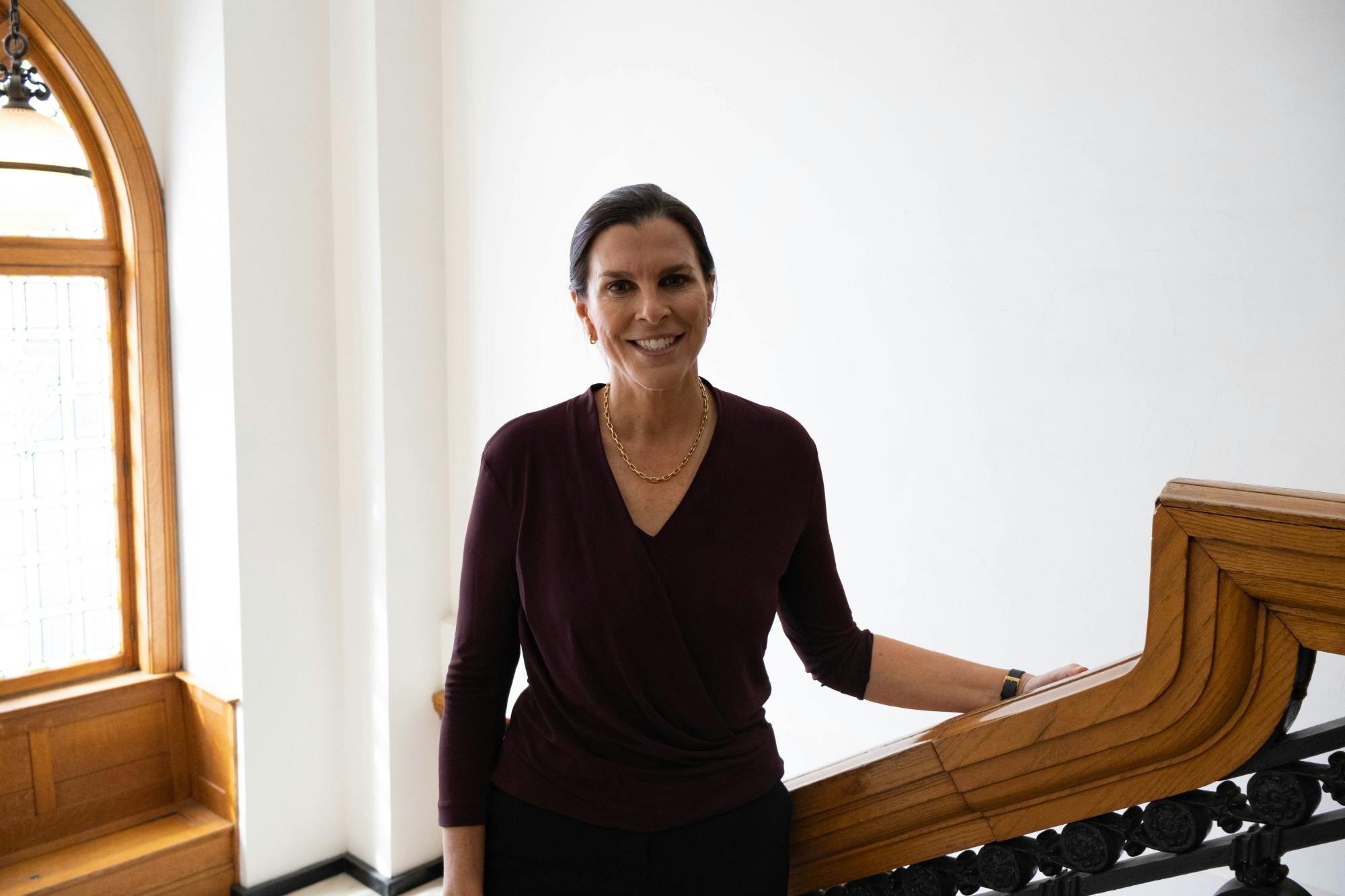
In this installment, The Dartmouth interviewed Portsmouth Democrat Stefany Shaheen, a candidate for the U.S. House of Representatives in New Hampshire’s 1st Congressional District. She is the daughter of U.S. Sen. Jeanne Shaheen, D-N.H., who announced in 2025 that she will not seek reelection. The 1st Congressional District seat is vacant after U.S. Rep. Chris Pappas, D-N.H., announced his campaign for Jeanne Shaheen’s current seat in the U.S. Senate in April of 2025.
Stefany Shaheen previously served on the Portsmouth City Council and as chair of the Portsmouth Police Commission. She centered her campaign on health care affordability, housing costs and restoring trust in government. Shaheen founded health care company Good Measures — a company that connects people with chronic conditions to clinicians — and served as chief strategy officer at the Advanced Regenerative Manufacturing Institute, a federally-funded regenerative medicine consortium based in Manchester, N.H. She stepped down from ARMI in 2025.
In her interview with The Dartmouth, Shaheen discussed her health care advocacy and federal funding priorities. She also addressed controversies about her ties to New Hampshire businessman Dean Kamen, who served as executive director of ARMI during her time there as chief strategy officer. Kamen maintained extensive ties to convicted sex offender Jeffrey Epstein from 2011 to 2014, according to records published in the recently-released Epstein files.
You are running for Congress in New Hampshire’s 1st District, an open seat in a competitive Democratic primary. Why is this the right moment for you to seek federal office? What do you see as the single most urgent issue the next representative must confront first?
SS: The cause of my life has been health care. It became the cause of my life when my eldest daughter, Ellie, was diagnosed with Type 1 diabetes. For the last 18 years, I’ve seen firsthand how broken the health care system is. When I saw the Trump administration cutting health care funding and undermining medical research and National Institutes of Health funding, I felt like this was the moment I had to step up and speak out.
My grandfather survived polio as a young boy. I remember watching him take his leg braces off at night. He wanted to join the Marines during World War II but couldn’t because his body had been so damaged by polio. We have vaccines that work. No family should face that when we have the science to prevent it. I would give anything to have a vaccine for type 1 diabetes. This is deeply personal.
Your campaign centers on affordability, particularly health care, housing and child care. What specific federal legislation would you prioritize in your first year to lower costs for families in NH-01?
SS: Start with health care. Immigration and Customs Enforcement funding has tripled in the most recent budget. We could redirect some of that money to lower health care costs. Because Affordable Care Act tax credits were not extended, the average family of four in New Hampshire is facing up to $7,000 more in health care costs this year. That’s not sustainable.
Housing affordability remains one of the top issues in New Hampshire. What role should the federal government play in addressing housing supply shortages where zoning is largely local?
SS: Housing affordability is the single greatest issue facing New Hampshire. We’re one of the oldest states in the country because young families can’t afford to live here. My husband is the executive director of our local housing authority. He presided over the first permanently affordable workforce housing project built in Portsmouth in 50 years. These projects rely on federal tax credits and financing tools. We need more federal incentives and financing instruments to make it possible to build permanently affordable housing, not just luxury units.

Health care is central to your campaign. Do you support Medicare for All, a public option or strengthening the Affordable Care Act?
SS: Our health care system is broken. Doctors should be making health care decisions — not insurance companies, pharmaceutical companies or Wall Street. Every option should be on the table, including a public option, but we can’t wait for comprehensive reform to start lowering costs. We can pass bipartisan legislation to lower prescription drug prices. There’s no reason people here should pay four times more for the same medication.
We should ban artificial intelligence from making benefit or eligibility decisions. And we must address Wall Street’s consolidation in healthcare.
Your opponents have raised questions about your association with Dean Kamen, who had ties to convicted sex offender Jeffrey Epstein, and your role as Chief Strategy Officer at the company he founded and headed, Advanced Regenerative Manufacturing Institute. What do you say to voters who have concerns?
SS: When the recent information was released, I was shocked and troubled. I called for an independent investigation and for Dean to step aside while it proceeds.
I served in a consulting role for ARMI and raised philanthropic funding to support regenerative medicine research in Manchester. That work is important. When I announced my campaign, we transitioned my consulting role and wound it down. It concluded at the end of December 2025.
ARMI has received significant federal funding during the time your mother has served on Senate appropriations panels overseeing related agencies. Have you ever discussed ARMI funding with your mother?
SS: No. I was never paid with federal funding. I raised philanthropic money to support specific research projects. ARMI funding has historically received bipartisan support. There is no evidence of improper influence.
Is there anything about yourself voters should know that we have not covered?
SS: I love talking about my experience as a high school volleyball coach. I grew up as a student athlete, and being part of a team shapes how I lead and how I build teams. That experience informs all of my work.
This interview has been edited for clarity and length.
Isabel Menna ‘29 is a reporter from Leavenworth, Wash., is majoring in economics and is a member of the Dartmouth Ski Patrol.