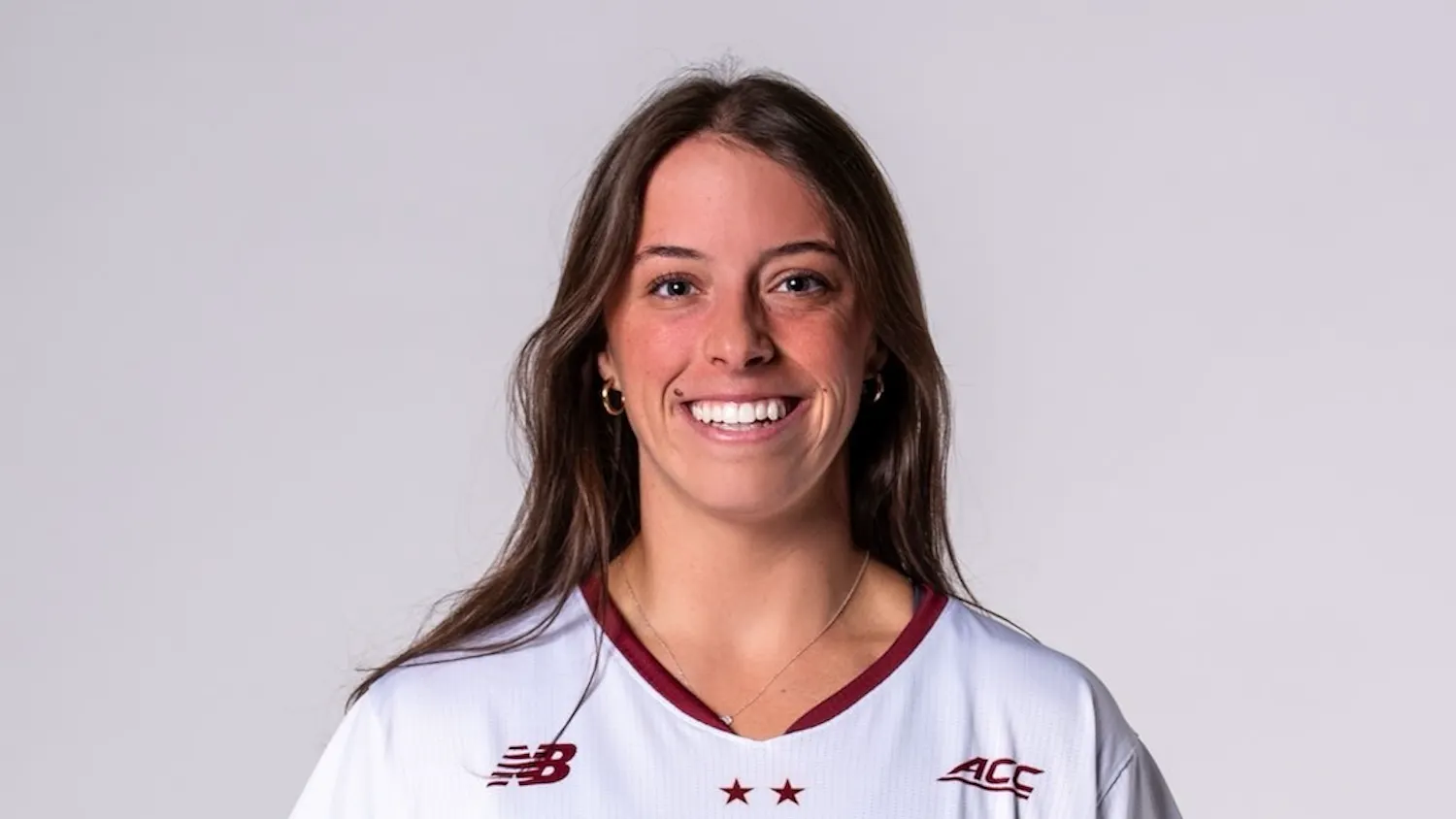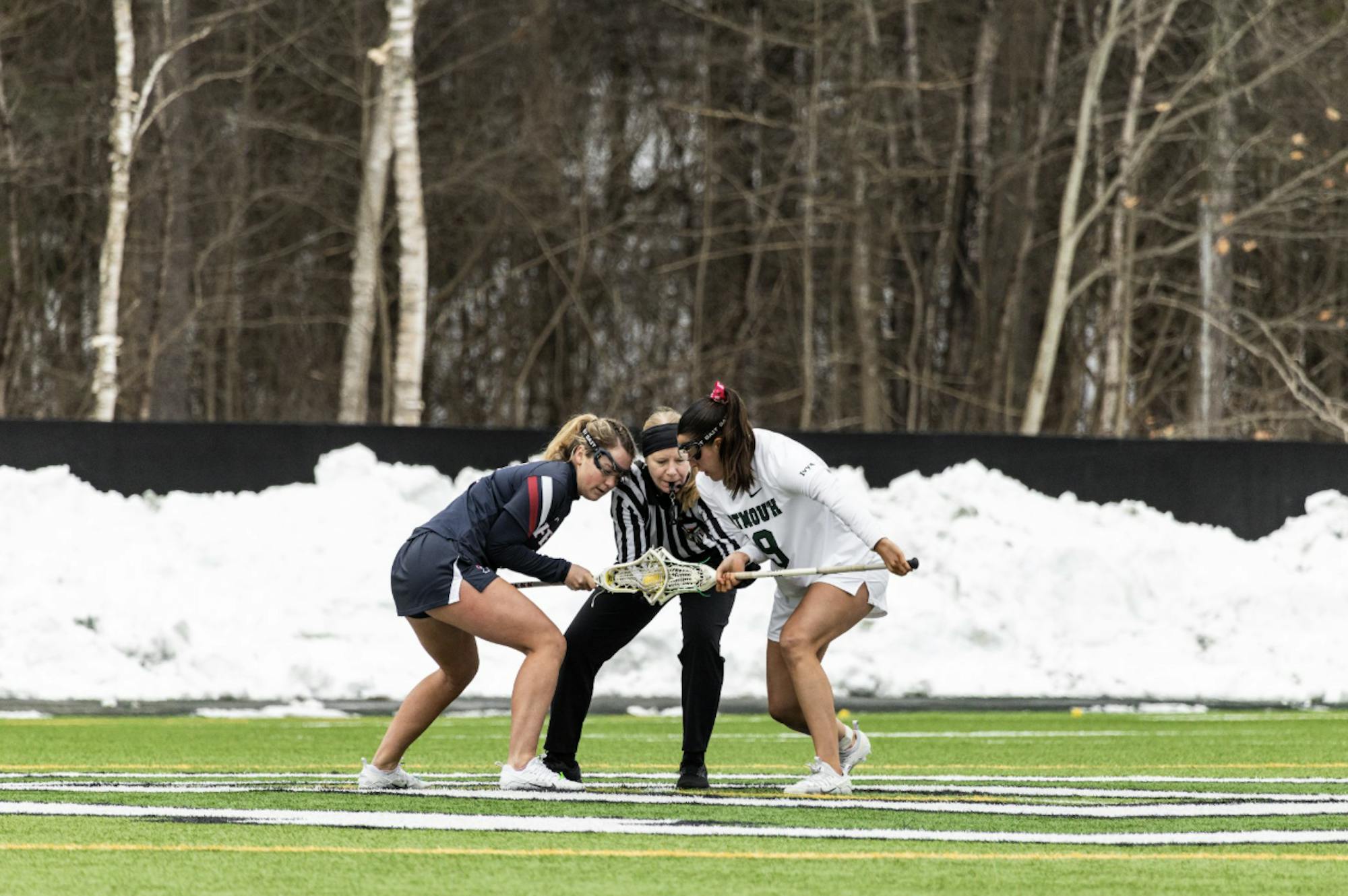
With three games left in her senior season, Maya Kendall ’26 has cemented herself in Dartmouth and Ivy League history. The draw specialist broke the Ivy League draw control record previously held by Kathryn Giroux ’19 on March 28. Kendall currently has 438 career draw controls, and as of April 9, is ranked third in the country among Division I collegiate lacrosse players in draw controls per game with 12.00.
Kendall’s success didn’t come overnight. Years of technical development, competition and team-focused play have shaped her into a leader on one of the nation’s top draw units. As she prepares to graduate, Kendall reflects on her journey, the evolution of the draw specialist role and what the Dartmouth lacrosse team has meant to her.
How long have you been playing lacrosse?
MK: I have been playing lacrosse since I was in kindergarten. I don’t really know how many years that is, but it’s been a long time. I went to a pre-K through 12 school, and they had a lot of the middle schoolers and upper schoolers do a clinic for us, and that is what sparked my interest.
How long have you been taking the draw?
MK: I believe I have been taking the draw since I was in third grade. I was just the tallest person on the team, so they had me start taking the draw pretty young.
How did it feel to break the Ivy League career draw record?
MK: It was awesome and super exciting. Obviously, I try not to really focus on stats and stuff like that, but I think it’s just a recognition of the legacy that we’re really starting to build at Dartmouth. Over the past two years, we’ve been known as one of the top draw units in the nation. I think being able to break the record is just really setting a high standard for what we want to accomplish for Dartmouth lacrosse in the future.
You are currently ranked third nationally in draw controls per game with 12.00. How does this feel?
MK: It feels good. But, really what I’m focused on is trying to deliver wins for our team and as much possession as possible. So if the stats and leading a statistical category align with that, then that’s awesome. But I think really anything that we can do to leave the legacy that we’re a draw team, that people should be scouting us, that it’s a really big focal point of our game and that our opponents are going to have to fight for possession in every single game, is important. Our goal is always to give our team upwards of 65% possession every single game. If we can land in the 70 to 80% every game, that gives us such a great chance to win. However, being third nationally is awesome. It’s been fun to be along some of the best in the nation for sure.
What’s the chemistry like with the other players on the draw circle?
MK: You have to have a good connection with them. They really have to read off of what I’m doing, and I have to let them know what I’m going to try and do, because every draw is different. It’s a lot of communication. For example, if I’m trying to self-draw, they’re boxing out for me, or if the ball is going out far to the circle, they’re positioned in a way where they can get the ball. It really is a three-person draw unit. It’s not just about the one person in the middle taking the draw.
What’s going through your head when you’re stepping up to take a draw?
MK: I try to simplify it to make it not stressful, but I think it is stressful to know that the draw is going to determine who gets the next possession. When I go up to take a draw, I really try and just think of three different things: using my top hand, using my bottom hand and then getting possession. I just try to think of it as one draw at a time to not think about too many things as I’m going through it.
What has been clicking for you this season?
MK: Honestly, it’s been the culmination of a lot of years of work that has come to fruition over these past two seasons. It’s really been the work on the mechanics, everything that my coaches and fellow teammates have taught me throughout my first two years and the competition that we have faced that have really made me into the best draw-taker that I could be. Once I stepped into the full-time role as a draw specialist during my junior and senior years, I was able to really make an impact.
Do you think women’s lacrosse will move more towards specialized draw roles, like a men’s FOGO (face-off, get-off)?
MK: I think it’s going to be moving towards more of a draw specialist role. When I started college, it was more likely that the draw-taker would stay on the field. But with the evolution of draw sticks in general –– they’re so much harder to throw with and play with –– I would say that it really is probably going to be someone coming off the field. For me, I’m just a FOGO. I go on, take the draw and I come off.
Across most of the NCAA, there will be a specific person that is a draw specialist. Also, a rule change this year means that the draw stick had to come completely off of the field, and then the person can go back on with a new stick. So just in terms of timing and stuff, you have to really take the stick all the way off the field. This really limits the amount of people that are going to stay and do a stick switch on the field, because now that’s illegal.
How has being on the lacrosse team shaped your Dartmouth experience?
MK: Dartmouth lacrosse has been everything to me, and it’s made my Dartmouth experience so special. Our team is so incredibly close –– we have 30 girls on the team, and for me that means I have 29 best friends who truly I can go to with anything. The culture that we have around our team is so special, and the support system has made Dartmouth and the community the greatest experience of my life. I really can’t even describe what Dartmouth lacrosse has meant to me during my time here, but it’s been an experience of a lifetime for sure.
You’re graduating this spring. What’s next for you?
MK: I’m excited for the last couple weeks of this term, and then to graduate and go on to what’s next. I’m going to be moving to New York to work in sports marketing. I’m originally from Denver, so I’m excited to be staying on the East Coast, get to watch some Dartmouth lacrosse games in the future for sure and stay kind of near. There’s definitely a really big future for Dartmouth lacrosse, and the draw specialists coming up behind me on our team are awesome and really made me who I am. I’m excited for them, too.
This interview has been edited for clarity and length.
Gabriella Messina ’27 is a sports writer. She is from Rye, N.Y. and is majoring in Engineering and minoring in French. On campus, Gabriella is on the club lacrosse and taekwondo teams. She is also a member of the 2027 class council.