“The Super Mario Galaxy Movie” knows exactly what it is. Directed once again by Aaron Horvath and Michael Jelenic and produced by Illumination and Nintendo, the sequel had high expectations to meet. Its predecessor, The Super Mario Bros. Movie, released in 2023, remains the highest-grossing video game adaptation of all time.
The new installment arrives with the same formula intact: dazzling animation, relentless pacing and enough Nintendo Easter eggs to keep die-hard fans scanning the screen for its full 98-minute runtime. Whether that formula constitutes a movie, however, is a difficult question to answer.
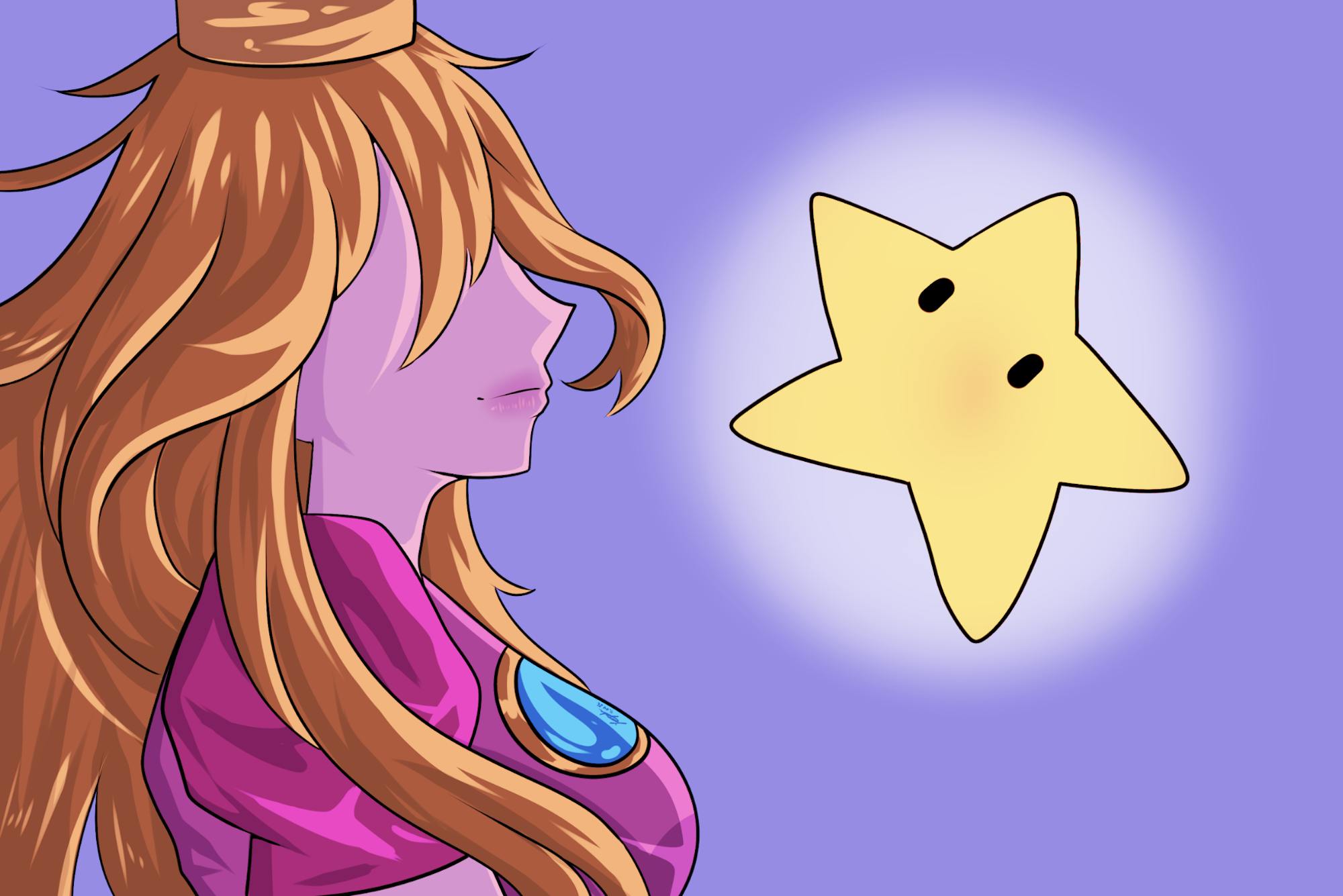
Set shortly after the events of the first film, “Galaxy” opens with Princess Peach (Anya Taylor-Joy) ruling the Mushroom Kingdom and Bowser (Jack Black) imprisoned under Mario's watch.
Mario and Luigi befriend Yoshi, the lovable green dinosaur, while the villain Bowser Jr. (Benny Safdie) kidnaps Princess Rosalina, Peach's magical sister, to harness her powers and rule the galaxy with his father.
Peach sets off to rescue Rosalina, leaving Mario (Chris Pratt) and Luigi (Charlie Day) behind to guard the kingdom. From there, the film splits into parallel storylines: Peach’s interstellar rescue mission, and a surprisingly tender arc in which Bowser navigates his desire to reconnect with his son.
Those emotional subplots are where the Super Mario Galaxy Movie is most interesting — and most frustrating. The film gestures toward something genuinely affecting in Bowser’s arc, a villain caught between grudging redemption and paternal instinct. Peach, similarly, is given a quest that is ostensibly about found family.
But the movie’s breakneck pace never slows down long enough for either thread to fully register. Scenes that could land with real emotional weight are interrupted by the next set piece before the audience has time to feel anything. The result is a film that has the skeleton of a story with some form of stakes, but opts to keep sprinting past them.
This is the most glaring flaw in “Galaxy,” and it is the same flaw that hobbled its predecessor. “The Super Mario Bros. Movie” was widely criticized for prioritizing fan service over narrative coherence, resulting in a colorful, kinetic brand experience more than a film.
“Galaxy” doubles down. The plot is threadbare almost by design, serving primarily as connective tissue between action sequences and cameos.
Non-Mario Nintendo characters — including Fox McCloud from the “Star Fox” video game series and the Pikmin from the “Pikmin” video game series — make appearances that will thrill franchise devotees and baffle everyone else. For a viewer without a childhood investment in the games, the film can feel like being handed someone else’s scrapbook.
As in “The Super Mario Bros. Movie,” Chris Pratt remains the weakest link in the voice cast. His Mario is serviceable at best and, as with the first film, never quite convinces you there was a reason to cast him over the character's longtime voice actor, Charles Martinet.
The rest of the cast fares considerably better. Charlie Day brings real warmth to Luigi, and Jack Black is once again the film’s standout, finding unexpected pathos in Bowser's odd-couple dynamic with Mario even when the script shortchanges him.
What Galaxy does well, it does extremely well. The animation is stunning, vibrant, inventive and clearly made by a team that loves these games. The spherical galaxy environments lifted from the 2007 Wii title of the same name are a visual playground, and the action sequences are truly thrilling, choreographed with a kinetic energy that justifies the big screen. The orchestral score is epic in the best sense of the word. These are not small achievements.
But craft in service of nothing in particular only goes so far. “Galaxy” is critic-proof by design, built for two audiences — children and devoted Nintendo fans — and for both, it largely delivers.
“The Super Mario Galaxy Movie” is, at its best, a genuinely fun time. It is visually inventive, energetically performed and clearly made with affection for the source material. At its worst, it is a reminder that affection for a franchise is not the same thing as having something to say about it.
Nintendo and Illumination have clearly built a reliable machine. Whether they ever decide to make it meaningful is a question worth asking.