
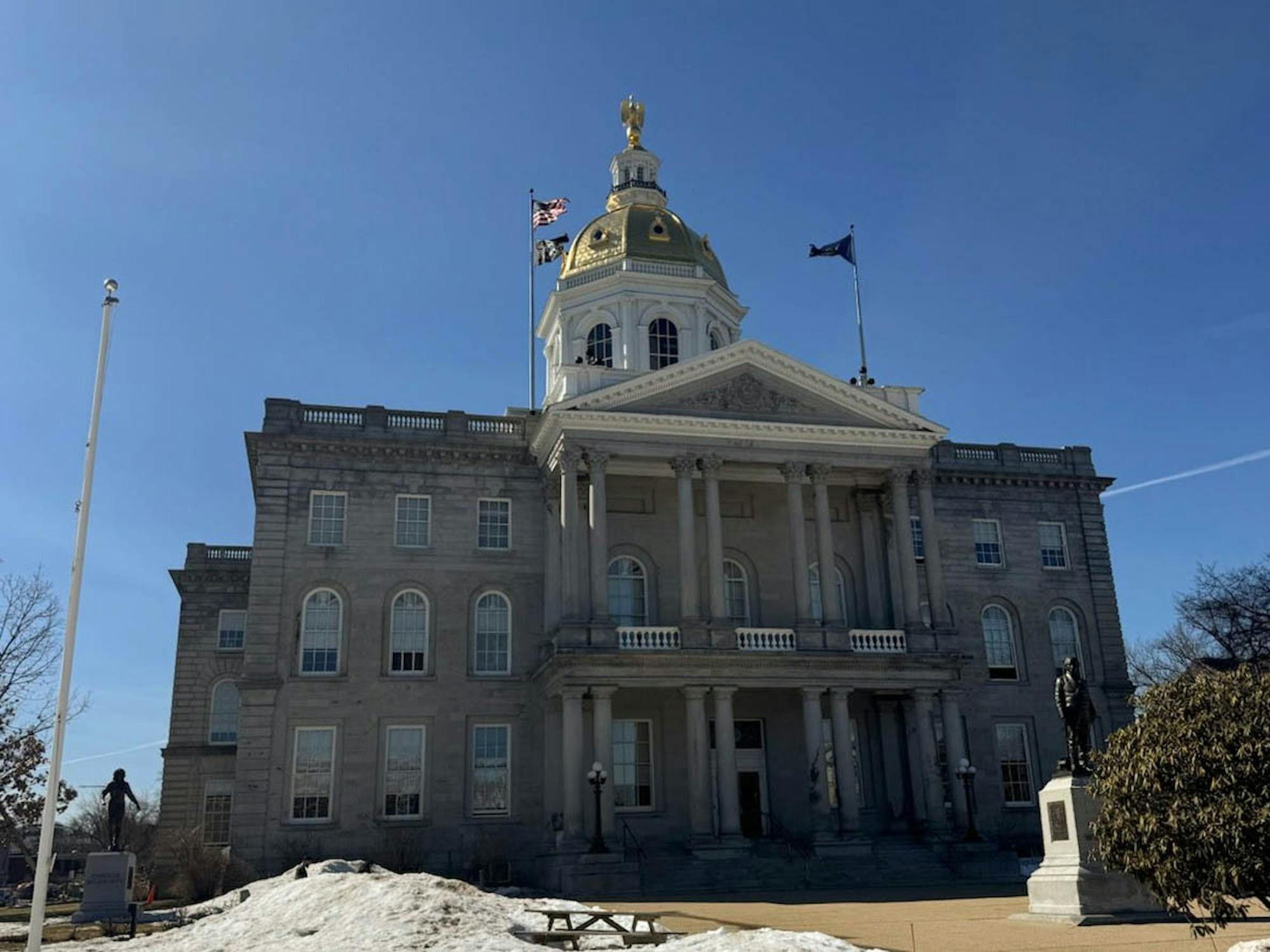
A Republican-backed effort to expand firearm rights on New Hampshire college campuses collapsed on May 21 after the state Senate declined to negotiate differences between the state House of Representatives and Senate versions of the legislation through a Committee of Conference.
In February, the N.H. House passed H.B. 1793, known as the “Protecting College Students Act,” which would have prohibited colleges and universities that are “supported by public funds” from restricting firearm possession on campus.
After initially recommending that the bill be retained in committee for further study, the Senate amended the legislation on the floor on May 14 to permit faculty, but not students, to carry firearms on public college campuses. The amended bill also specified that students could carry certain nonlethal weapons, including pepper spray and stun guns.
During an April 14 state Senate Judiciary Committee hearing, committee chairman State Sen. Bill Gannon, R-Sandown, said he had “concerns” about allowing firearms on college campuses and questioned how schools would safely store and regulate weapons in dormitories and other campus spaces.
“I am a big gun person, but I do have concerns,” Gannon said during the hearing. He later told the Senate that “my fear is we’re putting a gun in a very dangerous and volatile situation.”
On May 18, the House rejected the Senate amendment and requested a committee of conference to negotiate a compromise between the two versions of the bill. The Senate declined to move forward with negotiations on May 21, effectively killing the legislation for the current session.
Supporters framed the legislation as a constitutional rights issue. The bill’s lead sponsor, State Rep. Sam Farrington, R-Rochester, a 2026 graduate of the University of New Hampshire who sponsored the legislation as a student, previously described the proposal to The Dartmouth as a “matter of liberty.”
“In New Hampshire, we have the Second Amendment to the [U.S.] Constitution, but we also have Article Two of the New Hampshire Constitution, which provides that all persons have the right to keep and bear arms in defense of themselves, their families and their property in the state,” Farrington said in January.
In an interview with The Dartmouth after the bill failed, Farrington said the Senate amendment was “a step backwards.”
“If you’re a college student, you’re a legal adult,” Farrington said. “You can fight in a foreign war, you can vote in our elections, and so I made the case that you should be entitled to all of your rights, especially the right that is constitutionally protected.”
State Sen. Keith Murphy, R-Manchester, said he supported the Senate compromise despite believing the original House-passed bill was stronger.
“I voted for the amendment even though it weakened the bill because I recognized that it was the version of the bill that would get 13 votes,” Murphy said in an interview with The Dartmouth before the vote to kill the bill.
Murphy said he believes that adults on public college campuses should retain the same firearm rights they possess elsewhere in New Hampshire.
“They can already buy a gun and carry it into a bank or a grocery store or a restaurant or a library,” Murphy said.
The University of New Hampshire issued a statement in February advocating to maintain the university’s current policy, which prohibits the possession of “all firearms, other dangerous weapons intended to inflict injury or explosives,” on campuses, with exceptions made by the Chief of Police “for instructional or other qualified purposes.” The university wrote that it had “shared this position” with state lawmakers.
“We . . . continue to have concerns about the impact and implementation of this significant change to longstanding university system policy,” UNH executive director of public relations Tania deLuzuriaga wrote in an email statement to The Dartmouth. “As we testified previously, we’d ask lawmakers to take the time to study this issue further and fully before enacting any changes to state law.”
Opponents of the proposal, including Democratic lawmakers in both chambers, university officials and some faculty members, argued that expanding firearm access on college campuses could increase safety risks and complicate campus security operations.
Government professor and State Rep. Russell Muirhead, D-Grafton, wrote in an email statement to The Dartmouth that the legislation reflected broader ideological pressures within the Republican Party to cater to “extremists” who “fund their campaigns and turn out on primary day.”
“There is no problem on earth that is solved by inviting students to bring guns to classrooms, sporting events and frat parties,” Muirhead wrote before the bill failed. “But this is not about solving problems.”
State Sen. Rebecca Perkins Kwoka ’04, D-Portsmouth, said in an interview with The Dartmouth that while the Senate amendment reduced the scope of the original proposal, it still failed to adequately address safety concerns surrounding firearms on campus.
“Our police chiefs and our public safety communities told us this was a bad idea, that it would make us less safe and that it would make their job harder,” she said.
Dartmouth Safety and Security director Keiselim Montás said the department had monitored the legislation since it was first introduced in January 2026 and discussed the possible operational effects of expanded firearm access on college campuses.
“Having more guns doesn’t guarantee anybody’s safety,” Montás said in an interview with The Dartmouth. “It just increases the probability that somebody will use that weapon.”
Dartmouth’s current firearm policies state that weapons are generally prohibited on campus except for active law enforcement officers acting in the course of their duties. Students, faculty and community members may store rifles and shotguns with Safety and Security under limited circumstances.
In an interview with The Dartmouth, Dartmouth Democrats executive director Reece Sharp ’28 said she personally believes the amended legislation remained dangerous despite the Senate’s narrower approach.
“Inviting firearms onto college campuses in any capacity with very little checks and protections is dangerous,” Sharp said.
The Dartmouth Democrats issued a statement on Instagram in February opposing H.B. 1793, arguing that the legislation would undermine campus safety.
Addressing his colleagues from the Senate floor after the final vote to kill the bill, Murphy expressed disappointment but remained optimistic about the policy’s future, expecting similar legislation to return in future sessions.
“Sometimes I’ve learned good bills are lost due to conflict and clash between chambers, personalities and philosophies,” Murphy said. “I’m disappointed, but I am certain that it’s only a matter of time until this policy is adopted by our state.”
Isabel Menna ‘29 is a reporter from Leavenworth, Wash., is majoring in economics and is a member of the Dartmouth Ski Patrol.


