
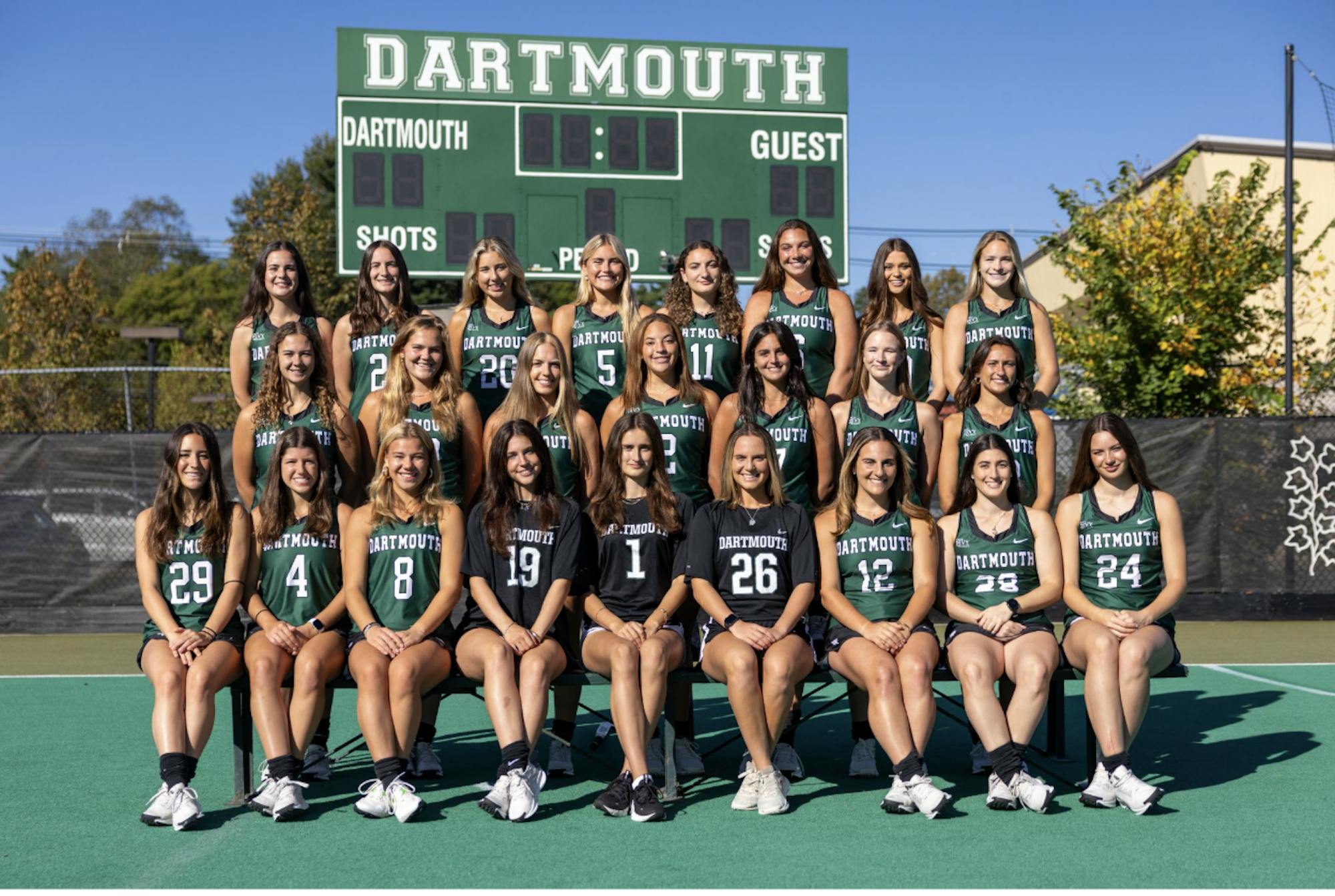
Following former coach Mark Egner’s departure, Jason Klinkradt has been named the new field hockey head coach and began his role on April 6. Prior to arriving at Dartmouth, Klinkradt was an assistant field hockey coach at Old Dominion University, the University of Delaware and James Madison University.
Klinkradt, who is originally from East London, South Africa, also served as the head coach and technical director of the YMCA Hockey Club in Dublin, Ireland, and as an assistant coach for the Irish Men’s National Team and technical coach for the Irish Women’s National Team in the buildup to the 2020 Tokyo Olympics.
The Dartmouth sat down with Klinkradt to discuss his path to Dartmouth, his coaching philosophy and his plans for next season.
How did you get into field hockey?
JK: My mother played field hockey. She played at a high level back in South Africa. Because my mom was very good at sports, I got pushed into sports. I played every sport growing up, and field hockey stuck. I was relatively good at a young age.
How did you get into coaching?
JK: I had a sports scholarship at a university, but I needed to pay for a portion of university as well, so I coached on the side. Then I got injured, and I had to coach more for more of the college tuition. I just loved it and felt fulfilled. I had the opportunity to coach a state-level team in South Africa, and we had some success. From there, I got an opportunity to move abroad and see the world.
How did you end up in the United States?
JK: I did a few sports camps while I was living in Ireland through the current field hockey coach at Harvard University. I know him well. I met my wife while working in Ireland, and that’s probably the biggest catalyst for why I came to the U.S. My wife’s an American citizen — we met in Dublin, Ireland, and she was from Dublin, Ohio, so we have a cool story. She took the leap of faith to come to Ireland. We lived there for four years. After four years, we wanted to settle down and have kids, and wanted to be close to some family in the U.S., so we decided to move to the U.S.
What brought you to Dartmouth?
JK: I was a head coach prior to my arrival in the U.S, but I hadn’t had enough experience within the U.S. system. James Madison University was a great learning opportunity, but I felt it wasn’t the right place for me. At the University of Delaware, I had a great experience and won a conference title as an assistant coach. Then, Delaware’s head coach changed, and the new head coach came in and fired all the assistants. Tough world, but that’s the nature of college athletics. I wouldn’t have moved otherwise, but then the opportunity with Old Dominion came up. At this stage, I was already exploring head coaching roles, so when Dartmouth became available, when I had the conversation, it felt right. The moment I stepped on campus, it was what I was looking for — a community. I felt I was going to be successful because I could add value and be a part of something greater.
What has your experience been like working with the team so far?
JK: The sense of community was very much evident even from the first few days. A little story: I was running between buildings and my passport fell out of my bag. I wasn’t even aware. I got an email, a student had picked it up and dropped it off at the art gallery and then someone within that department reached out to me, and one day later, I got my passport in my hand. That wouldn’t have happened on any other campus. People look out for each other here. People have also been very helpful about transition. I have a young baby and a wife, so there are a lot of moveable parts in my family, but I never felt like I was out of place. I feel like I’ve been here for years already. The players themselves have also really risen to the challenge.
What changes have you made since you got here?
JK: I think the team can have a more upbeat tempo and play a little bit more aggressively. Our focus is to be great in three different areas, and those areas are more like a stylistic point of view of what we’re gonna be known for. If someone can tell us in, say, a year’s time, that [these ares] are what we’re known for without me telling them, then I’ve achieved something.
What are your goals for next season? What do you think the team is going to be up to during the off season to get there?
JK: Dedication to the goal is going to be very important. The players committed to strong academics and also competitive sport. That comes with some requirements: Doing a little bit extra over the summer and making sure we’re in the best possible physical condition. We’re training a lot harder than they are used to. That is one goal, and then over the summer making sure we are arriving in a great condition. The group is well connected, so I think that part won’t be a problem, and then to hit the ground running.
This interview was edited for clarity and length.


