
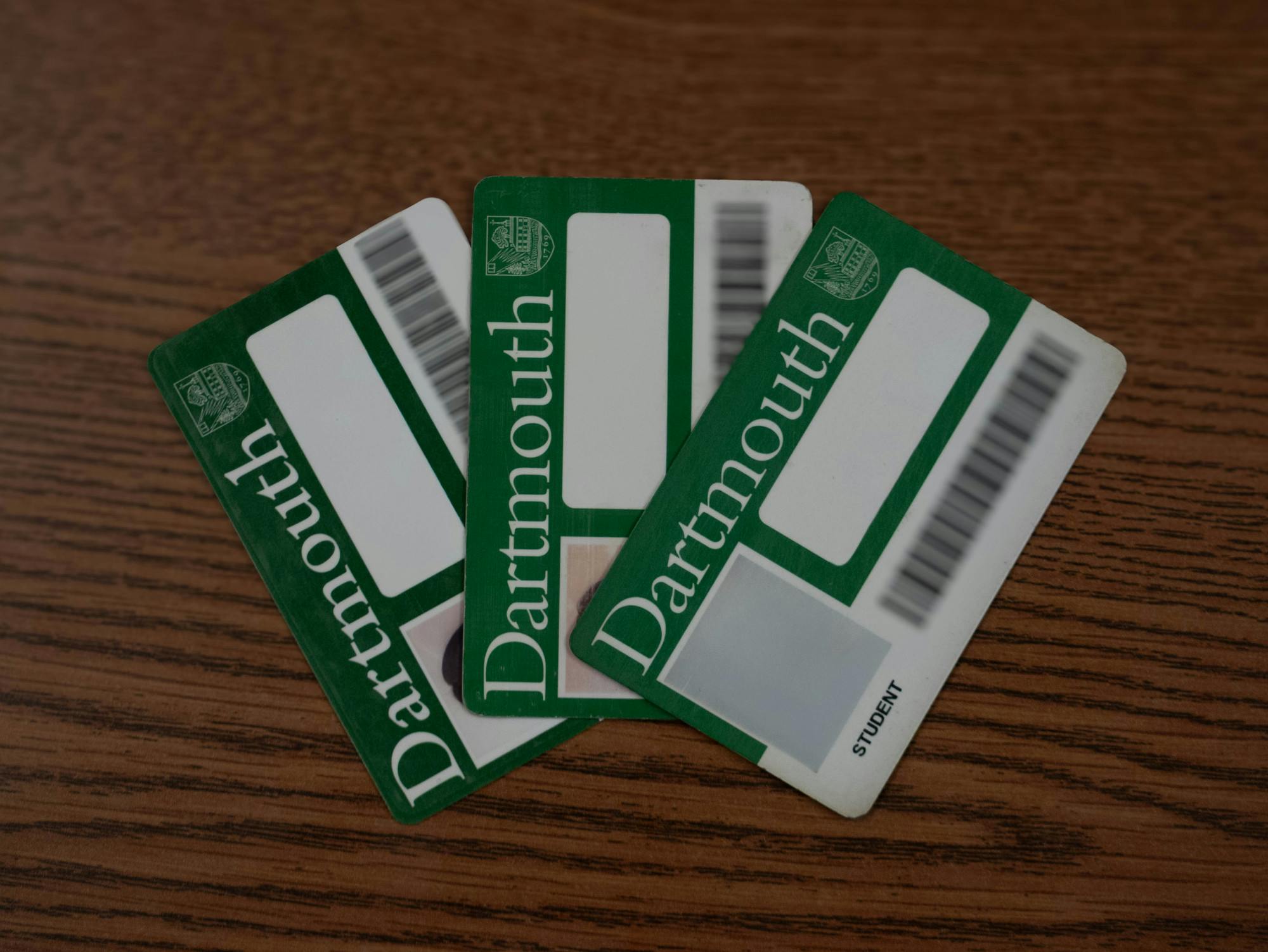
Students in New Hampshire will no longer be able to show school-issued ID cards to obtain a ballot on election day, according to a new law passed last Friday. On April 3, Gov. Kelly Ayotte signed H.B. 323, which amends the state’s current voter ID law to require the presentation of a government-issued ID — a driver’s license, non-driver identification card, military ID or passport — at polling locations.
The new law will go into effect on June 2, so students who wish to vote in town elections on May 12 can still do so with their student ID, according to town clerk Tracy Walsh.
Walsh said Hanover does not anticipate that the law will have a “significant effect” on levels of voter registration because residents already had to verify their age, citizenship, domicile and identity to vote in New Hampshire. Student IDs only verify age and identity and must be supplemented with additional documents, including an official government document verifying citizenship.
Prior to the bill’s passage, for example, a student registering with a student ID must also present an official government document and a document from the College verifying that the student lives on campus.
“Our working directive to Dartmouth students is when you come to the polls to vote, have your passport on hand or your driver’s license from wherever you’re from,” Walsh said.
Walsh added that the town is “seeking clarification” from the New Hampshire Secretary of State about whether student IDs can still be used to verify identity and age along with documents that verify citizenship and domicile.
Same-day registration will still be available to students voting in Hanover, Walsh said.
Government professor Herschel Nachlis wrote in an email statement to The Dartmouth that student voting debates in the state are “perennial” and pointed to the small margins by which state elections are often decided. In the 2016 U.S. Senate race, now-Sen. Maggie Hassan, D-N.H., beat Ayotte by 0.14% — or 1,017 votes.
“Given the stakes, one imagines that these battles will continue, including via potential legal challenges,” Nachlis wrote.
In September 2024, former Gov. Chris Sununu signed H.B. 1569, which requires a birth certificate, passport or naturalization papers when registering to vote. Previously, voters could sign an affidavit confirming their identities at the polls. That bill is currently being challenged in federal court. A similar law was struck down in 2016 in Kansas for violating parts of the National Voter Registration Act.
State representative and government professor Russel Muirhead, D-Hanover, wrote in an email statement to The Dartmouth that the new law will "not make our elections one bit more secure."
"It will only make it harder to vote, especially for students whose families are too stretched to afford cars or driver education courses and who lack driver licenses," he wrote. "But that’s the point — to make it hard for poorer citizens to vote. That’s what Ayotte and her party want. Because in their imagination, young people, older people, and poorer people all vote Democratic."
Dartmouth Democrats president Bea Reichman ’27 said the law is a “suppression of voting rights.”
“There are no verified cases of voter fraud associated with the use of student identification in New Hampshire,” Reichman said. “This is clearly just an attempt to limit youth voices.”
Dartmouth Conservatives president Jack Coleman ’26 disagreed, saying the law is “common sense” and will help “generate trust” in elections.
“To the two, maybe three Dartmouth students who vote in New Hampshire with a student ID and don’t have any other form of identification — I’d work on getting that,” he said.
Walsh said that students who do not have passports or driver’s licenses can get a non-driving state ID by making an appointment at the nearest DMV in Newport, N.H., which is a 30-minute drive from Hanover. A non-driving state ID costs $10 and is valid for five years.
In a statement to The Dartmouth, Dartmouth Civics co-presidents Lia Symer ’27 and Will Nelson ’27 wrote that they are “disappointed to see that leaders in Concord have chosen to impose more barriers on college students’ ability to fully participate in our democracy.”
“Student IDs were an equitable and accessible form of ID for all students,” they wrote. “H.B. 323 will suppress our students’ turnout, because many don’t carry two forms of government ID.”
Iris WeaverBell ’28 is a reporter and editor. She is from Portland, Ore., and is majoring in economics and minoring in public policy.
Tierney Flavin ’28 is a reporter and editor. She is from Kansas City, Mo. and plans to major in Government and Sociology.


