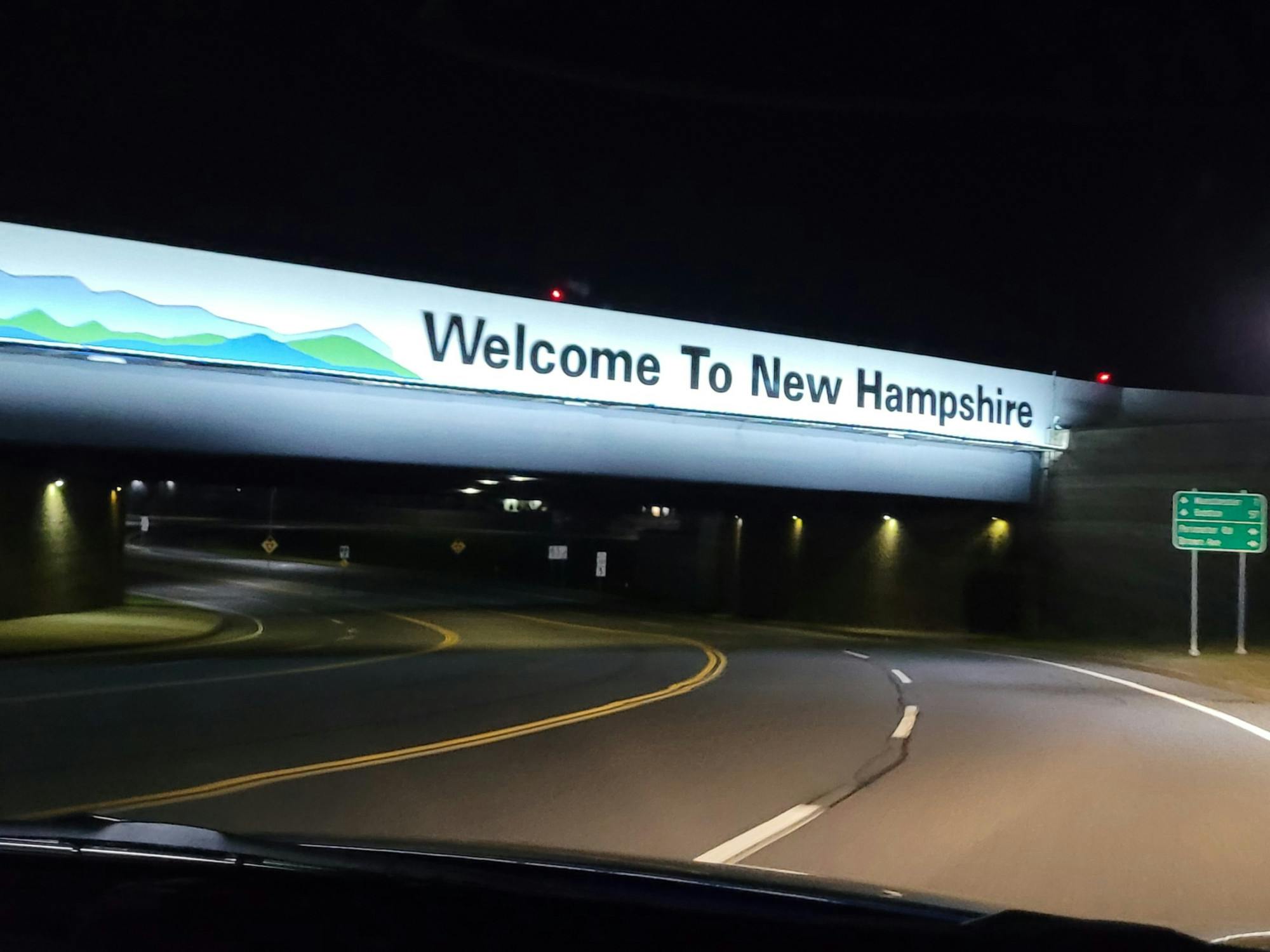
Jan. 5 marked the 250th anniversary of New Hampshire’s adoption of its first state constitution — the first of the 13 colonies to adopt a constitution and form an independent state government. In light of the anniversary, students, faculty members and state historians considered the state’s unique history, culture and political identity.
New Hampshire government professor and State Rep. Russell Muirhead, D-Grafton, called the state’s adoption of a constitution “an extraordinary moment” in American history.
“Instead of breaking out into fights and warfare and rule of the strong, they sat down and they created a constitution,” Muirhead said. “The people in New Hampshire in 1776 … surprised themselves, they surprised history and they surprised everybody in the world.”
Muirhead added that New Hampshire was a “pioneer” in the American Revolution.
“New Hampshire showed that it could be done and inspired the other states,” Muirhead said.
New Hampshire Historical Society education and public programs director Elizabeth Dubrulle called the state’s adoption of a constitution “a big shift” from previous governments.
“Governments did not form before this based on the will of the people,” Dubrulle said. “They were based on the divine right of kings.”
Dubrulle added that the state constitution was adopted because the people of New Hampshire “knew [their] own minds.”
“We weren’t going to wait around and let other people tell us what to do,” Dubrulle said.
During the Revolutionary War, New Hampshire native and Maj. Gen. John Stark became a symbol for “how tough and independent” the state was, according to Dubrulle. He later coined the phrase “Live Free or Die” in 1809.
Stark “resigns his commission in the Continental Army because he’s been passed over for promotion,” Dubrulle said. “He ends up becoming a colonel in the militia on [the] condition that he never has to follow an order from anyone in the Continental Army, [and] that’s kind of that independent spirit.”
Although the phrase was not officially adopted as the state motto until 1945, it “seized the public imagination” before then, according to New Hampshire Historical Society president Bill Dunlap.
The motto is “woven into the state’s identity,” Dunlap said. “We’re going to live this sort of independent life.”
The state continued to maintain its individualist identity into the 19th and 20th centuries. History professor Robert Bonner said distrust of Washington, D.C. and of centralized power contributed to New Hampshire being “out of sync” with the rest of New England in the American Civil War.
“It’s an unpopular war in New Hampshire,” Bonner said. “It’s become an abolition war, it’s become a war that centralizes power in Washington, it’s become a war that is moving too fast, and so there’s this latent conservatism that comes out.”
History professor Allen Koop noted that in contrast, World War II gave the state “a sense of purpose and a unity.”
“The [state’s] individualism had its own ways of manifesting itself [in World War II],” Koop said. “But New Hampshire people … realized there was a war [going] on, and there was an idea that everybody was sort of to do his or her part.”
In more recent decades, New Hampshire’s individualism has manifested in the state’s first-in-the-nation presidential primary, according to Dubrulle.
“We [are] willing to listen and vote for people who would have been forgotten on the national stage and give people a chance,” Dubrulle said. “That really exemplifies that ‘Live Free or Die’ feeling.”
Some New Hampshire residents noted the political connotations of the state’s motto. English lecturer and New Hampshire state representative Ellen Rockmore, D-Hanover, said the motto creates a “feedback loop” that reinforces New Hampshire’s libertarian politics.
“I think New Hampshire has this reputation for independence, libertarianism and ‘Live Free or Die,’ and therefore it attracts people who are looking for that,” Rockmore said. “And then [libertarians] get seats in the New Hampshire House, and they implement that philosophy in the legislation.”
Fifth-generation Granite Stater Marshall Carey-Matthews ’27 added that he believes that state Republicans use freedom “as a lever to defend their actions.”
“New Hampshire’s perceived identity as being a bastion of freedom is used much more as a political weapon than it is being served as a value,” Carey-Matthews said.
Lily Johnson ’27, who is also a New Hampshire native, said the state’s individualistic identity stretches beyond politics and affects the “disposition” of New Hampshire residents.
“I know plenty of people who [think] … you don’t have to be as formal and do things in a certain way, because there’s a little bit more [of] a sense of freedom,” Johnson said.
Johnson added that while she did not agree with some of the political interpretations of “Live Free or Die,” she nevertheless liked “the idea” behind the motto.
“You shouldn’t necessarily be bound by some construct,” Johnson said. “You should live your life to its fullest potential.”
Kay Alvito ’29 is a news reporter from Rio de Janeiro, Brazil studying comparative literature and creative writing. On campus, she is very involved with the arts as a member of the Rude Mechanicals classical theatre company and the dance group Street Soul.
Eliza Dorton '29 is a reporter from Washington, D.C. and is studying English and public policy. Outside the classroom, she enjoys reading and going on walks.