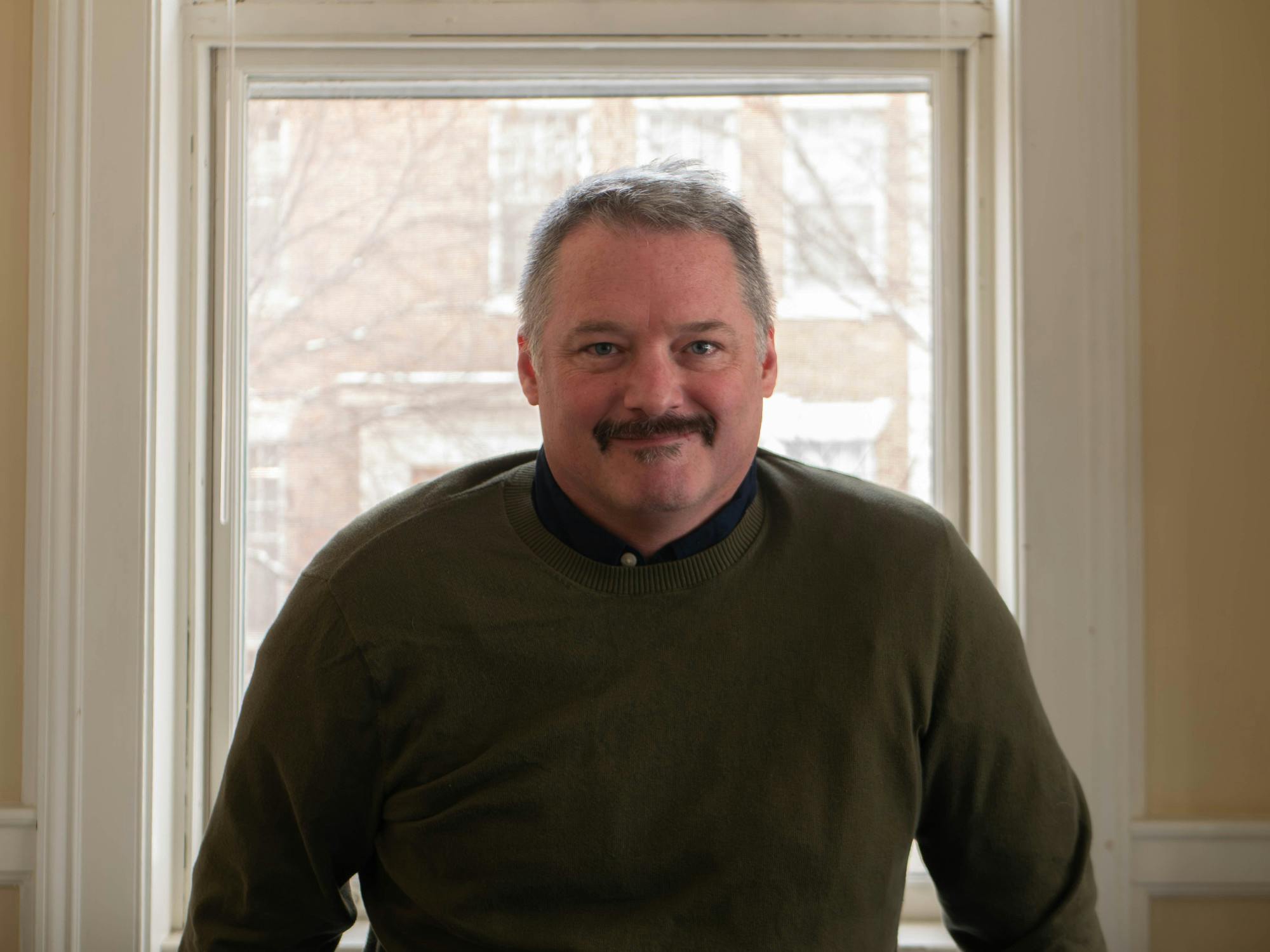
As part of The Dartmouth’s coverage of the upcoming 2026 midterm elections, we are launching a new interview series, “A Sit-Down with The Dartmouth,” featuring in-depth conversations with major national and statewide candidates in New Hampshire.
Restaurant owner Jon Kiper previously came in third in the 2024 Democratic primary. On June 13, 2025, Kiper announced his campaign for governor as an independent, challenging incumbent Republican Gov. Kelly Ayotte, before switching his affiliation to run as a Democrat. Kiper is currently the only declared candidate. In an interview conducted at the offices of The Dartmouth, he discussed why he is running again, how he would approach housing and education funding and what he sees as the state’s core economic challenge. Kiper has centered his campaign on affordability, housing, tax reform and what he calls “community-first economics.”
You ran for governor in 2024, finished third in the Democratic primary and initially launched this campaign as an independent before returning to the Democratic Party. Why is this the right moment to run again, and what is the core problem you believe the next administration must confront first?
JK: When I ran the first time, most people anticipated I would probably get one or two percent of the vote. I got almost 10%. The conversation I had with people after that was basically, “We voted for you because you talk like a normal person.” To me, the issues haven’t changed at all. And I think that having done it once, I’ve learned a lot.
When I ran as an independent, one of the realities I ran into immediately was that everyone who deeply cares about politics right now has accepted the two-party system. It’s really hard to operate outside of that without already being famous. The Democrats had no candidate, still have no candidate. I’d rather be the Democrat candidate, if they have none, than be running as an independent, waiting for someone to come along. I’d rather be on the inside trying to work for change in a way that’s a little bit more practical than being on the outside.
You recently told the Boston Globe that you are ‘in it to win it,’ but also said it was ‘insanely unlikely’ for you to win against Ayotte. Tell me more.
JK: What I was more saying was that it’s unlikely that an established Democrat can win in New Hampshire — it’s impossible. I don’t see any of the people beating Kelly Ayotte. That’s more what I was saying.
I don’t consider myself a normal Democratic candidate. I am not of the wealthy elite, I was not born with a silver spoon in my mouth and I’m not a lobbyist. But I think I can win. I don’t think those people could win. They offer no real change to the status quo.
You have been open about discussing tax policies. What revenue source would you put on the table first to reduce reliance on property taxes?
JK: We need to bring back the interest and dividends tax. It was a great tax because it taxed sitting money. It taxed wealth, not work. Income and sales taxes are not going to be good long-term solutions with artificial intelligence and automation taking jobs.
We should also look at a homestead exemption and taxing second homes more aggressively. We have one of the highest rates of second homes in the country. We need to tap into that wealth and put it back into local communities — especially infrastructure that allows us to build more housing.

You have said housing, education funding and property taxes are all connected. Which issue has to be addressed first?
JK: They’re really one issue. One reason we don’t have enough housing is that property taxes fund schools. Towns block affordable housing because it brings in kids and drives up school costs. So, you get this perverse incentive where towns approve 55-plus housing but not starter homes.
Property taxes disproportionately hurt middle- and working-class people. Renters pay them too; they’re just baked into the rent, and when education is funded by local property values, it’s inherently unequal.
Ayotte recently signed into law a policy that expanded Education Freedom Accounts. Do you support or oppose that policy?
JK: I strongly oppose Education Freedom Accounts. We should not have them. They should not be a thing at all. Our state constitution says, specifically, that state money will not go to religious education. While the ability for the state to send money to religious education has been upheld in the federal court system, the federal constitution says nothing about education.
We already have choice. We have charter schools built on a lot of different models. The idea that we should be giving money to people that don’t need it makes no fiscal sense in a state where we have so little money. They’ve studied this significantly. There is no discernible educational gain from anyone using a voucher to go to private school. When you average it all out, there’s no metric by which it is better for these kids.
Many young people, including Dartmouth graduates, leave New Hampshire after college due to affordability concerns. What would you do to make the state a place they want to stay?
JK: Housing affordability has to be the number one issue. How can you see an apartment that’s $1,800 a month and think you can make that work?
We used to build housing at the federal level. From the late 1930s until about 1980, the government built a lot of affordable housing. We stopped. We’re not going to free market our way out of this because zoning laws make that impossible. It’s going to take state investment and nonprofit and cooperative models.

Kiper plans to run his campaign on "community-first economics." "We’ve detached economics from lived reality. GDP can be up. The stock market can be up. But people can’t afford housing, can’t pay their electric bills and feel left behind," he said.
When voters are deciding whether you are ready to be governor, what’s the strongest argument against you, and why should they reject that?
JK: People say I’m not a serious candidate because I’m not wealthy, and I haven’t spent time in the legislature. If I were a multimillionaire, nobody would question it.
State representatives get paid $100 a year. I can’t afford to do that. Most working-class people can’t. That’s why the legislature is mostly wealthy or retired. It filters out real voices.
Finally, how would you describe your governing philosophy?
JK: My whole campaign is about community-first economics. We’ve detached economics from lived reality. GDP can be up. The stock market can be up. But people can’t afford housing, can’t pay their electric bills and feel left behind.
Democracy is a conversation. You have to be willing to sit down with people you disagree with. After 10 years running a restaurant, what I learned is that party labels don’t matter. Everyone is worried about the same things: housing, property taxes and whether their kids are getting a good education.
This interview has been edited for clarity and length.
Correction Appended (Jan. 15, 9:32 a.m.): The subheadline previously stated that Kiper ran for senate. He ran for governor.
Isabel Menna ‘29 is a reporter from Leavenworth, Wash., is majoring in economics and is a member of the Dartmouth Ski Patrol.