From the pseudo-gothic “Phantom Thread” to the contained “Punch-Drunk Love,” all Paul Thomas Anderson films tend to center complex interpersonal dynamics. One of the most prolific and acclaimed directors working today, his plots range from coming-of-age films like “Licorice Pizza” to historical thrillers like “There Will Be Blood” and experimental cult classics like “Magnolia.” Besides his tendency to work with the same actors and to set his films in California, one can identify Anderson film by its use of tracking and extended shots alongside bold soundtracks and sweeping establishing frames. At their core, however, his films investigate what brings and keeps people together — and “One Battle After Another” is no exception.
This film, in fact, may be Anderson’s magnum opus. It also marks his first venture into political commentary. While most of his previous work takes place during some ambiguous point in history, this film is wholly current, undeniably reflecting the contemporary moment.
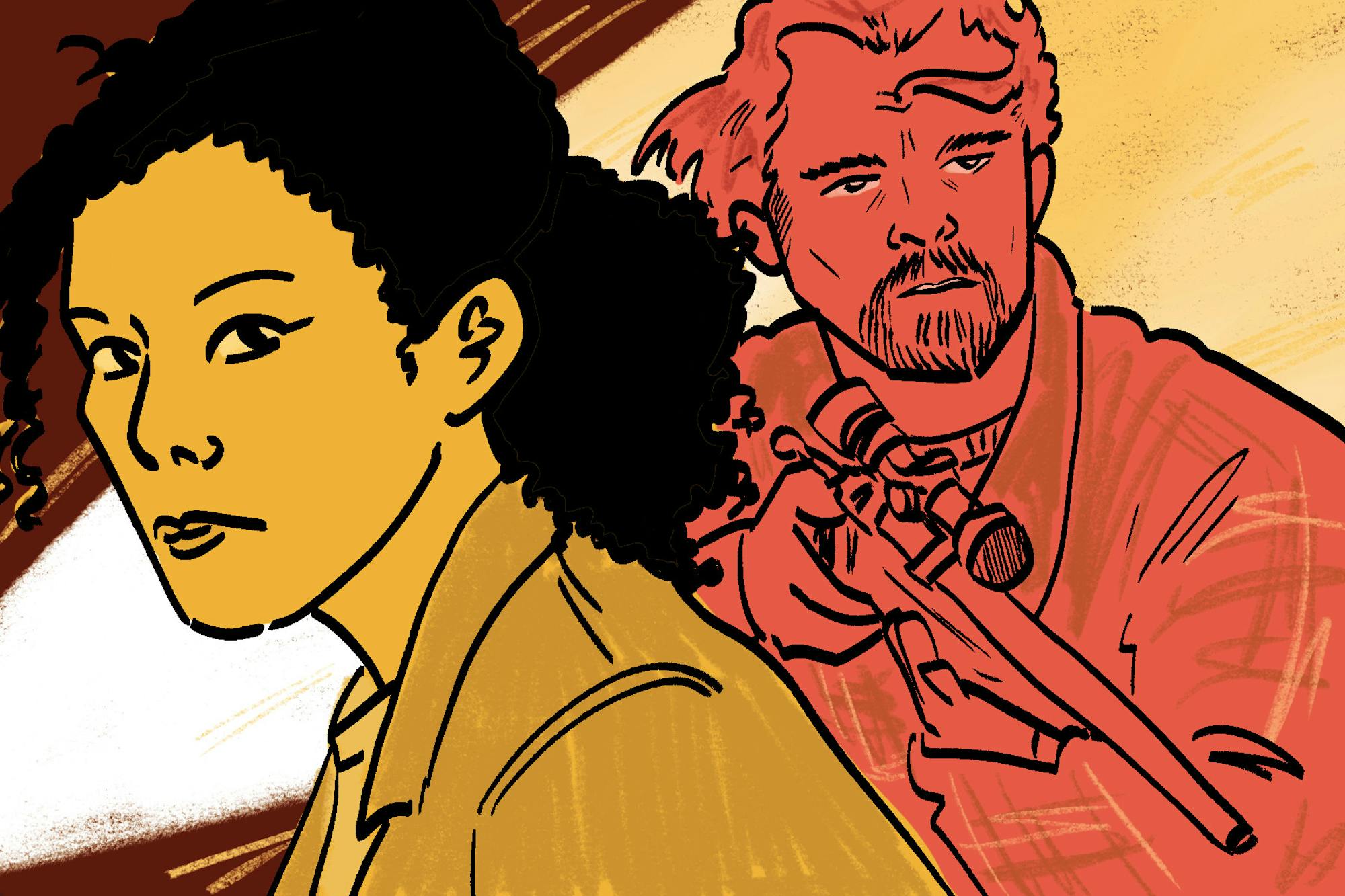
In the explosive opening scene, audiences are introduced to the “French 75” — a band of guerilla activists who free detention centers, rob banks and generally do whatever it takes to secure “freedom.” At the center of this group is the revolutionary couple Bob Ferguson (Leonardo DiCaprio) and Perfidia Beverly Hills (Teyana Taylor).
After a 16-year time jump roughly a quarter into the film, DiCaprio is a doting single father on the run who spends his days arguing with history teachers in a cannabis-induced haze — paranoid and devoted to his daughter Willa (Chase Infiniti) in equal measure. At its most basic, the film is the story of a father and daughter’s attempt to return to each other.
“One Battle After Another” balances the excitement of a sprawling epic with a tightly constructed plot featuring individually dramatic moments. One memorable one occurs at the start when “French 75” member Perfidia disarms the commander of an immigration detention center, upending racial and sexual power dynamics with which Anderson continues to engage throughout the film.
Unapologetically political, the film is a searing indictment of far-right nationalist movements and complacency. It is a radical and thought-provoking meditation on the necessity of violence in revolution and the role of protest in the modern age. It is also humorous. In one slapstick comedy moment parodying older generations’ attempts at revolution, Bob runs around helplessly in a bathrobe.
Besides the engaging plot, Anderson’s direction and a standout cast make “One Battle After Another” a sure contender for Best Picture at the 2026 Academy Awards. The cinematography is striking — the framing of shots corresponds to changes of power between characters. One car chase through a Texan desert creates a visceral swooping sensation in your stomach.
DiCaprio and Infiniti have a wonderful rapport as an aging revolutionary and a daughter paying for her parents’ sins. DiCaprio is endlessly entertaining, showing off the physical comedy chops from his “The Wolf of Wall Street” days. Regina Hall gives an impressive performance as one of the highly dedicated members of the “French 75.”
Besides its political angle, “One Battle After Another” is also about parenting and aging, race and gender and sex and sexual power. It features all of Anderson’s usual themes and tricks; its levels of violence and greed and of introspection and realism recall “The Master” and “Boogie Nights” respectively. “One Battle After Another,” however, stands out for its timeliness and urgency. While rooted in America’s past, it’s also terrified by its present and hopeful for its future. Ultimately a tender film, “One Battle After Another” pulls off a balancing act only Paul Thomas Anderson could achieve.