
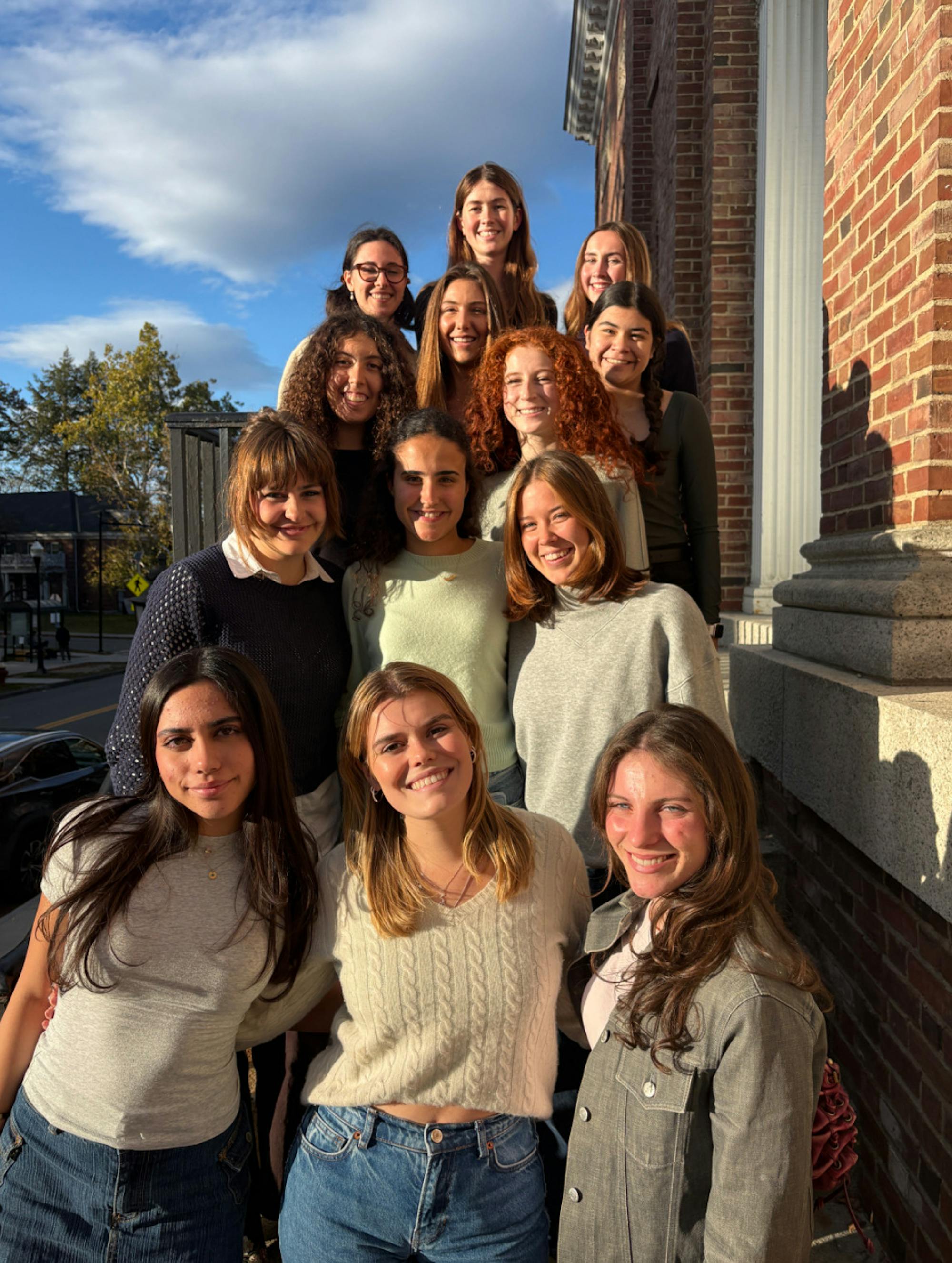
Dartmouth’s new art and art history journal “Ephemera” is leaning into its “fun” side.
According to co-editor-in-chief Sara Shelton ’26, the idea would be “feeling like you can rip out a piece of paper that has some student’s artwork on it — like hanging on your wall.”
Shelton and co-editor-in-chief Lucie Morton ’26 said they are spearheading a new organizational focus for the publication, which was founded last spring as a creative outlet for students interested in art and art history. The magazine will be “less like an academic journal” and “a little more casual,” according to Shelton.
For example, Shelton said she and the editorial team are experimenting with more fluid layouts. Instead of organizing the publication into fixed sections like last year, Shelton envisions “Ephemera” to have sections “interspersed throughout the magazine.” She suggested that this new structure will give editors and contributors more creative freedom.
She also hopes this new format will make the publication “feel a little more fun.”
“Ephemera” was founded by Chandini Peddanna ’25 to fill what she saw as a gap in Dartmouth’s extracurricular landscape.
Vivien Pihlstrom ’29, a prospective Art History major who joined “Ephemera” this fall, said this gap still exists. At this year’s Student Involvement Fair, she noted that “Ephemera” was the only student organization focused on art history.
Last year’s issue was both a milestone and learning experience for Shelton and the editorial team. As a contributing editor and treasurer at the time, Shelton recalled that the publication only reached a small audience because of its limited print run of around 80 copies.
However, Shelton said that the publication's reception was “really amazing, especially on the faculty side and the staff side.”
Shelton said that for the next issue, while the format will be more flexible, she also wants to be “pickier” about what the journal includes. She attributed this decision to her and Morton having “a more clear idea of what we want.”
The team also hopes to broaden the magazine’s reach by both expanding its print distribution and publishing editions more frequently, according to Shelton. This expansion will be facilitated by the Dartmouth Class of 1969 Grant awarded to “Ephemera” in spring 2025, which helps student groups address campus needs through annual funding, according to Shelton.
“We’re planning on making it not less nice, but less precious — so that we can kind of put them all around campus instead of people feeling like they can’t just take one home with them,” Shelton said.
As the magazine evolves, Shelton further described the editors’ hope to expand “Ephemera” beyond just a publication into a creative community: “a space to meet people and network,” especially those “curious about art” and to “gain perspective.”
She added that one of her favorite parts of working as an editor for the publication has been meeting more people involved in the art and art history scene on campus. Pihlstrom echoed this sentiment as a new member, saying she was drawn to the organization to meet students “interested in similar things.”
In an attempt to also strengthen mentorship within the organization, Shelton said the team plans to pair new editors and contributors with more experienced upperclassmen — an idea Peddanna first proposed.
Shelton reflected that while Ephemera’s first year was more about getting the publication “done,” the focus this year is on “building and growing.”
She underscored how the organization’s expansion also reflects a new focus on making art history accessible to more people.
“Whatever people are studying, there’s probably a way that it connects to art,” she said.
Lucie Morton ’26 was previously a contributing Mirror and Sports writer.


