
A memory: My roommate and I collapse into our seats across from each other at the dining table of our apartment in Prague — home for the next 10 weeks. Between us are bowls of couscous, roast chicken thighs, grilled eggplant and roasted carrots. As we begin to eat, our conversation drifts from excitement about being abroad, to weird cake ideas, to concerns about pigeons in the apartment. Warm sunset light bathes our meal. Like my study-abroad friends often said, this must be the point.
Another one, this time at Dartmouth. My friends and I are laying in Pine Park on a few thrown-together picnic blankets. My sneakers and socks are soaked from our walk through a low-hanging blanket of fog, and the tiny bit of exposed skin between the bottom of the sweatpants I borrowed from my friend and my shoes is freezing cold. From our blankets, we look up at the night sky in search of bright yellow flashes, exclaiming and pointing whenever we see one, as if we can make the flying rock burning up in our planet’s atmosphere pause its journey until we’ve seen our fill. Jupiter and Venus, perfectly aligned with each other in a colon formation, soar through the sky together as the minutes tick by. “Another one!” my friend and I whisper-shout in unison. I turn my head and my eyes catch hers. I can’t help but smile and laugh.
The Mary’s Room thought experiment is part of a broader philosophical debate about whether any amount of knowledge of the physical information or facts concerning certain experiences can suffice for knowledge of what these experiences are like. It follows: A woman named Mary is a brilliant scientist who has learned everything there is to know about the physical properties of color — the wavelengths of light, how the eye and brain process color information, etc. However, she has only ever experienced the world in black and white. If she were to leave her black-and-white environment and experience the world in color for the first time, would she learn anything new?
While the philosophers debate questions of knowledge and experience, I find myself preoccupied with a more simple issue: How would Mary describe the feeling of seeing in color?
Trying to pin down things that refuse to be defined feels like trying to grab a handful of water; in the end, I am inevitably left with only a few dozen droplets that linger. My skin will get pruny as I dunk my hands in again and again, but the saturation runs deep inside me, and I am still left with nothing to show you. I want to tell you how beautiful the happiness I have found in my memories is. I want to tell you how wonderful it feels to be with people who make laughing feel like the easiest thing in the world. I don’t have any satisfactory words.
Instead, take these platitudes about this effervescent lightness, this inexplicable delight. It overwhelms my body. My smile feels immovable; my body weightless as though I could, at any moment, take flight and soar away.
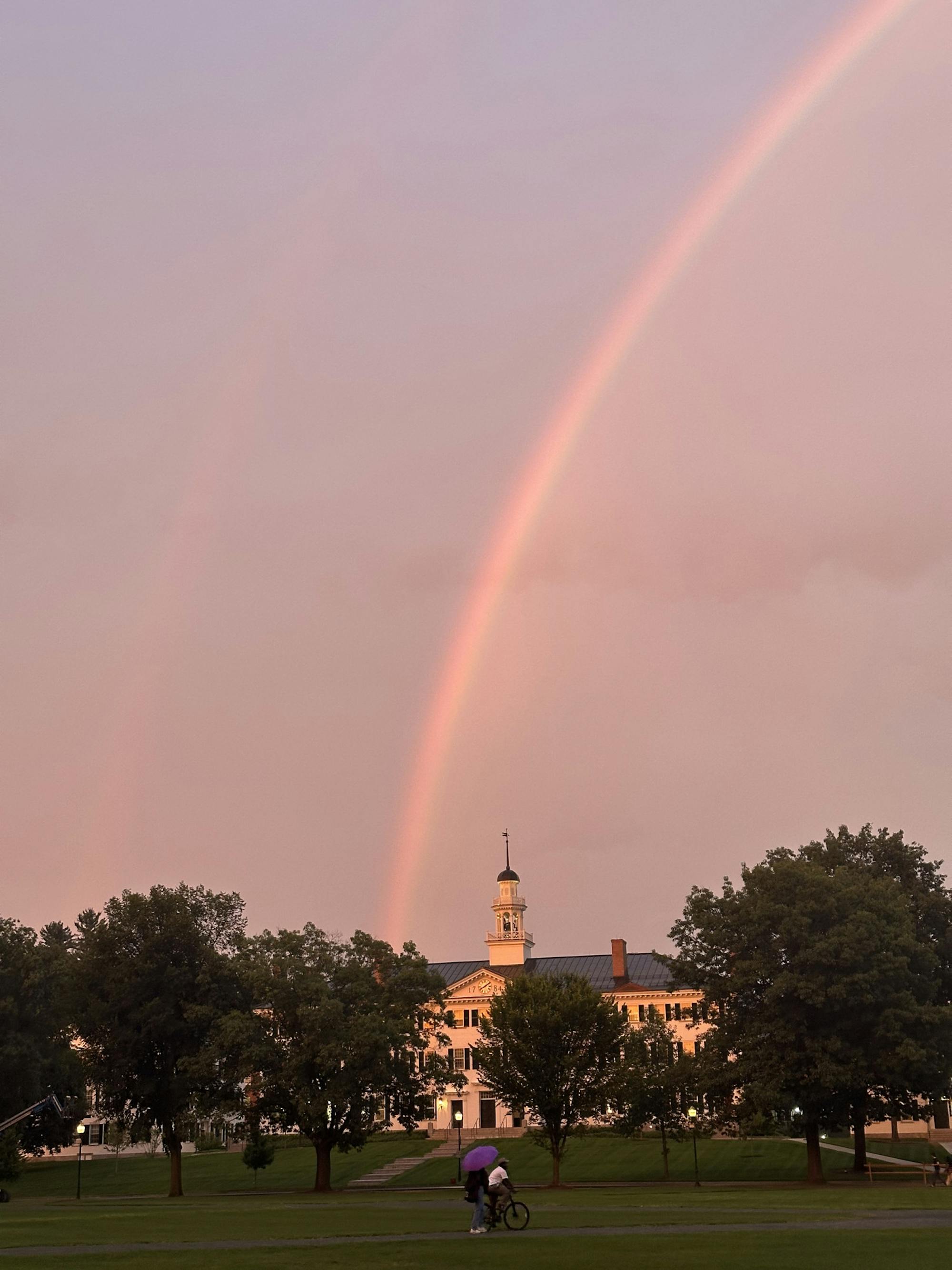
I feel this when I look across the table over a homemade dinner or next to me as I walk down Main Street, and again when my friends and I are lounging at the swimming docks by the Connecticut River or listening to more friends play music in a comically green field under a pink-and-gold sunset. So much of my life is captured in these brief moments — a lightness in my head, a butterfly in my stomach, a weightlessness in my step.
I have one more memory I want to share with you. It’s a snapshot from years ago. I’m standing in the middle of the pond in my hometown park, wobbling as I turn around to wait for my best friends to catch up. The water is unusually shallow, and the rocks and pebbles of all sizes lining the bottom of what seems like a mile-wide basin are slyly exposed by the colorless water. The sunlight is almost blindingly white, so I bring both hands up to my brow to shield my eyes and watch my friends approach. As my eyes adjust, the colors come back into focus: the bright blue sky, the pinks and greens of my friends’ dresses, the sound of our laughter.
Annabelle Zhang '27 is a reporter and editor from New Jersey. In the classroom, she studies Geography and Government modified with Philosophy and Economics. She enjoys creating recipes, solving puzzles and listening to music.


