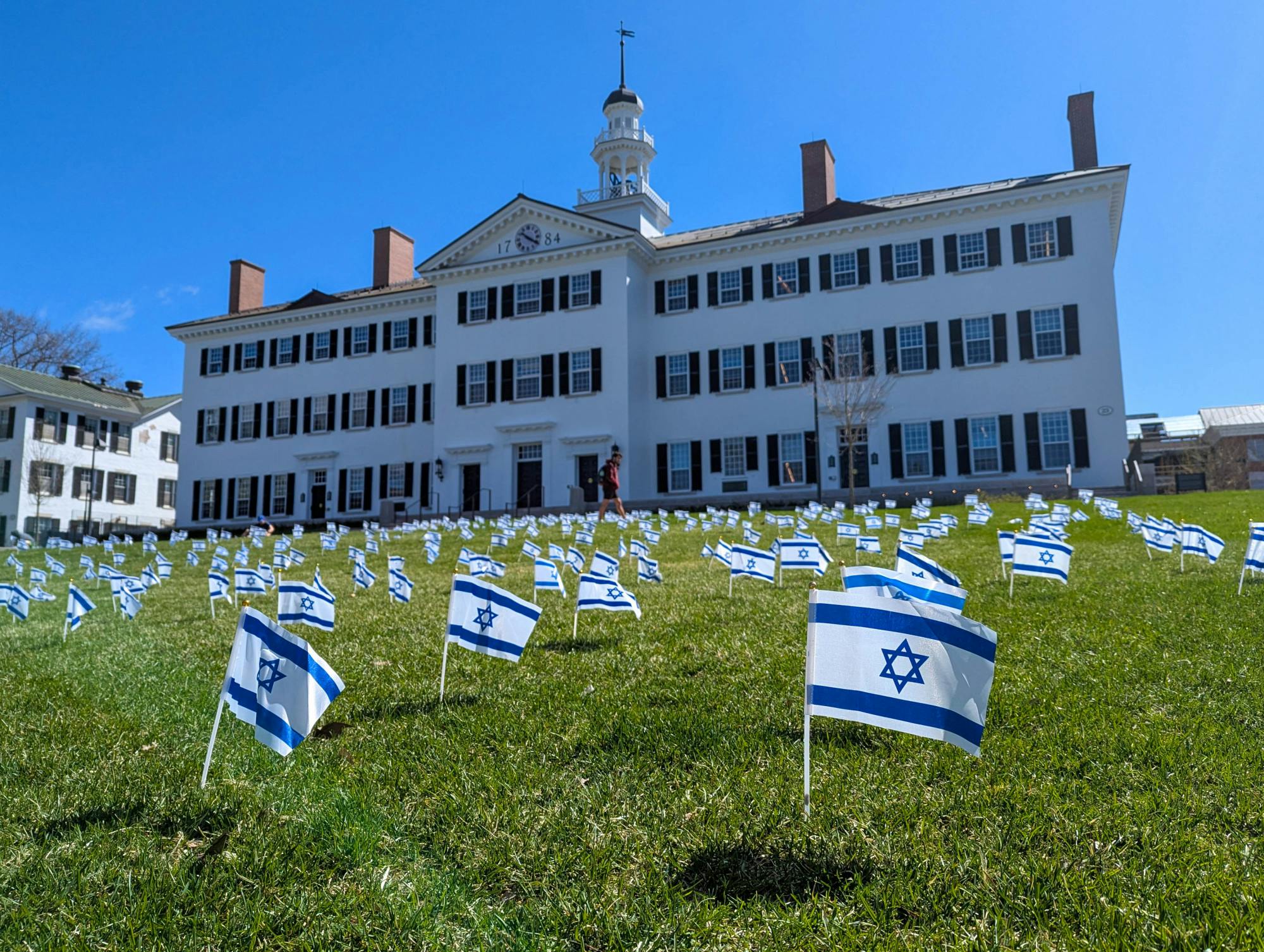
Dartmouth launched a partnership with Israeli universities in October 2024 that will bring Israeli researchers to Hanover and facilitate academic collaboration.
Computer science professor Daniel Rockmore and Psychological and Brain Sciences professor Jeremy Manning founded the Dartmouth chapter of national group Kalaniyot, making the College one of five members of the nationwide organization founded by researchers at the Massachusetts Institute of Technology after the Oct. 7 attacks, according to its website. In addition to MIT, other member institutions include Columbia University, Harvard Medical School and the University of Pennsylvania.
The program centers Dartmouth’s “core value” of neutrality, Manning said.
“Kalaniyot is specifically focused on furthering Dartmouth’s academic mission,” he said. “There may be other knock-on benefits. But it’s true that anytime there’s war and strife, academic difficulty comes with that.”
The organization’s website says that it is dedicated to reversing trends of “hostility” against those with ties to Israel.
“Many U.S. universities have seen an increase in hostility aimed at anyone with ties to Israel,” reads the national Kalaniyot website. “Kalaniyot is a faculty-driven effort to reverse these trends and return universities to their core purpose of being a welcoming place for students and scholars of all backgrounds.”
Rockmore said he was inspired to found Kalaniyot at Dartmouth by his past collaborations with Israeli universities, including the Tel Aviv University.
“Israel has some of the best mathematicians in the world, as well as some of the best computer scientists,” Rockmore said. “So it struck us as a natural connection.”
Rockmore added that the “community of researchers” in the national Kalaniyot organization were proponents of intercollegiate research collaboration.
“We anticipate that intellectual life here will be fuller with these new connections,” Rockmore said.
Manning added that he looks forward to “engaging with this exciting community of scientists” and “building relationships with Israeli universities.”
“There are amazing scientists at Israeli universities,” Manning said. “They are at the absolute top of their fields, and they are excited to work with the amazing people at Dartmouth, too — that gives us an opportunity.”
Rockmore said the “completely apolitical” ethos of the organization “resonated” with him.
Kalaniyot at Dartmouth is opening applications for three programs: one for postdoctoral researchers, one for visiting faculty and one for research collaborations with Israeli universities. The group will begin reviewing applications from researchers at Israeli universities in November, according to Manning.
Religion professor and Dartmouth-Kalaniyot faculty board member Susannah Heschel said she believes programs that attract both researchers at the beginning of their careers and established faculty are valuable.
“Having someone who is young and fresh and has new ideas — that’s exciting for us,” she said. “But it’s also fantastic when we bring the most prestigious scholars in the world.”
As chair of the Jewish Studies Program, Heschel helps facilitate collaborations between Dartmouth and Israeli universities through the Brownstone program, which funds a visiting Jewish Studies professor each year.
Heschel said she was “thrilled” about the initiative.
“I think it’s something that gives [Dartmouth] international prominence,” she said.
Iris WeaverBell ’28 is a reporter and editor. She is from Portland, Ore., and is majoring in economics and minoring in public policy.