Throughout the summer term, more than 4,000 alumni return to campus for 12 class reunions and the 40th anniversary of DGALA, the Dartmouth LGBTQIA+ Alumni Association. The Dartmouth sat down with vice president of alumni relations Cheryl Bascomb ’82 and alumni engagement director Joe Piedrafite to discuss this year’s reunions, undergraduate involvement in these events and what they hope to accomplish with reunions.
Which reunions were held this year?
JP: We usually have 12 classes that come back for reunions. The Class of ’60, ’70 and ’75 were all here for what we consider ‘early week’ reunions. Then we had what we call our ‘end-week’ classes. This year, we had the 45th cluster, which was the classes of ’79, ’80 and ’81; the 30th reunion, which was the Class of ’95; and then the 25th reunion, which was the Class of ’00.
This year, for the first time ever, we also held reunions in July, primarily because of space constraints. We took the Class of ’09, ’10 and ’11, who were here for their 15th reunion, and moved them into the July timeframe. The Class of ’20 was here for their fifth reunion. Also, this year was special because we had DGALA, the Dartmouth LGBTQIA+ alum association, here celebrating their 40th anniversary in July.
What is the goal of reunions?
CB: We hold reunions because it is a wonderful way to have people keep connected and to start being connected to people they may not have known during their time on campus. It is also a wonderful way for people to understand Dartmouth today. It’s much more about supporting an incredible alumni network. People are at different points in their lives, and they want to share that with each other. Reunions help facilitate that. It’s a bit like a pebble in a lake that has ripple effects for quite a long time.
What does preparation for reunions look like?
CB: It’s an ongoing cycle. There is no point in the year when some aspect of reunions is not being planned. One of the really cool things about reunions is that volunteers are critical to the work. Each class has a lead volunteer and a committee that helps him or her do things like meal-planning, program-planning and gifts. They work closely with Joe Piedrafite and his staff to make their class reunion what they want it to be. So, even two years out, people have started identifying who their volunteers are and the kind of things they want to plan.
What kinds of events and programming typically take place at reunions?
CB: There are three components. There’s what the College provides in terms of both program and reunion support, individual support. Then, there are the things that the individual classes want to do that are somewhat traditional. There is also academic programming, and other pieces such as tours of Bartlett tower and Baker tower.
How are current Dartmouth students involved with reunions?
JP: Student workers are often the face of interactions with alumni, especially during meals, at the class tent or class programming. We find a lot of students really like it, and they can make connections with alumni. It’s a really cool way for the students to interact with the alumni.
Are there any moments from reunions this year that stick out to you now?
JP: For me, it’s the fact that it was the first official year that we did July reunions. We were a little bit nervous, I think, about how it was going to feel with students on campus, but the energy was really great.
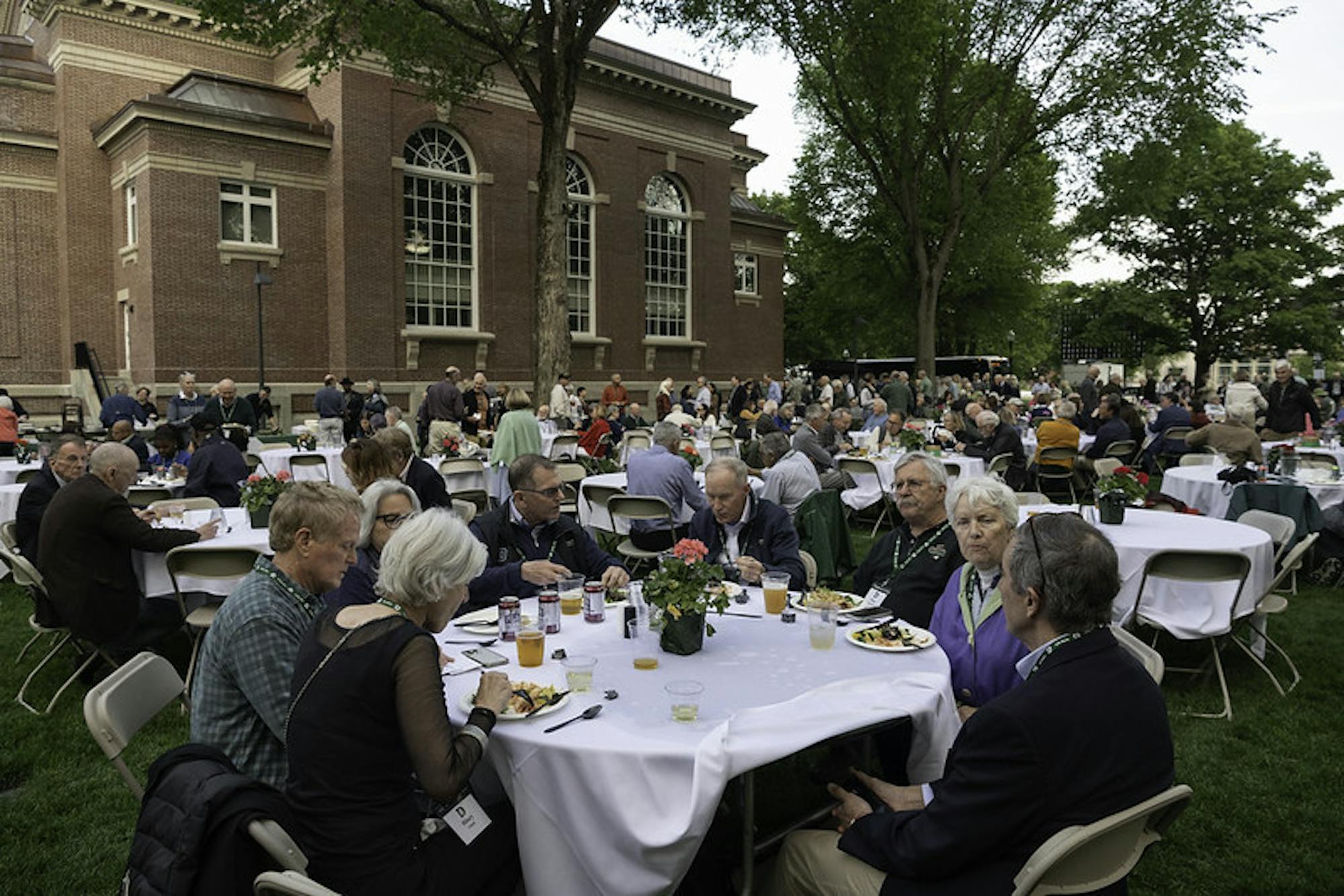
In June, on Saturday night, we had a big party on the Green with bands and pyrotechnics. It was a really fun atmosphere.
The staff and team that work on reunions are incredible. It’s not just alumni relations, it’s everyone across campus: the Conferences and Events Office, marketing and engagements, Division of Student Affairs, the Office of Greek Life, the academic departments, the Hopkins Center for the Arts and the Hood Museum of Art. It really is a community effort, and seeing everyone come together is really exciting.
This interview has been edited for clarity and length.
Elizabeth Ray ’27 is a reporter and editor from Montgomery, Ala. She is studying history and sociology at the College.