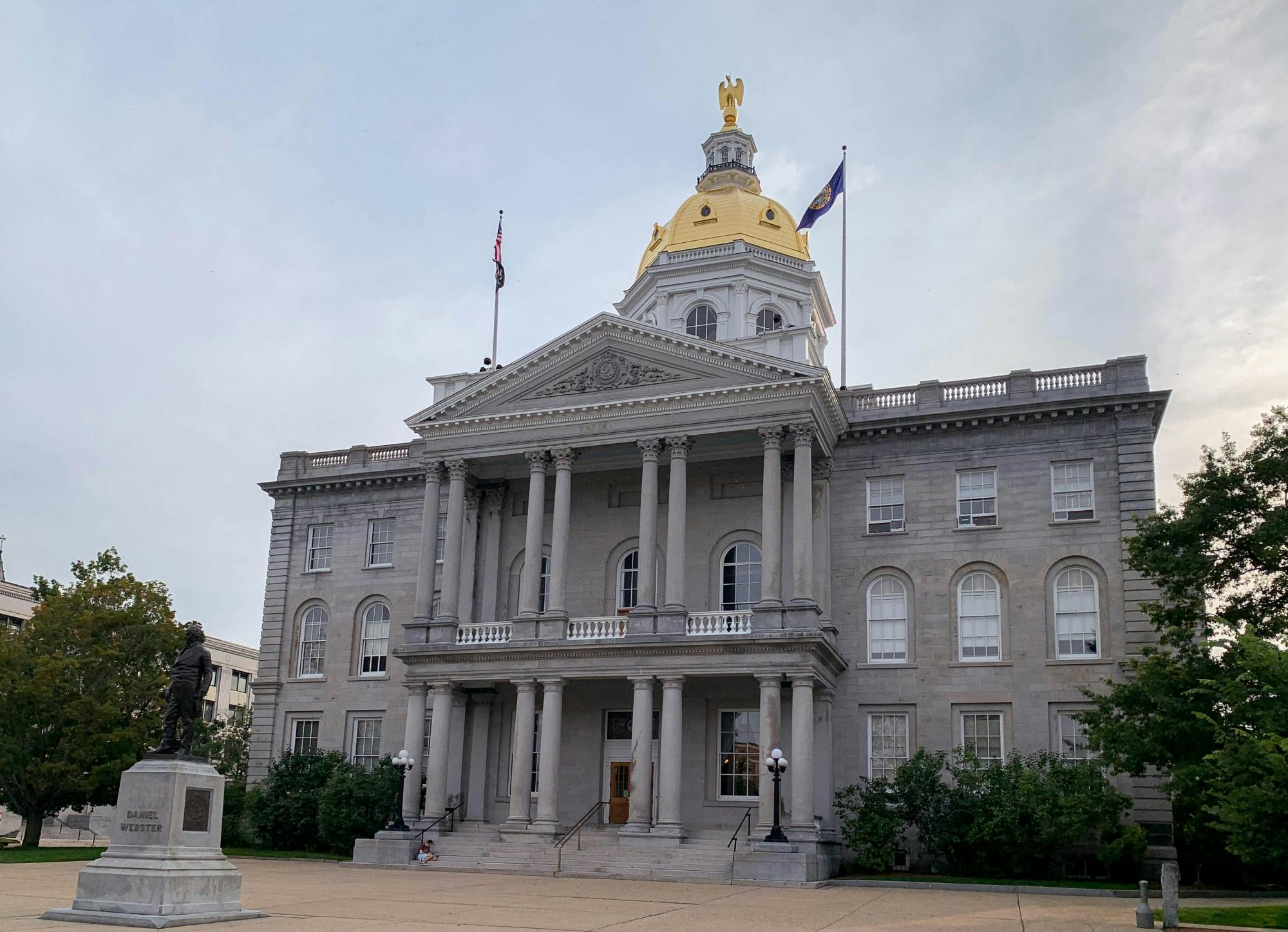
New Hampshire has the lowest amount of funding for higher education in the country, according to a recent study by the New Hampshire Fiscal Policy Institute that ranked all 50 states. The study comes less than two months after New Hampshire approved its 2026-2027 state budget, which cut funding for the University System of New Hampshire by 17.6%.
The study compared state funding for education from tax appropriations and non-tax funds, such as lottery revenue, using data from the State Higher Education Executive Officers Association, a nonprofit organization. Further, the study found that half of New Hampshire’s top ten occupations require employees with at least some college education, and that underinvestment in public higher education may increase tuition and fees for in-state students and families.
Senior policy analyst at NHFPI Nicole Heller, who wrote the study, said its findings should serve as a “wake-up call.”
“Underfunding our public colleges and universities not only makes it harder for Granite Staters to afford to pursue college degrees, [but] it also risks leaving the state unprepared to meet its workforce needs,” Heller wrote in a press release.
At a meeting of the New Hampshire State House in April, State Rep. Dan McGuire, R-Merrimack, said the cut to the university system was his “personal favorite” in the new budget.
“Seventy percent of the adults in New Hampshire are not college graduates,” McGuire said. “We tax them and give money to the university system.”
Government professor and state Rep. Russell Muirhead, D-Hanover, said that cuts to the university system are “placing higher education out of the reach of the working class.”
“The key question is what it actually costs to send your child to university [and] what kinds of financial aid are available to families in the working class who want to send their child to UNH,” Muirhead said.
“Dan McGuire thinks that if you didn’t go to college, then you have no interest in a public higher education system, and I think that’s completely false,” Muirhead added. “We have an interest in a community in which all young people can develop their skills and their abilities to the extent necessary to thrive and to share in the promise of American life.”
Muirhead added that ever since the College won its 1819 lawsuit to avoid becoming a state university, Dartmouth has “turned its back on New Hampshire [and has] regarded itself as a global institution.”
“We could commit to educating more students from New Hampshire; We could commit to admitting more graduates of New Hampshire public schools and we could commit to supporting the community colleges or state university system,” Muirhead said. “If that’s something that the Board of Trustees thought was important.”
North Park senator Jude Poirier ’28 said Dartmouth students have an “obligation” to give back to the College’s surroundings. He encouraged students to get more involved in the Upper Valley community, outside of Hanover.
“I wish that more people were getting involved in ways they could, like registering to vote in New Hampshire [or] doing nonprofit work with the Dartmouth Center for Social Impact, Strengthening Educational Access with Dartmouth, Outdoor Leadership Experience or Growing Change,” Poirier added.
Muirhead pointed to what good education does for businesses in New Hampshire. He echoed the NHFPI study, which stresses “investing in our students” to “help grow our workforce and improve the Granite State’s economic future.”
“Our businesses need young people who are coming out of school at age 21, 22 or 23 with real training,” Muirhead said. “Are they able to count on getting that in a situation where it costs $20,000 a year to send your child to the state university?”
Jackson Hyde ’28 is a senior news reporter, who writes about artificial intelligence and technology at the College. He is from Los Angeles, Calif., and is majoring in Government modified with Philosophy.