
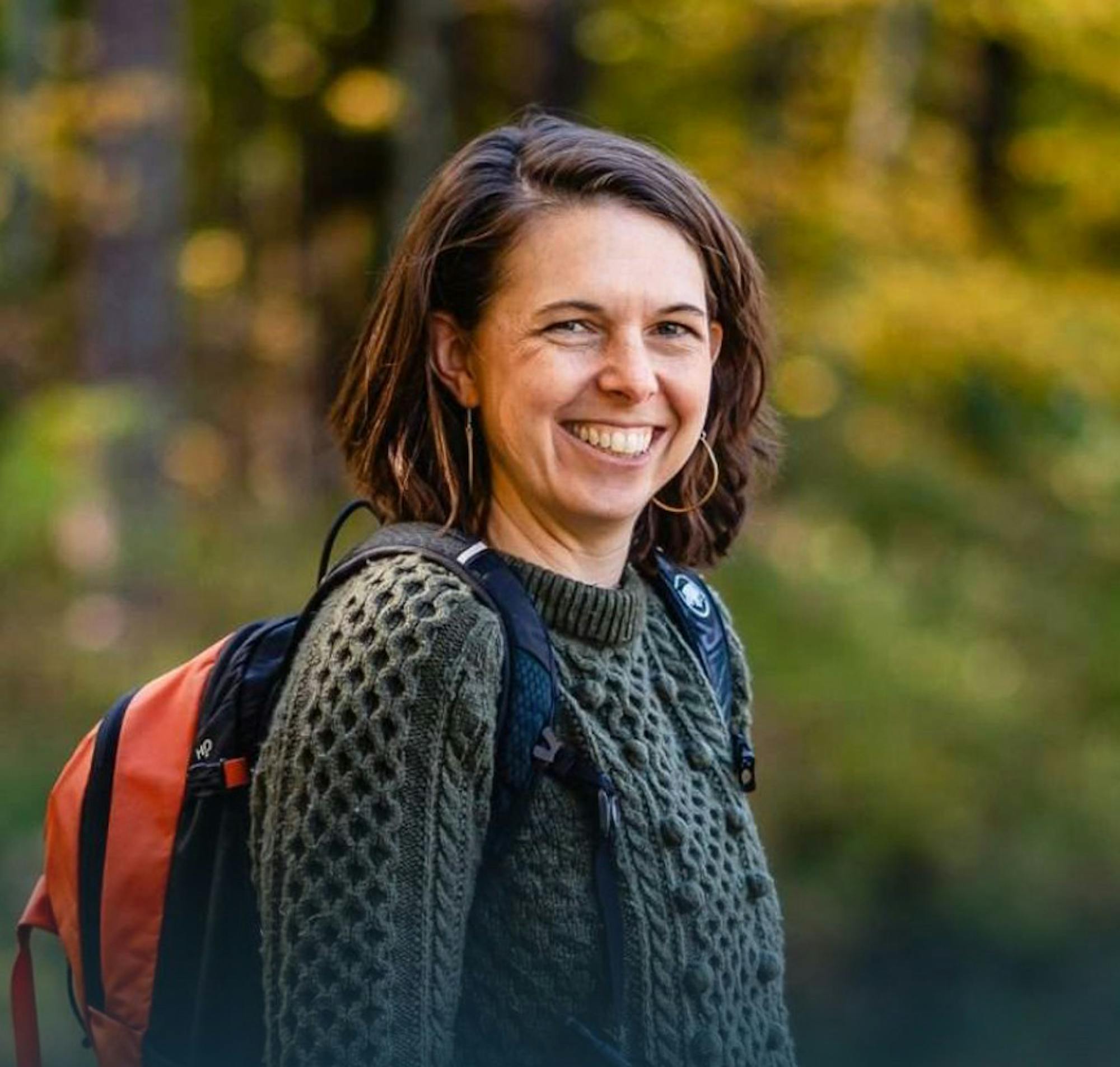
Sarah Koff is a woodblock printmaker and environmentalist who lives in the coastal woods of New Hampshire. With a background in natural resources and environmental journalism, her intricate prints tell the stories of her local environment and highlight current environmental issues affecting the region.
In 2024, Koff was selected as one of four Juror Recognition Award winners by the Alliance for the Visual Arts Gallery in Lebanon, where her exhibition “Object Permanence” is currently on display alongside works of the other winners from July 11 to August 9. Koff also shows her work at the annual League of New Hampshire Craftsmen Fair in Newbury, N.H. Koff sat down with The Dartmouth to discuss her artmaking process and exhibition at AVA.
How did you get your start as an artist? What inspires you?
SK: I got my start as an artist when I was actually in graduate school for natural resources. I took my very first block printing class, and I absolutely loved it. My conviction is that everyone should have some sort of connection to the natural world. I became an environmental educator because I grew up very, very connected to the outside world, and when I was in college, I learned that not everyone had that connection.
I wanted these connections to grow for people, so that they could feel a little bit of ownership over the natural world. And, in that way, all these little connections could grow to more of a global sense of stewardship and responsibility. I think art provides people with a way to connect to the natural world, and I just happen to really love making wood cuts.
What do you love about the particular media of woodcutting and printmaking?
SK: I just love the smell of wood; I love the feel of it. I’m a very tactile person, so I love the physical act of carving. I also love that it’s a very, very slow process. You can’t just whip it out. The work that I do does not take a day — it takes months. I like the slowness of it because I tend to process things a little bit slowly; not just the concepts that the art is inspired by, but also how I’m going to make it.
Also, I just love the look of it. It has all these different phases: there’s the sketching phase, carving phase and then the printing phase, which can take a really long time, too. It is so fun and challenging to choose the different inks, choose the levels of transparency and play around with ways to mess it all up and put it on its head.
A lot of your work in the AVA Gallery exhibition deals with invasive species. What drew your interest to the subject, and how did you try to engage with it in your work?
SK: I really love plants, so I’m drawn to ecological problems — particularly because that’s just where my comfort is and where my training is. So I love to make plants my focus and tell their stories through my printmaking. In this exhibit, I wanted to show the Japanese Knotweed, for example. It’s a beautiful plant; when you go out in the fall and see it, it’s gorgeous, but it also basically makes a mat under the soil so that no other plants can ever grow there. I wanted to show the juxtaposition between the beauty and the horrific nature of this plant.
Some of the other themes included the chemicals that are seeping into our waters and soils and air --- through just our cultural use of a lot of things that we have come to think of as normal, like Teflon products --- and just bringing some awareness to that through print.
You also think a lot about the environmental impact of your art-making process. Do you think this is common in the art world today?
SK: I work with a school called Zea Mays Printmaking down in Northampton, Massachusetts, which is a specifically non-toxic printmaking studio. I take a lot of classes with them, and I just finished a mentorship with them. So I might be a little biased in what I’ve seen, but I’ve seen a lot of printmakers really caring about that sort of thing, so I do think it’s on the rise.
How has the local environment informed your work?
SK: The seacoast where I live, and New Hampshire in general, is certainly a source of great inspiration for me. I think it’s important for me personally to get outside very regularly — for my mental health, but also just for balance and seeing the different changes in the world around me. My inspiration is fully from my backyard and the natural areas around me: the coastline, especially in the off-season; the marshes and forests.
I think it’s important to really get to know one’s backyard, wherever that is. I try really hard to get to know mine — to know all the trees and know all the animals that are out there and all the birds that come to my feeder.
What do you hope people take away from your work?
SK: I want people to look at my work and feel something: feel curiosity, want to learn more. Also feel maybe even confusion, like ‘What is that chemical compound and why is it in the lettuce?’ Ultimately, I hope that people feel inspired or activated to do things related to environmental stewardship — whether that is to vote a certain way or send money to that conservation association or organization.
What theme or project currently interests you?
SK: The concept of how in nature, organisms tend to have to work together in order to survive, and thinking about showing that graphically. I’m interested in pursuing that a little further because I feel like that’s an interesting metaphor for our politics right now — how we need to work together a little better — so I’m curious about learning more about that in nature.
This interview has been edited for clarity and length.
Avery Lin ’27 is an arts editor and writer from New York City. She studies Comparative Literature, including French and Classical Greek, at Dartmouth and also writes for Spare Rib Magazine.


