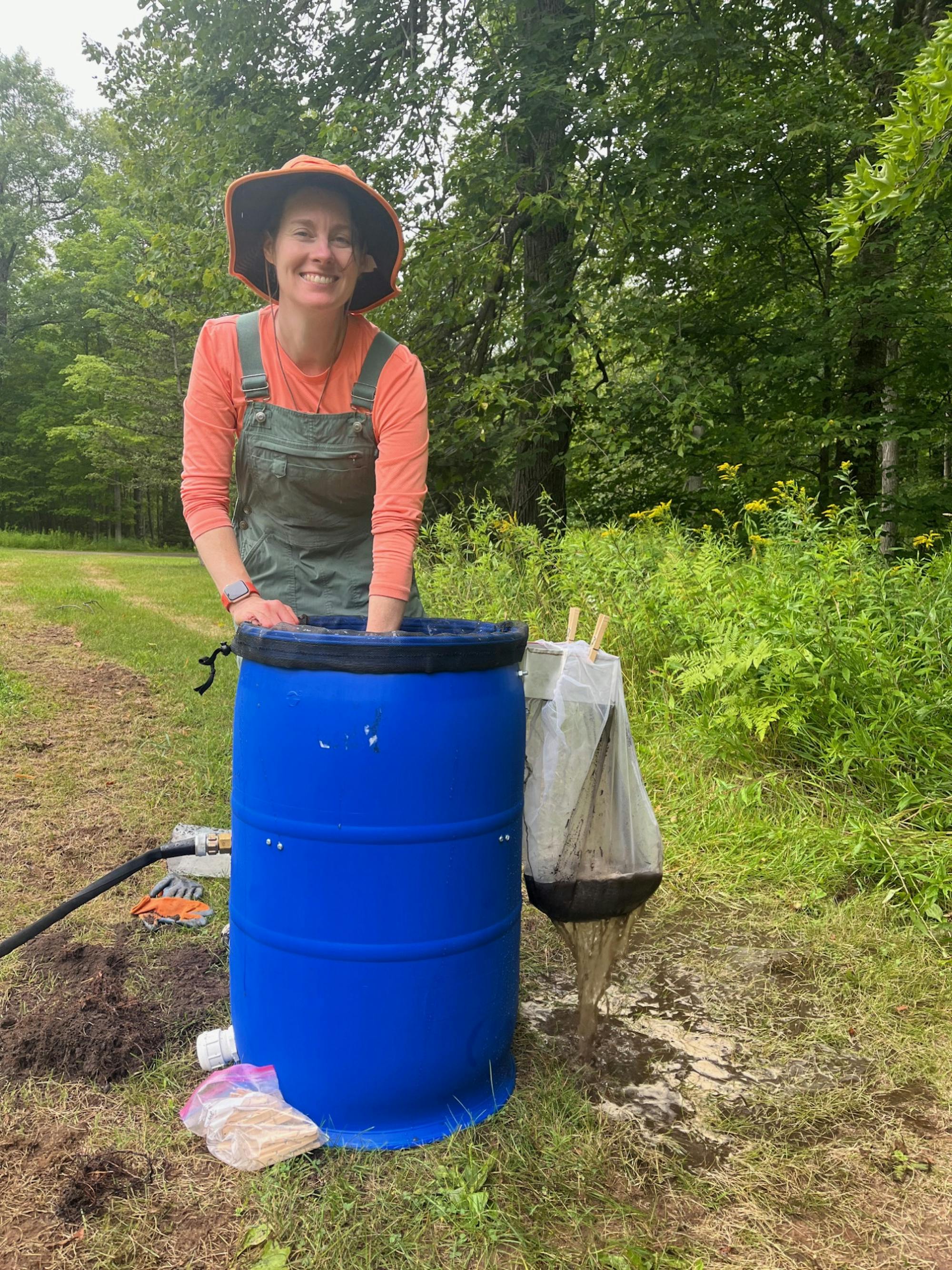
In a new study, a group of archaeologists led by anthropology professor Madeleine McLeester found that from A.D. 1000 to 1600, farming was extensive among Native American communities at the Sixty Islands site in Wisconsin, complicating widely held notions in current archaeological theory. At Sixty Islands — which is the largest preserved ancestral native American cornfield in North America — McLeester and her team examined soil-building techniques, ridge maintenance and connections with nearby villages. McLeester spoke to The Dartmouth about her career and her ground-breaking study, which has garnered national attention in the New York Times.
What were some of the biggest challenges that you and your team faced during the field work at Sixty Islands?
MM: The bugs are real. There are a lot of mosquitoes and a lot of ticks. We also had some unpleasant interactions with the mining company and general logistical difficulties.
One thing was that we had a really tight window to do the work, and that window is when the snow has melted, but leaves are on the trees, so you can’t really plan for that. We kind of had to be ready to go on very short notice, and that meant clearing our personal and academic schedules.
How did your collaboration with the Menominee Nation shape the goals and ethics of this project, and what should other researchers take away from that partnership?
MM: We did not discover this site. It’s a known archaeological site, and the Menominee Native American tribe has been working for decades to preserve it from outside forces, the biggest one now being mining operations. They got the area listed on the National Register of Historic Places, and that’s thanks to the work of Wisconsin archaeologist David Frederic Overstreet. They recognized the importance of this site. It was discovered in the 1990s but was published in an edited volume and never got much attention.
It was the Menominee who came to us saying, ‘Hey, archaeologists aren’t paying attention to this site.’ This is a really important site, and they asked for help in getting the word out, protecting it and surveying it. The site then turns out to be much larger than previously thought. It’s now unequivocally the largest preserved ancestral Native American cornfield site in eastern North America.
Collaborative projects like this allow for a much deeper understanding of the landscape. Someone coming in alone wouldn’t have the same insights. This shows the value of collaboration, since the Menominee knew the importance of the site and pushed to start the project.
Considering the 600-year duration of farming at Sixty Islands, do you think we should expand our expectation for what is “sustainable” in today’s context?
MM: I do. In eastern North America, native communities often farmed a spot for a while, then moved to let the soil recharge. What’s unique about Sixty Islands is that they were actively making the soil, adding materials and rebuilding ridges to keep it productive. That allowed for long-term cultivation. We don’t know if the full area was used continuously over 600 years, but we do know the ridges were rebuilt, showing intentional and sustained agriculture.
Sites like Sixty Islands have survived partly because they weren’t suited for modern farming, which suggests even more intensive agricultural landscapes may have been lost elsewhere.
What was it like to see your research featured in The New York Times?
MM: It was pretty great! Any work that you dedicate so much of your time to as academics, you think is so important. And, you’re always trying to help others understand that importance. It’s very rewarding because it means that other people are seeing how important the work is. In the case of this particular site, we’re helping to protect it, which is really critical because these archaeological sites are so rare and very fragile.
What would you like both policy makers and average citizens to understand about the importance of this site and others like it?
MM: I want people to understand that the past is so rich. There’s remarkable archaeology all over the United States. New technologies are helping us enter a golden age of archaeology, where things that were once hard to see are becoming clear. We often imagine the past in our own terms, but it’s usually much more interesting than we can conceive. That’s the fun part — archaeology is so often unexpected. People did remarkable, surprising things and that opens up new ways to think about our own society.
This interview has been edited for clarity and length.
Jeremiah Rayban is a reporter and editor for The Dartmouth from Wilmington, Del., majoring in economics. Outside of The D, he enjoys reading, art and trivia.