
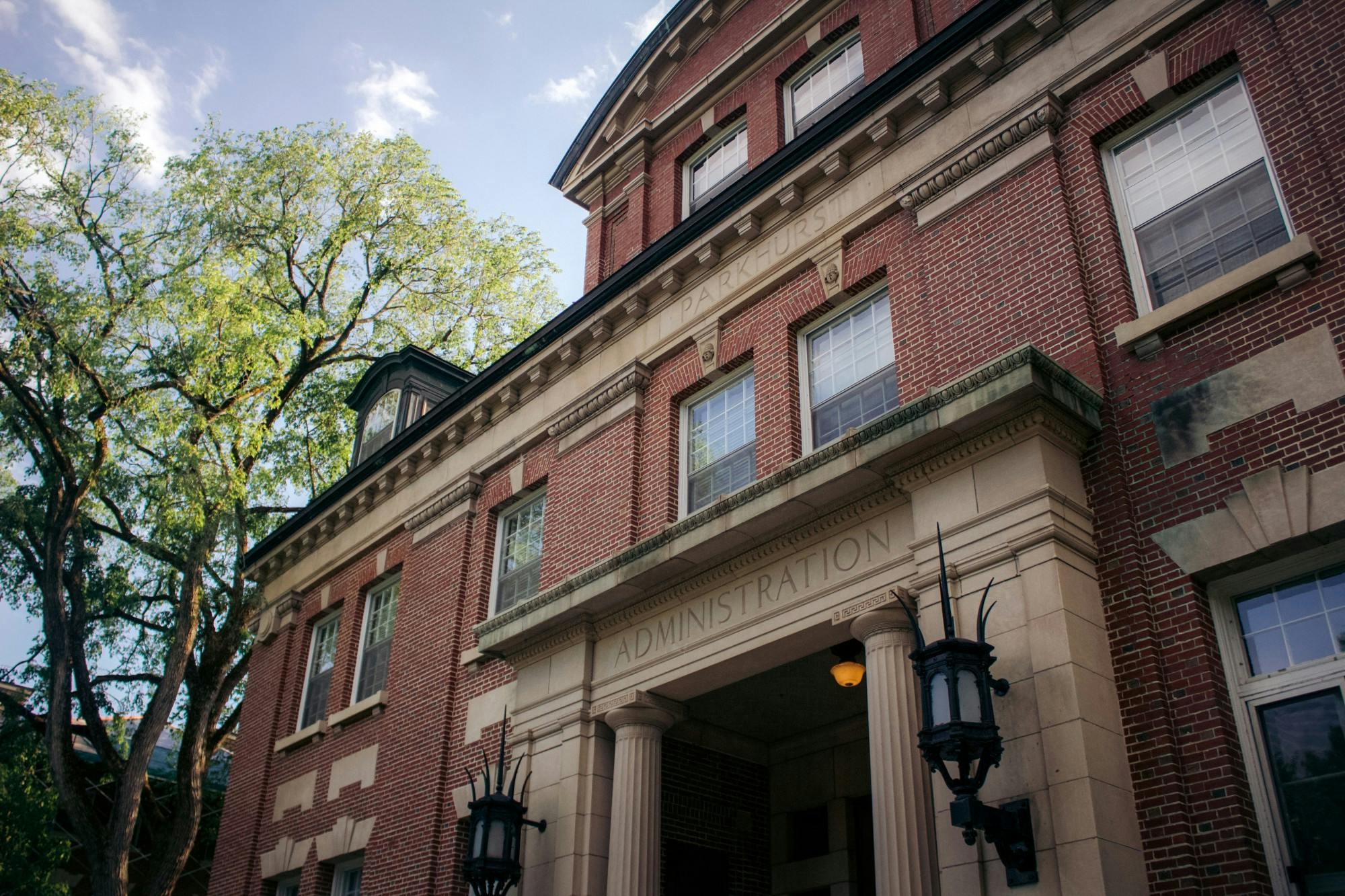
A federal antitrust lawsuit filed on Aug. 8 in the U.S. District Court for Massachusetts accused Dartmouth and 31 other colleges and universities — including Columbia University, Cornell University, Duke University and the University of Pennsylvania — of conspiring to inflate tuition through binding early decision admissions.
“Defendant schools have mutually agreed not to compete for students accepted through early decision, which both raises prices for tuition and other services and entrenches a system widely acknowledged to be unfair and harmful,” the plaintiffs’ complaint reads.
Early decision applicants apply to one college that they commit to attend if admitted, often before knowing their financial aid award. Although early decision is not a legally binding contract, admitted students are strongly discouraged from applying to other schools and may face repercussions, such as losing offers of admissions, if the student does so.
The suit — which was brought by three current students and a recent graduate of the defendant schools — says this “ethical obligation” represents a “horizontal agreement between schools to reduce competition,” while the lack of a binding contract means that schools “can charge the tuition they deem appropriate, or offer any student financial aid packages they deem appropriate without facing legal claims that implied financial terms were violated.”
Benjamin Brown, managing partner at Cohen Milstein, one of the firms representing the plaintiffs, argued in a press release that early decision admissions hurt all applicants.
“Early decision applicants lose choice and negotiation leverage, while regular decision applicants are left to scramble for an artificially diminished number of admission slots doled out at lower acceptance rates,” Brown said. “We contend that all of this is only made possible by an agreement not to compete that violates bedrock antitrust law.”
The complaint claims the defendant schools use early decision to accept a “substantial portion” of their incoming class each year, with “well known and understood” increased chances of admission for applying early. Forty-nine percent of the Class of 2028 were enrolled through the early decision process, according to the Dartmouth Admissions Office website.
College spokesperson Jana Barnello declined to comment on the case.
The complaint also names the Consortium on Financing Higher Education, a group of 32 private universities committed to fully meeting demonstrated financial needs of students, and the application platforms Common Application and Scoir — which runs the Coalition Application — as defendants. The suit alleges they “facilitated the information sharing and policy coordination among the school defendants.”
The lawsuit seeks class-action status, damages for students who allegedly paid more because of the policy, an injunction to eliminate binding early decision programs and “broad structural reforms in how colleges conduct admissions and deliver financial aid going forward,” according to the plaintiffs’ press release.
The suit comes amid increasing public concern about the rising cost of higher education. According to the Education Data Initiative, tuition at private four-year institutions has increased 181% over the last 20 years, outpacing inflation. The plaintiffs argue that this financial pressure is compounded when students are “prevent[ed] from receiving and comparing [financial aid] offers from other schools.”
The cost of attending Dartmouth increased five percent for the 2025-2026 school year, from $90,813 to $95,490. Since 2015, the median annual increase in tuition is 3.85%, according to the Dartmouth Office of Institutional Research.
The new filing comes less than two years after Dartmouth agreed to pay $33.75 million to settle a 2022 antitrust lawsuit that accused 17 universities of colluding through the 568 Presidents Group — a consortium of elite private colleges and universities — to limit financial aid awards. That case alleged the schools formed a “price-fixing cartel” that disadvantaged middle- and working-class applicants.
Iris WeaverBell ’28 is a reporter and editor. She is from Portland, Ore., and is majoring in economics and minoring in public policy.


