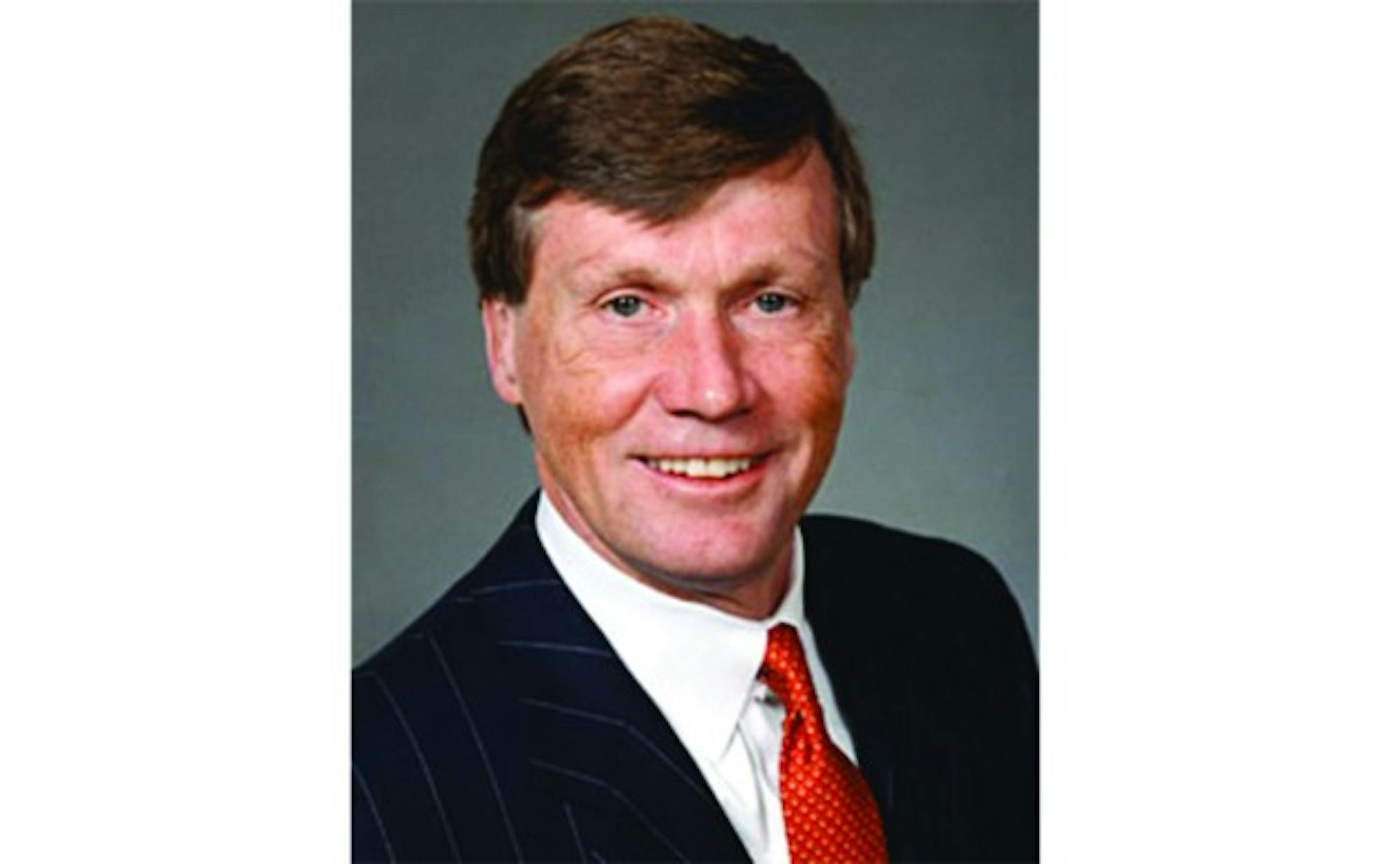
When Haldeman was offered the CEO position last June, he was hesitant about assuming command of the beleaguered government-sponsored loan organization, he said.
Freddie Mac, which borrowed approximately $50 billion from the government at a 10 percent interest rate to stay afloat, has had six CEOs in six years. The company's reputation was tarnished after an accounting scandal in 2002, and some politicians have also blamed it for the 2008 housing crisis.
Haldeman has been working to improve Freddie Mac by building a culture of "openness and directness," enforcing ethical behavior, developing communication values and instilling a sense of mission in his 6,000 employees, he said.
Motivating employees is especially important because of the uncertainty surrounding Freddie Mac's future, Haldeman said.
In the next 18 to 24 months, the company which is currently under government conservatorship will transition into either a government agency, private company or quasi-public company, he said.
Haldeman faces the challenge of recruiting new employees while retaining current employees and keeping their morale high as the company faces the transition in the coming months, he said.
"The way we try to do it is to be as open and direct with people about what's going on, to be visible with them, to admit we don't have absolute certainty about the future," Haldeman said in an interview with The Dartmouth. "We try to give them a sense of mission about what we are doing today and how important it is, and trying to have them less focused on the future."
In an effort to boost company morale, Haldeman has been visiting with employees, and he said in the interview that answering employees' questions at coffees and lunches is his favorite part of the job.
In his lecture, Haldeman also addressed the challenge of repairing Freddie Mac's damaged reputation.
"The best way we can help improve our image and reputation is by working hard and doing things to help American families," Haldeman said. "It's through our actions that we are trying to shape the reputation, not by entering into an aggressive debate about who is responsible."
Nine months after assuming the position of CEO, Haldeman described Freddie Mac as a "great place" for him and a "welcoming community."
He is less optimistic, however, about the housing market and does not expect it to recover this year, he said.
"We are in a bottoming period," Haldeman said. "It is not possible to say precisely when we will see an improvement, but I don't think it will occur until after we see some improvement in the rate of unemployment and we see jobs pick up."
In addition to high unemployment rates, the large number of potential home foreclosures is dampening a potential recovery, Haldeman said. Currently, 5 million families are 90 days delinquent on their mortgages, he said.
Freddie Mac plays a critical role in maintaining the housing market by ensuring that the mortgage market is liquid and interest rates are low, according to Haldeman.
The company is also attempting to prevent foreclosures by implementing President Barack Obama's Making Home Affordable program, which allows individuals to modify or refinance their mortgages to make monthly payments more manageable he said.
"Freddie Mac has always been very active in trying to help people keep their homes," Haldeman said.
Haldeman pointed to Freddie Mac's Forbearance program, which allows unemployed individuals to temporarily stall mortgage payments and was implemented before Obama took office.
Before being named CEO of Freddie Mac, Haldeman served as president and CEO of Putnam Investments, where he was credited with successfully responding to a major regulatory scandal at the company in 2003. Haldeman later joined Dartmouth's Board of Trustees in 2004 and was elected chairman in 2007, The Dartmouth previously reported. Stephen Mandel '78 will succeed Haldeman in June as board chairman at the conclusion of Haldeman's three-year tenure.
A major contributor to the College, Haldeman and his wife donated $10 million in 2004 to support the construction of the Haldeman Center, which houses the Dickey Center for International Understanding, the Leslie Center for the Humanities and the Ethics Institute.
During his time at Dartmouth, Haldeman majored in economics, graduating summa cum laude before attending both Harvard Business School and Harvard Law School, The Dartmouth previously reported.