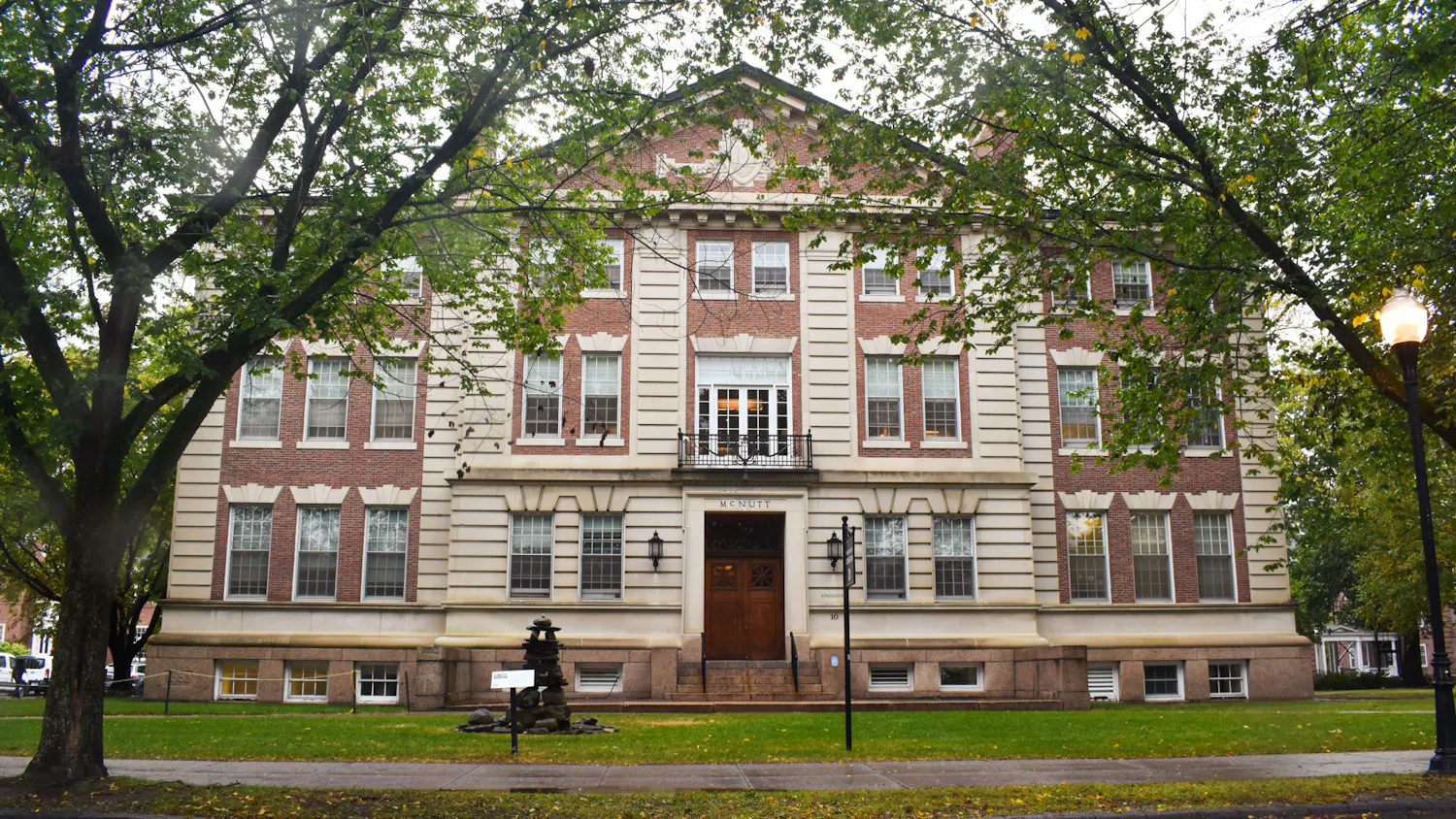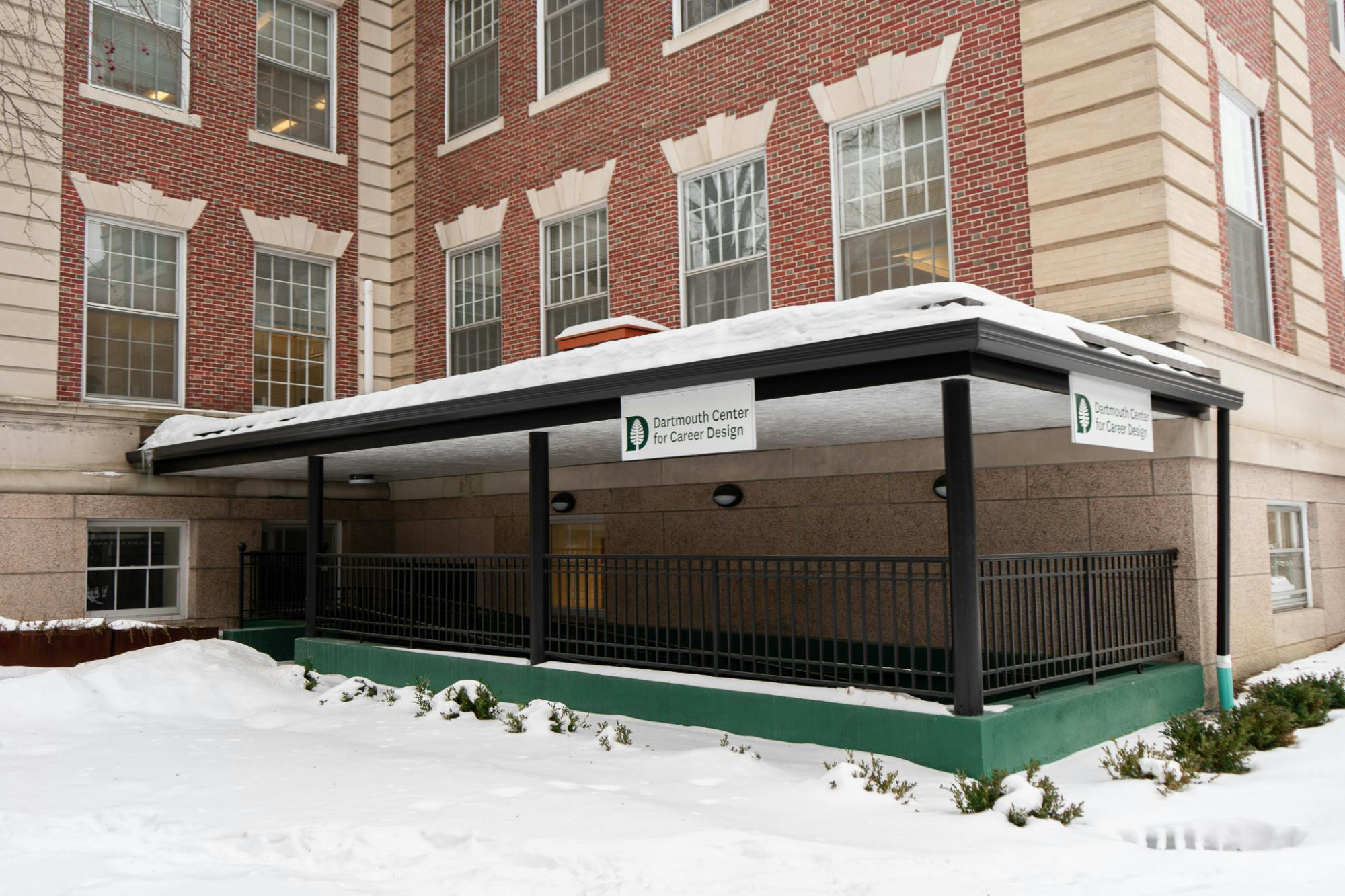
The Dartmouth Center for Career Design has raised $30 million in endowed gifts to support internship opportunities for undergraduate students, the College announced last month.
The Jan. 12 announcement comes as College President Sian Leah Beilock has publicly emphasized career development as a priority for her administration. In a Jan. 25 Wall Street Journal op-ed, for example, Beilock wrote that “there must be an undeniable return” for students who receive a college education.
“Institutions should be held accountable for student outcomes: Are our graduates getting jobs, pursuing meaningful work and contributing to their communities?” Beilock wrote.
In an interview with The Dartmouth, DCCD executive director Joseph Catrino said internships are now “critical” rather than “optional.”
“We want you as students to go out there and get experience,” Catrino said. “We want you to develop those skills and be able to talk about them.”
Catrino said part of the $30 million in new funding will go to providing $1.2 million per year to fund unpaid or low-paid student internships.
Students are “going to be able to say, ‘I can do an internship at a nonprofit organization that doesn’t pay, because I’ll be able to get funding from Dartmouth,’” Catrino said.
Catrino added that aside from internship funding, the DCCD offers one-on-one coaching to help students “make informed decisions” about their careers.
“We really want to help you unpack the things that you’re interested in, the things that get you excited,” Catrino said.
In interviews with The Dartmouth, students had feedback for where the DCCD could improve.
Aryan Bawa ’27, who studies computer science, said that more “industry-specific” advising could help students in their job searches, such as someone with a “deeper knowledge of what a good CS resume looks like.”
Kevin Guo ’26, who also studies computer science, said that he has been to the DCCD for advice on his resume and cover letters. He said he has found some of their advice to occasionally be “overly nice” and not a source of substantial criticism.
“I think it would be helpful to just be more direct and be like, ‘you need to change this,’ versus being like ‘everything looks pretty good,’” Guo said.
Separate from the new funding, the DCCD is also partnering with the Guarini Institute for International Education and various faculty departments to establish more opportunities for students’ to participate in internships in foreign countries.
The Dartmouth Initiative for Middle East Exchange is a program offering 15 to 20 different internships for Dartmouth students in Morocco, Tunisia, Kuwait, Saudi Arabia, Jordan and the United Arab Emirates. Program director Jonathan Smolin called DIMEX a “model for international internships at Dartmouth.”
“We are developing rigorous, innovative, experiential learning opportunities across the Middle East and North Africa, typically in the form of internships on off-terms … with major industry partners in different fields, like energy, humanitarian work, finance, computer science,” he said.
Smolin added that international internships support students’ abilities to work in “politically- and culturally-complex environments.”
“They’re going to be getting important workforce training and skills that are relevant to careers … that are going to be essential for understanding the world today,” Smolin said.
Gayathri Srinivasan ’26, an economics major who is interested in finance internships, said she felt that “a lot more” students are recruiting for international internships now than in the past. She added that, in particular, her friends who are international students have been looking for internships outside of the U.S.
“[My international friends] are looking for jobs outside of the U.S., and I feel like it’s become a lot more popular,” Srinivasan said. “Especially due to recent changes in the government.”
Since entering office, the Trump administration has imposed fees on U.S. companies which hire international workers, according to The New York Times.
Phyo Thiri Thu ’26, an international student, said she felt that the College could “do a better job [with] the alumni support networks.” Thu added that allowing students to access the alumni directory — an online portal with contact information for all College alumni — would be “really helpful.”
“You only get access to the alumni [directory] page after you graduate,” Thu said. “If we had access to that earlier, if you want[ed] to look at places like Dubai or London, you [could] reach out to alumni in that area.”
Catrino said that artificial intelligence and the COVID-19 pandemic have caused “a lot of disruption” in job markets. Still, Catrino said that a liberal arts education at the College prepares students for “the future of work.”
“Most likely, the job that you’re going to do after you graduate doesn’t even exist yet,” Catrino said. “I think the liberal arts really provide that versatility and that ability to pivot and move around to different areas.”
Will Sánchez '29 is a reporter from Portland, Ore., studying government and psychology.
Eliza Dorton '29 is a reporter from Washington, D.C. and is studying English and public policy. Outside the classroom, she enjoys reading and going on walks.