
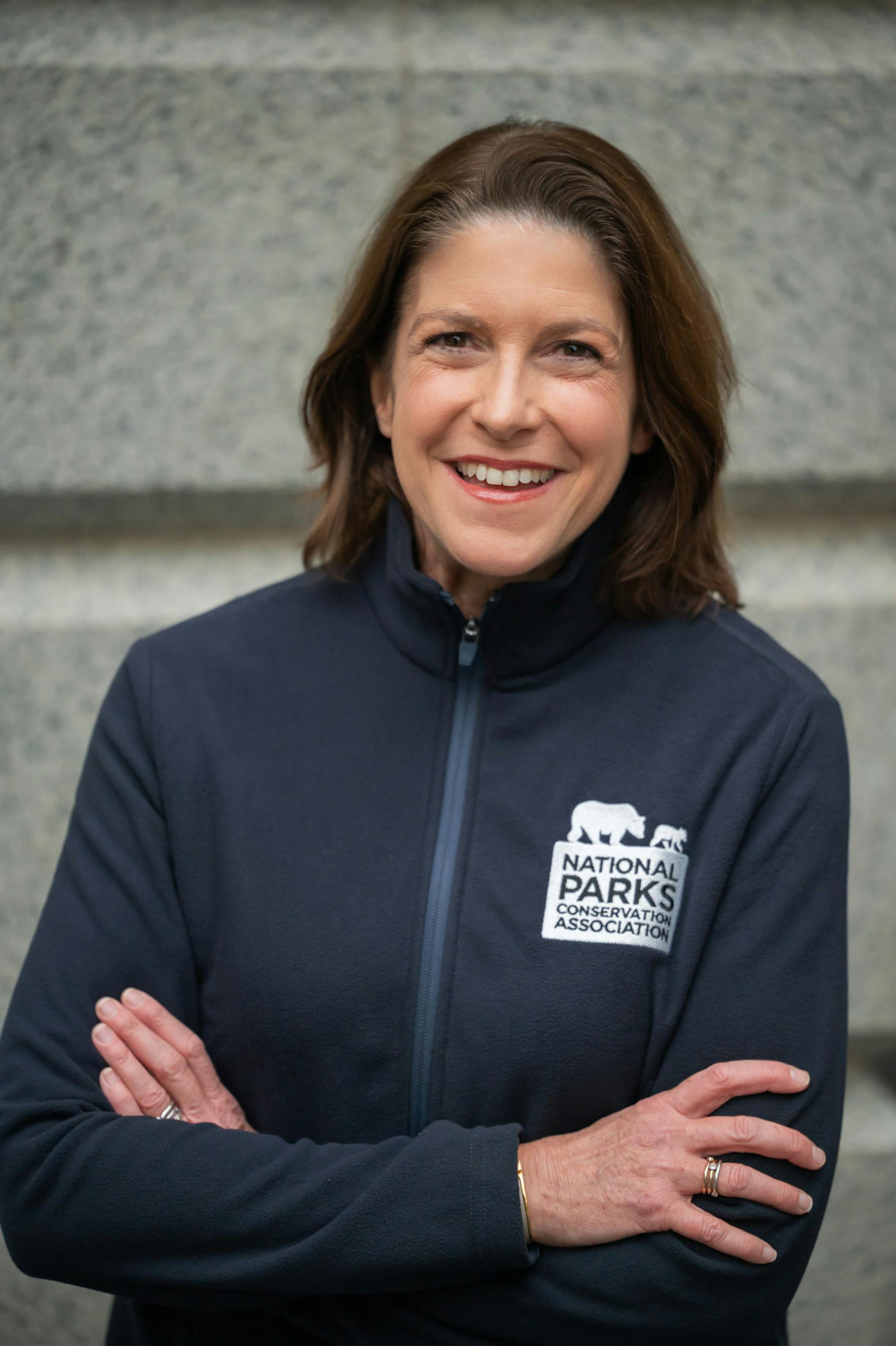
On Jan. 26, the National Parks Conservation Association board of trustees named Tiernan Sittenfeld ’96 as their next president and CEO. The NPCA, a non-profit which lobbies for the country’s national parks and promotes the preservation and expansion of public land, has over 1.9 million members nationally. Sittenfeld is leaving the League of Conservation Voters, an advocacy group focused on civic engagement and environmental policy, after two decades of service in legislative lobbying.
The Dartmouth sat down with Sittenfeld to discuss her career in conservation, her new work at the NPCA and her time at Dartmouth.
Can you describe your current conservation work with the League of Conservation Voters?
TS: I have led the government affairs team at the League of Conservation Voters for the last 20 years, working at the intersection of environmental conservation and politics. In that role, my biggest responsibility was to elect environmental champions and push elected officials in Washington, D.C., to pass generational legislation on climate change, clean energy, air and water, land conservation and environmental health issues.
How will your responsibilities change in your new role as National Parks Conservation Association CEO?
TS: I am so excited to focus on national parks and fight for them every single day. Here, I will not be as deep in the government affairs operation because I will be working to lead the entire organization. To get to work for national parks — which are so important for our country and at the core of what’s best about our nation — is so exciting.
I am starting this role at a time when our parks have never been more threatened. Parks are facing pressure from the climate crisis and pollution. In the direction of the [Trump] administration, there are ongoing efforts to erase our history by tearing down signs that document racism, sexism and the climate crisis in our national parks. There were pre-existing funding and staffing shortages in the National Park Service prior to this administration that have gotten significantly worse.

Alex Klee ’29 and Tiernan Sittenfeld ’96 speak in the offices of The Dartmouth following their interview on Feb. 4.
What is your approach to the current policy environment in Washington, D.C., with respect to the Trump administration and declining bipartisan support for conservation?
TS: Even as we continue to play effective defense, which my new colleagues have been doing so well, we also need to be preparing for better days ahead and going back on offense for our national parks.
One of the things that makes me really optimistic is that there continues to be overwhelming bipartisan support for protecting our national parks. While some issues are clearly more partisan than others, people love our national parks. Who doesn’t want to have beautiful public lands for now and for future generations? Who doesn’t want clean air and clean water? I’m really excited to be parks-first and work across the aisle to make sure that we are protecting our parks for current and future generations.
Was there a specific experience at Dartmouth that pushed you on this path towards public advocacy and conservation?
TS: Part of why I wanted to go to Dartmouth was that there was an environmental studies certificate, which was rare at the time. Going to school in such a beautiful place where there’s so much opportunity to spend time outdoors and to be with friends outdoors really helped nurture my love of the outdoors. Having the chance to go hiking, skiing at the Skiway or canoeing on the Connecticut River was incredible. The privilege of getting to spend four years in this idyllic place at this wonderful school was life-changing. The way I learned how to think critically, pursue what matters most to me and want to have an impact are all parts of what I take with me from Dartmouth.
Do you have any advice for students looking to work in conservation either in public advocacy, research or out in the field?
TS: Call me. In all seriousness. Students will find that there are many Dartmouth alumni in the climate conservation environmental space, all of whom would be eager to help welcome more Dartmouth grads into this critical work. There is a wide range of opportunities, whether it’s as an organizer, as an advocate, in the private sector or teaching young people about environmental issues and protections. I would like to do whatever I can to encourage the next generation to want to make conservation a career.
This interview has been edited for clarity and length.
Alex Klee ’29 is a reporter from Woodbridge, Conn. He plans to major in economics and minor in math. He enjoys live music, skating and climbing.


