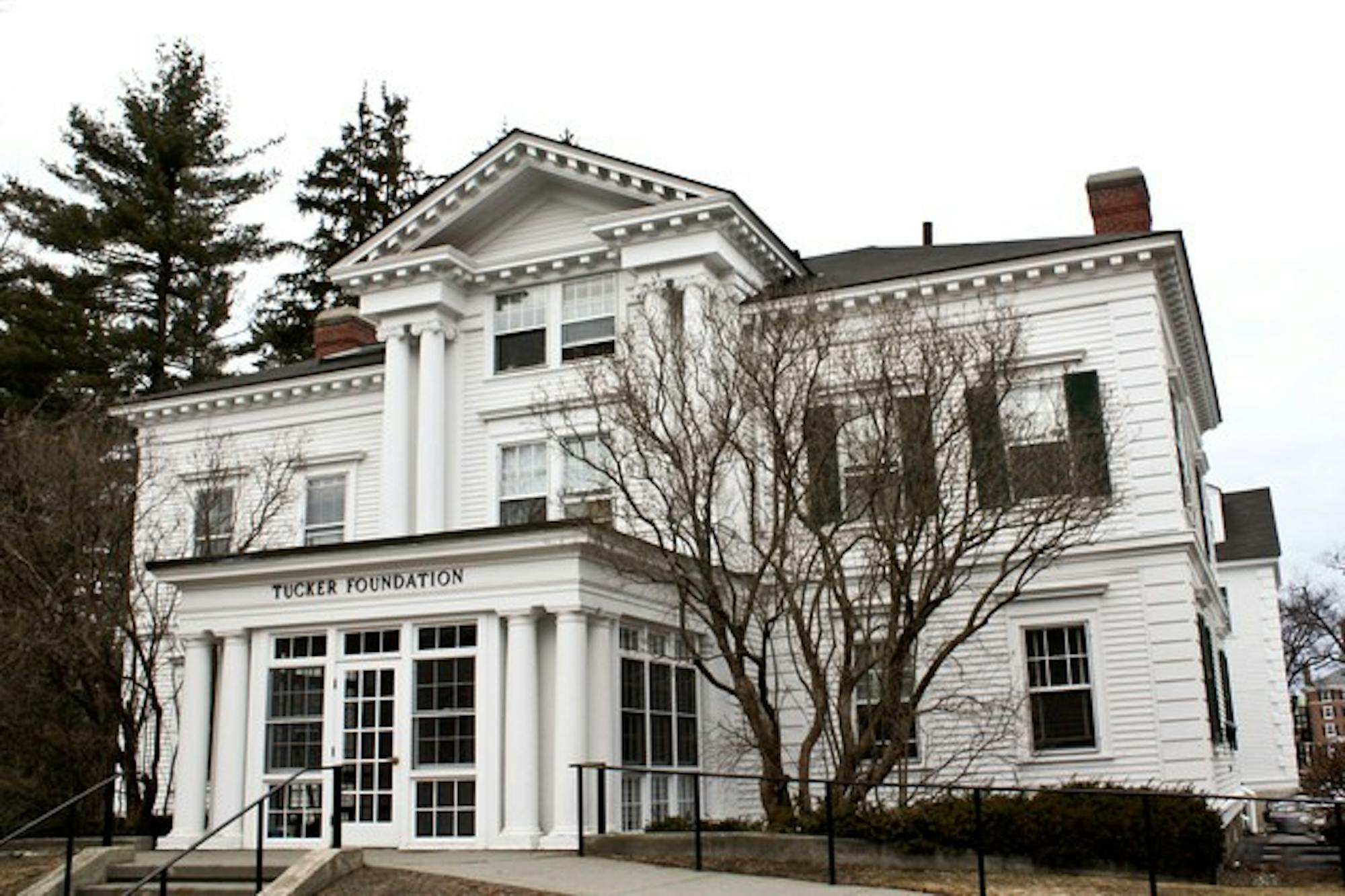
While the Rockefeller Center and Dickey Center both receive the majority of their funding from dedicated endowments, the Tucker Foundation is reliant primarily on donations to fund its operations, only receiving part of its funding from a dedicated endowment, according to the directors.
The Rockefeller Center will likely scale back its internship funding due to observed and expected endowment declines, resulting in either a smaller number of funded internships offered or a decrease in funding for students who receive them, according to Rockefeller Center Director Andrew Samwick.
Although the exact magnitude of the endowment's decline will remain unclear for several months, it will be "fairly significant," Samwick said.
The decline in endowment funds will make Rockefeller Center funding more competitive, Samwick said. The Rockefeller Center has sponsored more than 85 public policy and public affairs internships over the last two years, he said, providing up to $4,000 to each student.
Internship funding comes from two sources, Samwick said. Class and alumni donations, or "current use gifts" make up 25 percent of the Rockefeller Center's internship budget, with the remaining 75 percent coming from "dedicated endowments" set aside for internship funding from Dartmouth's general endowment.
"We will make whatever accommodations we can to make a smaller amount of money go almost as far," he said.
The Tucker Foundation sponsors approximately 40 internships for service in the United States and an equal number for service opportunities abroad per year, according to Tucker Foundation Dean and College Chaplain Richard Crocker. Each student receives between $3,000 to $4,000 in funding, he said.
Most of the funding for internships sponsored by the Tucker Foundation comes from the Class of 1959, Crocker said, along with contributions from other classes and money from the Dartmouth endowment. Like at the Rockefeller Center, Tucker Foundation fellowships are funded by a combination of alumni and class gifts and dedicated funds from the Dartmouth endowment.
Crocker hopes to maintain the number of internships and fellowships the Tucker Foundation sponsors, he said, although he acknowledged that a smaller endowment return is likely and that he may have to scale back the program.
The Dickey Center currently sponsors 50 internships each year, with a $4,000 stipend for each student, and will not decrease its offerings, Dickey Center Director Kenneth Yalowitz said.
The Dickey Center does not receive any money from Dartmouth and has its own endowment based on alumni donations, Yalowitz said. Because the Dickey Center's endowment is managed by the College, however, it closely tracks the performance of the College's general endowment.
Returns from the Dickey Center's endowment decreased by 20 percent this year, but the Dickey Center will nevertheless maintain full funding for its internship program, Yalowitz said. In order to do so, the Dickey Center has scaled back its Visiting Fellows Program, as well as travel, food and publicity expenses for events, Yalowitz said.
"Students are the top priority," Yalowitz said. "This is one of the most important programs that we do, to give students the opportunity to do leave term internships overseas."
Samwick, Crocker and Yalowitz agreed that internships are an important part of the Dartmouth experience.
"You should begin to apply what you learn in college in the world beyond Dartmouth when those experiences still have a chance to inform the rest of your college education," Samwick said.
Students often cite their service abroad or in the United States as "transformative" and "the highlight of their Dartmouth career," according to Crocker.
David Knight '10, who interned for the Amy Biehl Foundation in Cape Town, South Africa, said his experience teaching sexually-active teens about HIV/AIDS was "powerful," adding it would not have been possible without a Tucker Foundation Grant.
"I'm on financial aid here I needed to be supported and so the funding meant everything," Knight said. "Even the $4,000 was just barely enough."
Knight said any decrease in funding would be "very sad" and would inhibit students' ability to work abroad.
Kunal Arya '12, who received Rockefeller Center funding as a science policy intern at the National Association for Biomedical Research, also said the funding was helpful. If he had not received funding, he would have looked for better-paying opportunities, he said,
Daisy Duan '10, who assisted children at the China Rehabilitation Center for Children with Disabilities a government agency for children with physical and mental disabilities abandoned at birth near Beijing, said she valued the chance to give back to China, where her family originates from. Her work with the program also reinforced her choice of study once back in the United States.
"Being in that kind of clinical setting really reaffirmed my career path," Duan, who is a pre-med student, said. "It became something that I'm really passionate about."