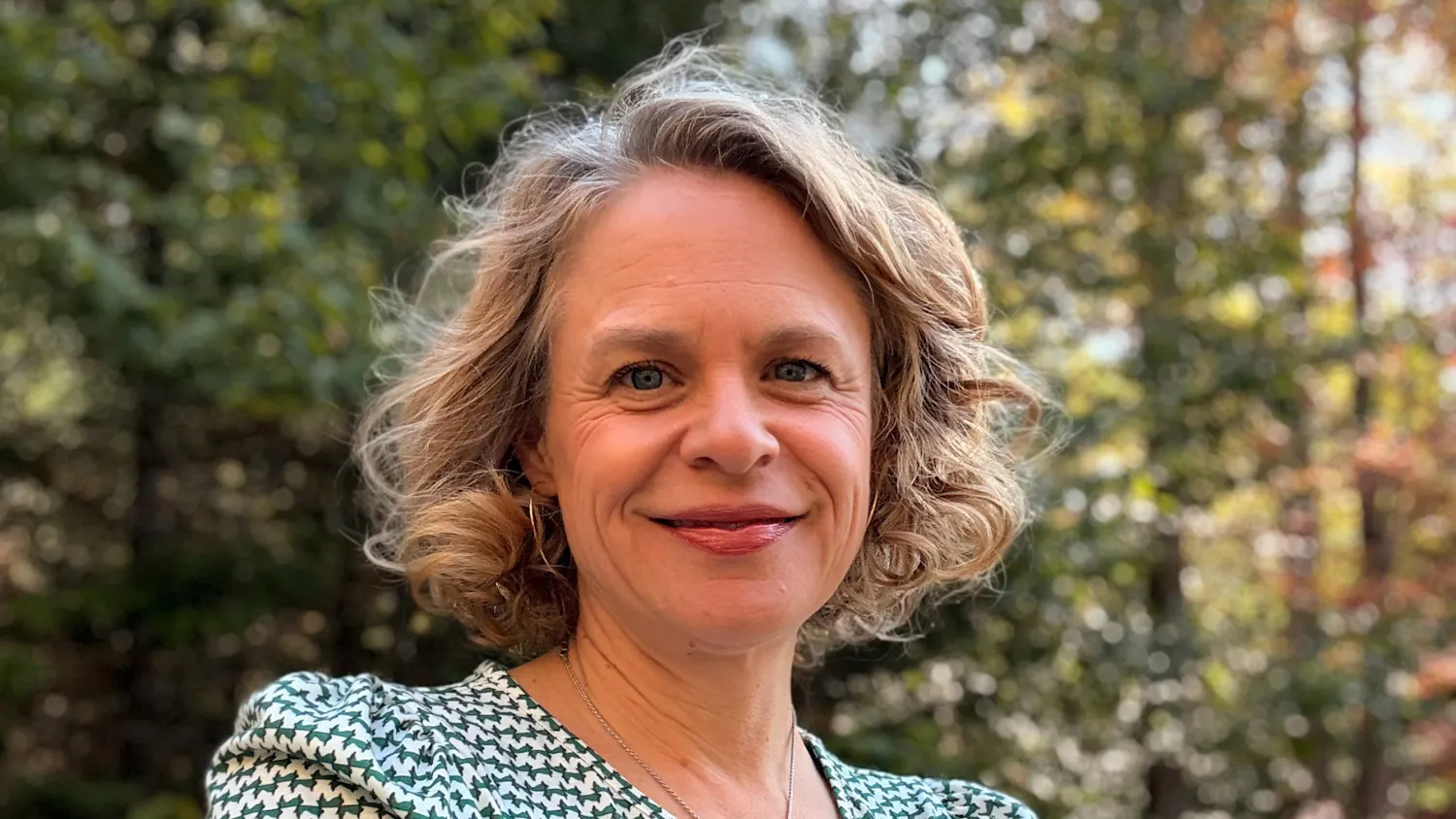
For ten years, acting Dean of the College Sylvia Spears sported leotards and tights to work as manager of a health and fitness center in the 1970s. Spears, now a top College administrator facing the reorganization of the Dean of the College office, dons more formal attire when she enters her office in Parkhurst administration building, but the communication and interpersonal skills she employs in her daily work remain the same, she said.
In grappling with the task, Spears has a varied reserve of personal experience to draw from, ranging from work as the tribal administrator of the Narragansett Indian Tribe of which Spears is a member, to past positions in university administrations, to lessons learned from her years in the performing arts and fitness world.
"I learned how important quality services are whether it's a customer, or a client or a student how important being responsive is, how important it is to have a welcoming environment in an office or in an organization," she said of her earlier position in an interview with The Dartmouth.
The reorganization of the Dean of the College's Office is part of the College's plans to cut $100 million from its budget over the next two years. As acting Dean of the College, Spears oversees undergraduate life at the College, including student life, student support services and administration.
Her work at Dartmouth is not the first time Spears has had input in planning a budget of millions of dollars. As a personnel director and then tribal administrator in the Narragansett tribal council in Charlestown, R.I., during the early 1990s, Spears oversaw 15 departments and several million dollars in federal grants and contracts allotted to the tribe, she said.
As tribal administrator, Spears managed the tribe's affairs in education, health, social services, natural resources, real estate and public safety, among other duties, she said in an e-mail to The Dartmouth.
"In doing her job, she worked well with people, and any task she set out to accomplish, she did," Anthony Stanton, current director of administration at the tribal council, said.
Spears' former colleagues cited her strong interpersonal skills as a significant factor in her professional performance.
"She was good at making sure things were done correctly and everyone stayed on the same page she was a good leader," tribal council administrative assistant Tamara Calhoun said.
Stanton said Spears also showed a commitment to enhancing the tribe's daily operations.
"She was always looking to improve the programs and to improve her job," he said. "In a lot of ways she's a consummate professional."
Spears' interactions with the Narragansett tribal community sparked her interest in education, especially after she reviewed data showing the under-representation of Native American students in higher education. Spears chose to pursue a master's degree in human development and family studies with a specialization in student affairs from the University of Rhode Island, which she completed in 1994, she said.
"What I discovered is, here's this little tiny state with a tribal community right in the middle of it and more colleges per square mile than any other state that I know of, and yet Native students in that community were not going to college," she said. "I decided someone has to be a runner between tribal communities and higher education to let people know that you can pursue college and still retain who you are as a Native person in the world."
Intrigued by student diversity affairs, Spears left the tribal council to work in multicultural student services at Bryant University in Smithfield, R.I. She later returned to URI, where she served as the school's director of affirmative action and equal opportunity.
At URI, Spears made the transition from student services to teaching, joining the department of human development and family studies as a lecturer and later as a professor.
Spears taught graduate courses in diversity in higher education and undergraduate courses in counseling, according to Katie Branch, professor of human development and family studies at URI. She was well-received by both colleagues and students, Branch said.
"Her classes were known for being highly interactive, and a blend of hearing the student voice but also conveying the content knowledge they needed to get," she said.
Spears's colleagues sought her out "as a calm, insightful voice if there were controversies," Branch said.
"She was well-respected, very trustworthy," she said.
During her time as a faculty member, Spears also pursued a Ph.D. in education from URI. In 2007, She left URI to become the director of the Office of Pluralism and Leadership at Dartmouth.
Spears' former colleagues attributed her ability to interact with "people from all walks of life" to her unusual educational background, according to Stanton.
An avid dancer and actress, Spears studied theater and performing arts intensively as an undergraduate student at URI, although she ultimately received a bachelor's degree in speech communications, Spears said.
After graduation, Spears taught local youth theater classes while she worked at health and fitness centers in New Jersey.
In the early 1980s, she traveled to Paris to study performing art with French actor Marcel Marceau, made famous by his performance of mime. She spent nearly a year studying subjects including acting, gymnastics, fencing, mime and ballet with Marceau, she said.
"It was a study of communication without words," Spears said. "In every moment, whether it's meetings about budget situations or walking into a student forum, I feel like I'm always interpreting what's happening at a much deeper level than just what people are saying."
Spears said her experience in theater helped to shape her personality in the classroom.
"Lots of times people who knew my other life would say, Sylvia, don't you miss theater?' and I would say, My classroom is theater, because we're creating this something it's group dynamics, but it's theater," she said. "Every time I walk into the class, in order for me to have engaging, vibrant, exciting educational experience for students, I am on."
Spears's confidence in public speaking was apparent during faculty meetings and other campus events, Branch said.
"She could get up in front of a large group and convey her message, which is not exactly sometimes a strength of many faculty members," she said.
Branch said she felt that Spears' strength as "a systems-thinker" would help her to succeed in an administrative position.
"She's constantly thinking about how all the pieces are interrelated and connect," Branch said, later adding, "that's one of her strengths wanting to understand the complexity of the whole while still attending to the individual parts."
Branch said she believed Spears's listening and communication skills enabled her to interact well with students and colleagues.
"She's always very tuned in to the impact of policies and procedures on an administrative side," she said. "She was always good at helping us think through and realize the impact of things."
Staff Writer Greg Berger contributed to the reporting of this article.