
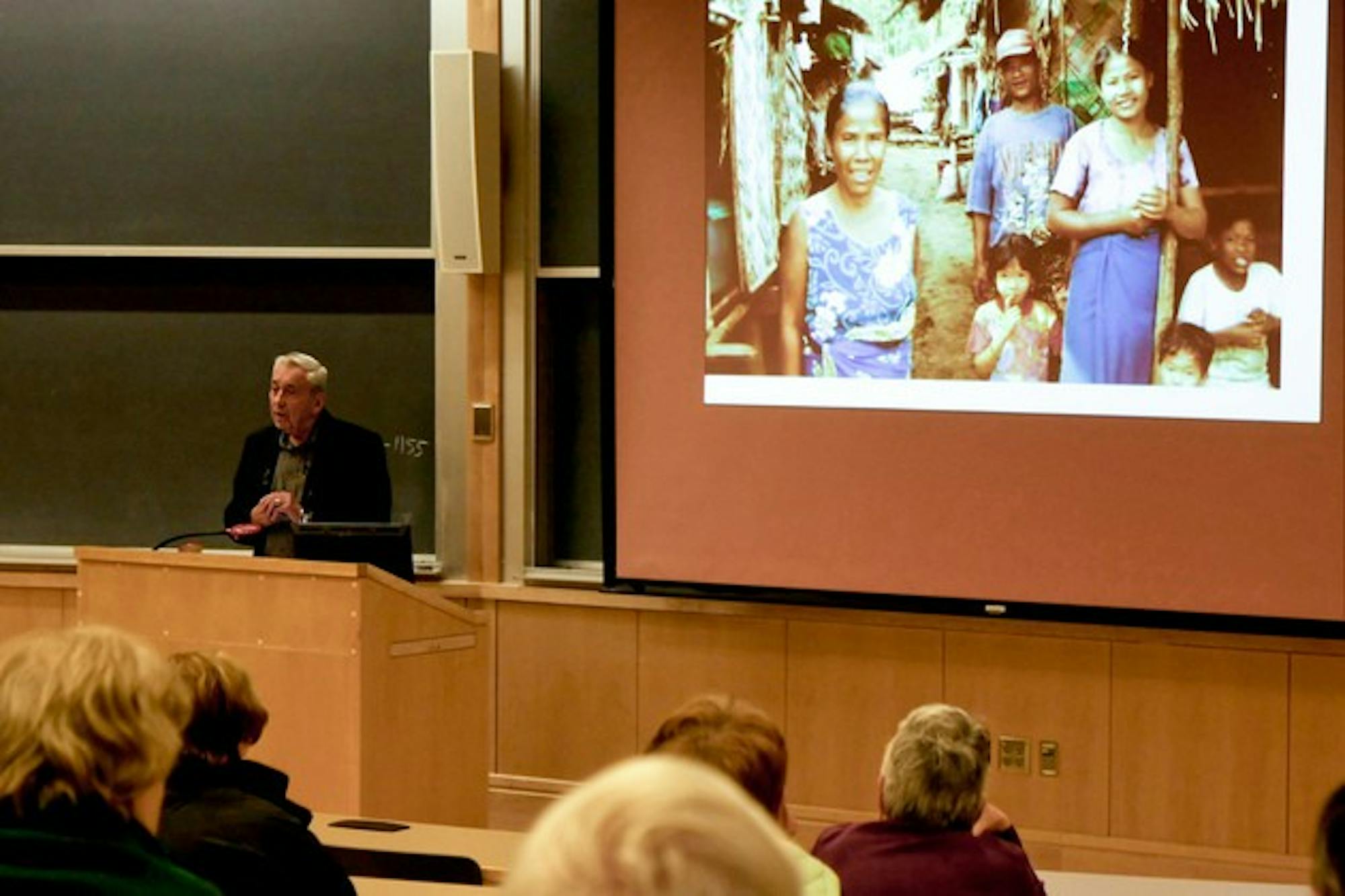
The exploitation and abuse of the Burmese by their government has forced thousands of Burmese to flee their homes to neighboring Thailand, Strickler said.
Although there are about 150,000 registered Burmese refugees in Thailand, Strickler estimated that there are an additional two million unregistered refugees. Unregistered refugees are not eligible for aid, and often work illegally for substantially lower wages than those paid to Thai workers in local villages.
"It's very analogous to the situation in our country with Mexicans," Strickler said.
Burmese refugees' long-term presence in these camps has created a cycle of poverty that only worsens refugees' situation, he added.
"[Refugee camps] are, in effect, prisons," Strickler said. "These kids have grown up in these camps they have no future."
Thailand has a policy of "humane deterrence," meaning that refugees in the country are treated humanely, but not so well as to encourage more refugees to cross the border, Strickler said, though he noted that the policy is becoming less stringent than in the past.
Previously, unregistered refugees caught by police were deported back to Burma as part of this human deterrence strategy, he said.
"Thailand is beginning to register some of these refugees and give them work permits," Strickler said.
Strickler attributed this policy change to Thailand's current labor shortage, which has increased demand for unskilled workers.
Despite these changes, Burmese refugees still live a "primitive existence," Strickler said. There is little room in the camps for refugees to grow crops or vegetables, and refugees are not permitted to grow rice, a staple food in southeast Asia, Strickler said.
Refugees rely on aid from the United Nations and other organizations that provide humanitarian relief for over 95 percent of their food supply, he said, although Thailand does not officially recognize the role of United Nations relief agencies in refugee camps.
This limited diet has stunted refugee children's growth, Strickler said.
"Their caloric intake is probably adequate, but their diets are deficient in nutrients," he said.
Refugees are not legally allowed to leave the camps, Strickler said.
Strickler also said that violence often occurs in refugee camps at night. Although this violence often goes unreported, he said, it is evident from the abused women who seek treatment at health care clinics.
The cycle of poverty and continued political unrest facing refugees is not unique to the Burmese in Thailand, Strickler said. More than eight million refugees globally have been living in camps for 10 years or more, Strickler said.
"Refugees and internally displaced persons are essentially a consequence of failed politics, an outgrowth of turmoil in the world," Strickler said.
Increasing population growth coupled with global warming and pollution is likely to exacerbate current refugee conditions by accentuating poverty, Strikler said.
"Poverty leads to political unrest, and political unrest leads to internally displaced persons and refugees," he said.
As a board member of the International Rescue Committee, a non-profit organization which works with refugees and victims of armed conflict around the world, Strickler sought to improve living conditions in refugee camps along the Thai-Burmese border.
"Our first priority is water and sanitation," Strickler said. "Next, is primary care and immunizations."
Strickler also said that relief organizations like the International Rescue Committee try to provide education in the camps.
"Even in crisis situations, we try to get the young kids to school," Strickler said. "It's enormously helpful to stressed out families to have their children supervised in school."
Strickler's lecture was sponsored by the Institute for Lifelong Education at Dartmouth.


