
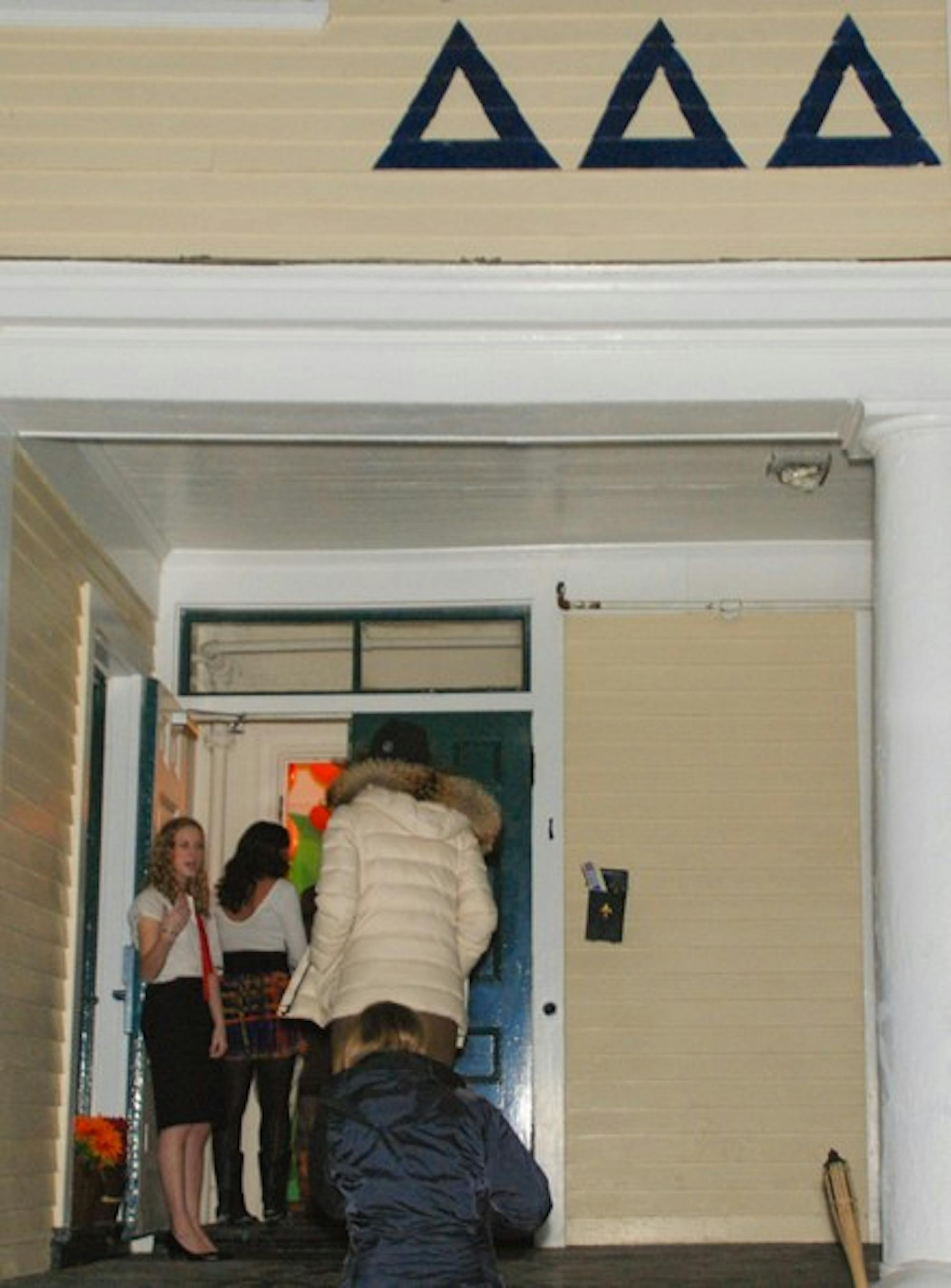
Alpha Phi sorority extended 11 bids; Alpha Xi Delta sorority, 12; Delta Delta Delta sorority, 12; Epsilon Kappa Theta sorority, 11; Kappa Delta Epsilon sorority, 9; Kappa Kappa Gamma sorority, 11; and Sigma Delta sorority, 13, according to members of each organization.
Panhell did not release the number of women who sank their bids.
While last year's winter rush was conducted over a four-day period, this year's process lasted six days, as it had during the Fall term. Both the first round, where potential members visit each of the seven organizations, and the second round, where potential members can visit up to four organizations that invite them back, spanned two days.
Sororities were open one day during each round for women to visit, according to sorority representatives.
"Winter rush was a very stressful week," Abigail Burns '11, who sank a bid at Sigma Delt, said. "It was a long process, but for some people I know, they came out of it very satisfied. The process is less of a time commitment [than Fall rush] for [sorority members], but the same amount of time for those of us rushing."
The rush process used the "Select and Rank" system implemented last year. The system allows women to choose their top four organizations and rank the other three after the first round of the rush process. A computer program used by Panhell then uses the rankings and lists compiled by sororities to match participants with as many as four organizations for the second round.
Following the second round, participants choose two organizations and rank the remaining two, and can be called back to up to two houses. On preference night, women who were called back to more than one house rank them.
The Select and Rank system was recommended to Dartmouth's Panhell by the National Panhellenic Conference, Lokensgard said. The system is the "best method of formal recruitment" for both the sororities and potential new members, and Panhell expects to continue using it for rush, she wrote in an e-mail.
"I think there are definitely some good things and some bad things about the new system," Kappa President Nell Beattie '09 said. "It is a speedier process and a more mutually selective process."
Although the winter rush process was longer this year, several new members expressed satisfaction with it.
The process was "less stressful," Tasha Lattanzio '11, a new member of Tri-Delt, said, because fewer women participate in winter rush than in fall rush. The process was very different from "these horror stories that everyone has," she said
"I think it was less intimidating than people make it out to be," Elena Falloon '11, who sank a bid at KDE, said. "You end up meeting a lot of girls that you might not meet otherwise have met. So I enjoyed having the opportunity, and I am really happy with the outcome."
Panhell President Jessica Lane '09 declined to comment for this article. Representatives from Panhell declined to release the number of women who began the process or any information about new policies put into place this term, including the number of bids each house was allowed to offer.


