
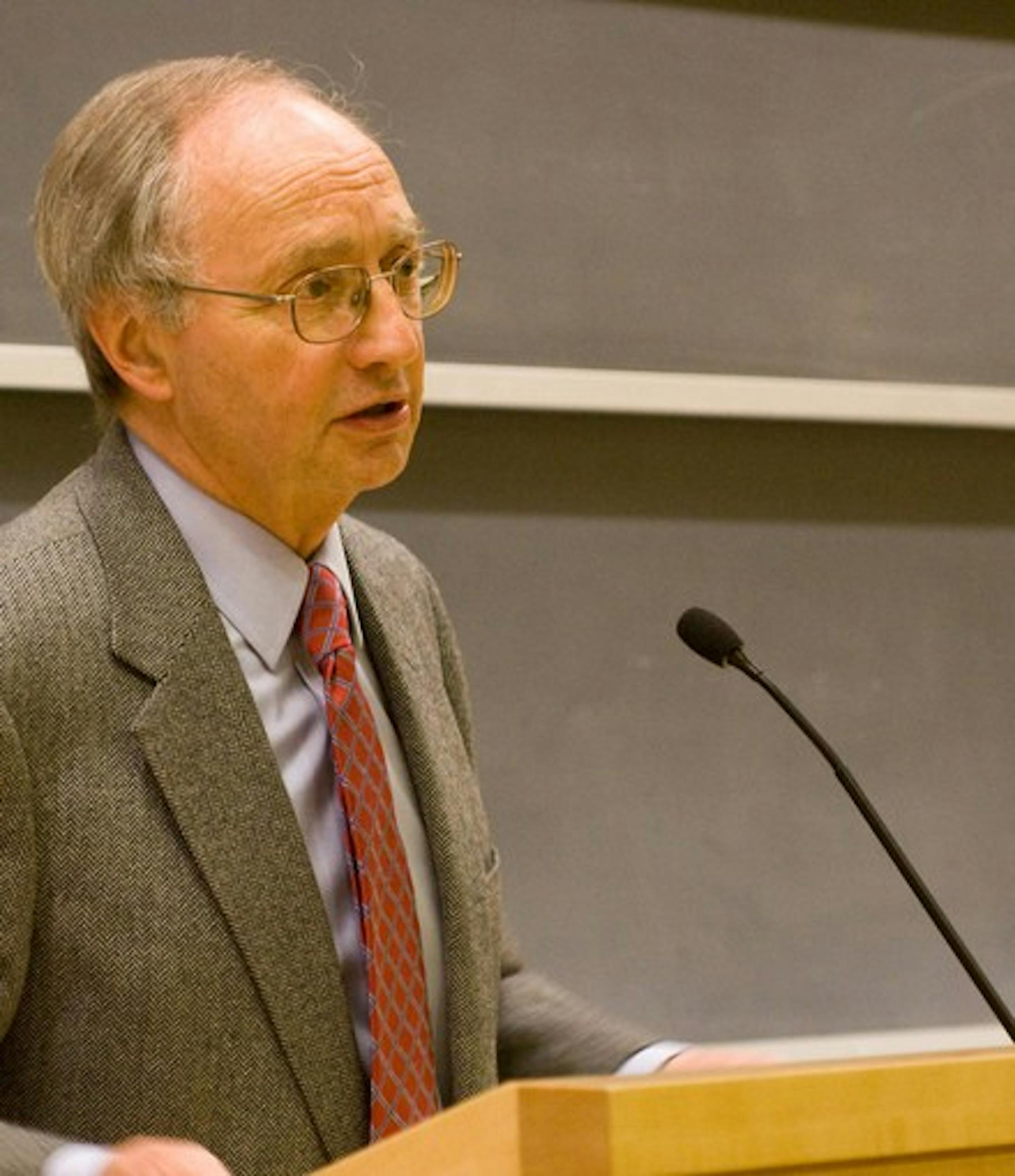
Employees who are fired from their high-powered jobs tend to fear re-entry into the workforce, Uchitelle said. A former airplane mechanic, whom Uchitelle cited as an example, began work as a janitor in an Indianapolis school district after losing his job.
"He took a job that was safe for him, he was lost," Uchitelle said. "His talents were lost to the work force. It is a tragedy when you think about the amount of skill that has been lost in America."
The problem, Uchitelle said, lies in employees' frequent self-blame for their predicaments.
"We reinforce that," Uchitelle said. "We say to people, Let the layoffs go, we'll retrain you for good jobs that are still out there."
Good jobs are scarce in the U.S. marketplace, Uchitelle said.
Uchitelle admitted that U.S. companies are unable to eliminate layoffs, but argued that, in light of the psychological impacts of layoffs on employees, not enough is being done to avoid them.
"My problem is that the companies have taken it too far," Uchitelle said. "They have to cut costs, including labor costs, but in the process of doing this in the last 30 years, we have acquiesced; we have gone from resisting layoffs to letting them happen."
Fired employees appear collected, but they harbor frustrations that become apparent in deeper conversations, which Uchitelle discovered while conducting research for his book, he said.
"If the American Association of Psychiatrists said [layoffs] are damaging to the health, maybe CEOs would be more careful about what they do," he said. "They feel there is no other way to go, but Europe finds other ways to go."
As an alternative to laying off employees, some companies have opted for buyouts -- asking an employee to leave voluntarily with compensation, Uchitelle said. Some buyouts, however, make U.S. workers feel that they are not valued, according to Uchitelle.
"People who are very good think someone should at least wring their hand and say, 'Oh please stay,'" Uchitelle said.
Uchitelle cited a New York Times' offer to buyout a distinguished 71-year-old reporter who was displeased with the proposal.
"The Times was busy trying to save money and doing what they thought was correct," Uchitelle said. "The only way you can save money when you are giving people a year and a half to two years of buyout pay is to get them off the payroll fast."
Dartmouth history professor Bruce Nelson, who attended the event, spoke about his personal experience of being laid off in the 1970s during the question and answer forum following Uchitelle's speech. At the time, Nelson was offered a new position if he chose to relocate with the company, but companies' attitudes toward employee severance has changed since then, he said.
"There used to be a culture of solidarity where unions fought to protect the workers," Nelson said. "Seniority meant something."
Nelson cited significant changes in politics and an increase in corporate power for reasons behind the decline of unity in the workplace. He added that America's youth believe responsibility in keeping a job lies with each worker.
Uchitelle based the speech off of his similarly titled book in which he interviewed Americans about the effects of being laid off.


