
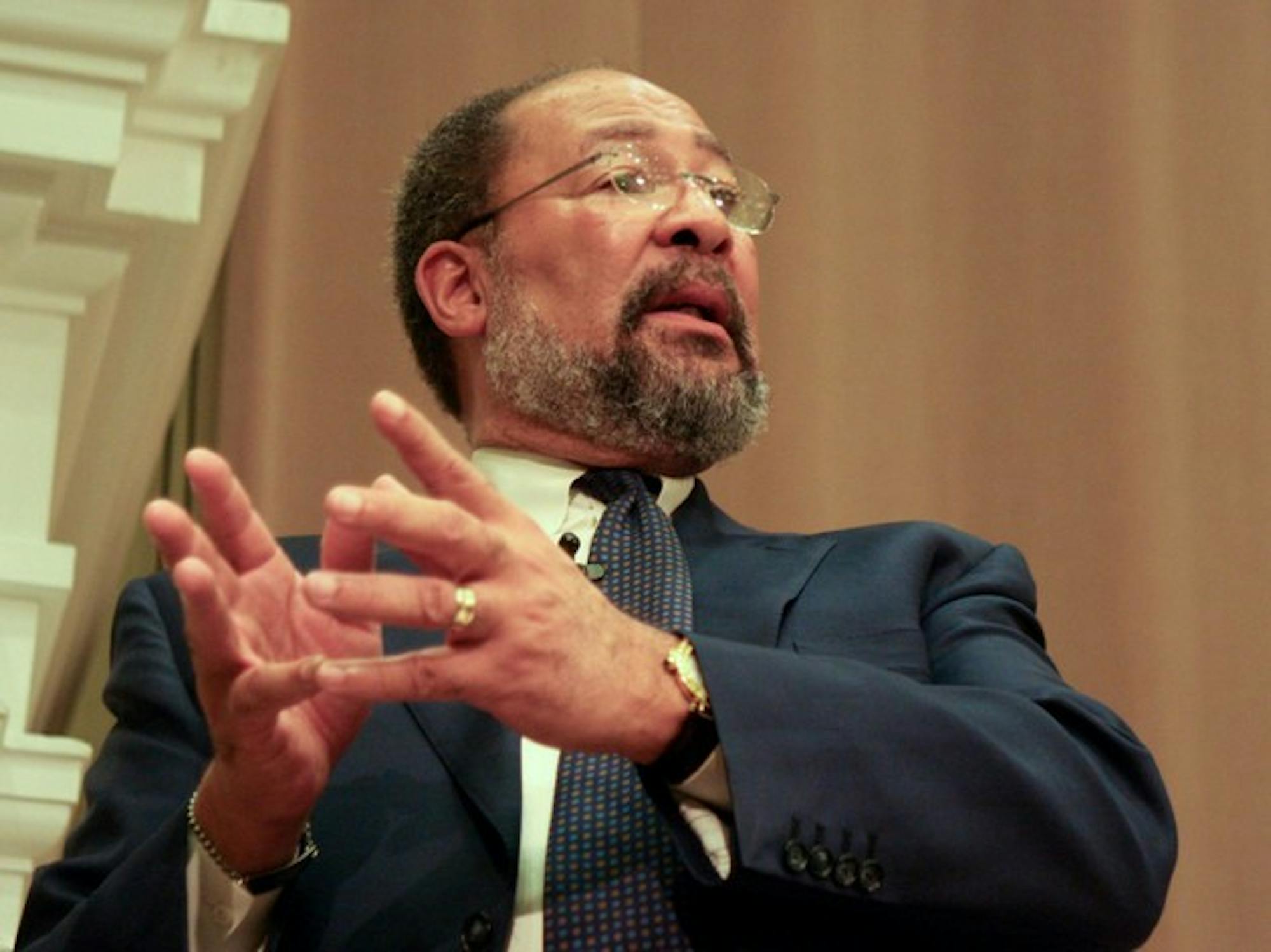
"It's ridiculous. You would never have heard of something like that 15 or even 10 years ago," Parsons said, referring to Bebo's rapid increase in value to a large corporation like Time Warner. "There was no real capital required to get into that business. And that's going to be the model in the digital age."
In his lecture, "Entrepreneurship in the Digital Age," Parsons said that entrepreneurs like Birch will be increasingly useful to large conglomerates such as Time Warner, which are too cautious to develop new ideas. Entrepreneurs can provide the innovation often lacking in major corporations, he said.
"Organizations become risk-averse the larger they get," he said. "Nobody wants to jeopardize an existing, successful business model. Young people come out and create these things ... then they sell them to these bigger companies, who try not to kill them in the crib."
Parsons also spoke on how the Internet has lowered the entry barrier for new ideas, leaving the marketplace "wide open for entrepreneurs." While investment capital for new ideas has spread since the 1990s, he said, technology has simultaneously made that capital less necessary.
"The way AOL got started was, they rolled over the existing telephone lines," Parsons said. "Nowadays, you don't have to even have servers and routers and other forms of infrastructure. If you have software development skills, you can essentially use someone else's infrastructure to create the business."
Many of the most inventive entrepreneurs are more interested in creating an attractive and revolutionary product than creating a useful business model, Parsons said. The difficulty, he added, is attracting young people to companies and employing their idealism for a practical purpose.
"Who among the young nowadays doesn't fundamentally want to work for themselves? They don't want to be shackled by some chucklehead like me," he said. "They want to go into a place of employment where they can be free ... and get rewarded for it."
Though Internet entrepreneurs have potential, Parsons said, their long term viability is limited by the current Internet business model that relies primarily on advertising revenue instead of the subscription-based structure once used by AOL. The dominance of advertising will have to change, he said, before sites such as YouTube and Facebook will be able to take advantage of their large user bases.
"A lot of these companies ... have no revenue bottom. They've built something that a lot of people use, but they don't pay for," he said. "At the end of the day, you can't sustain a free model."
Parson also stressed the challenges that existing media companies, like Time Warner, have had adapting to changes in the business environment after the digital revolution.
"[Company] valuation has moved in this digital space to a kind of a hope and a promise," Parsons said. "The music business has changed rapidly. The whole business model around videos and movies is different. The issue for companies like ours is, if you're going to be in the space, you've got to play."


