
"[Students] didn't know what kind of music they would play, so a lot of students were confused when they went to the party and they were discontent with the content of the music," Julian Thomas '09 said. "Not all of the music was socially conscious hip hop."
Kasitaza cited Justin Timberlake's "Summer Love" and Mark Morrison's "Return of the Mack" as songs that arose contention.
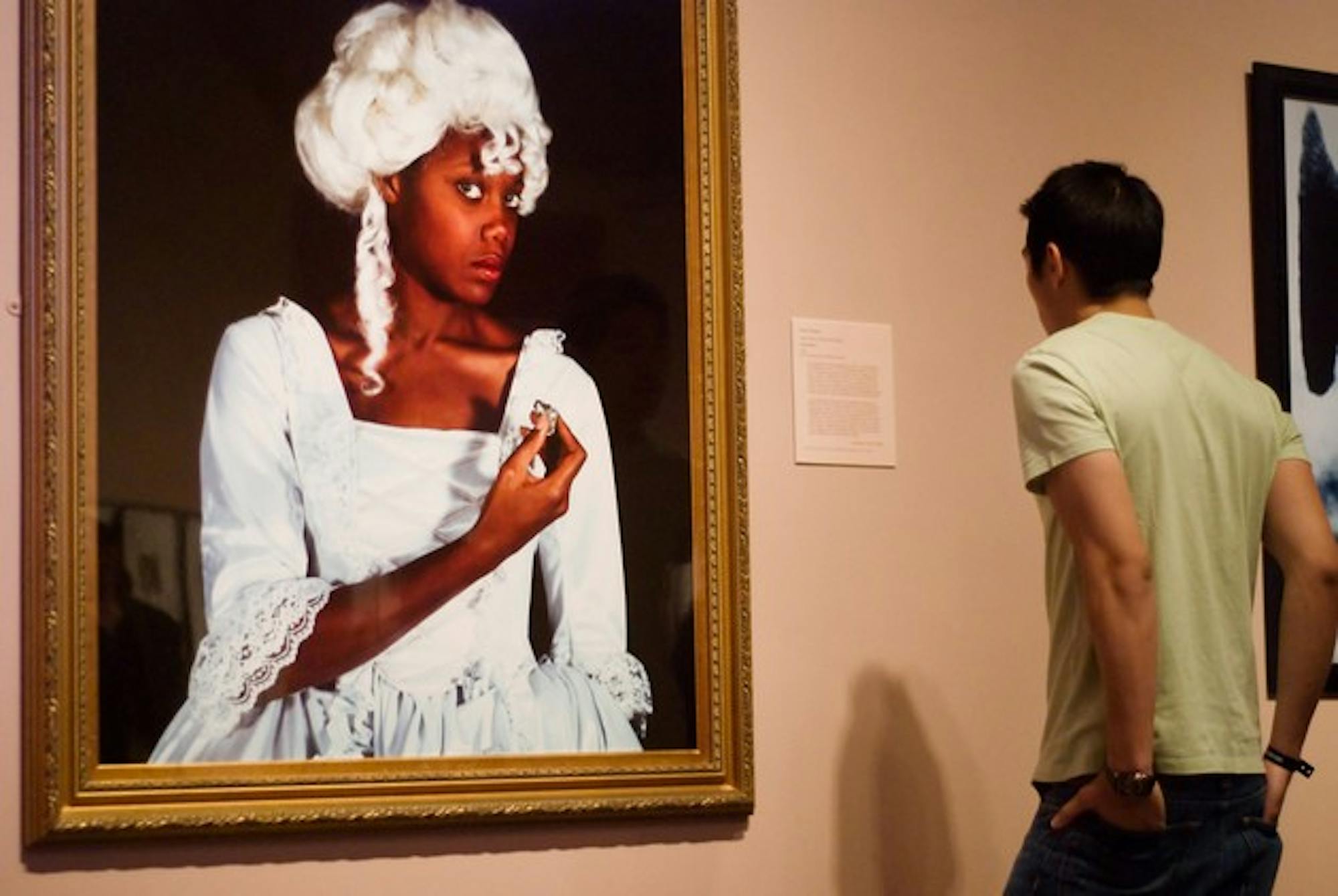
Hood staff threw the party to attract a diverse group of students to the opening of its newest exhibit, "Black Womanhood: Images, Icons, and Ideologies of the African Body," according to curator Barbara Thompson. The Hood used hip hop music because it appeals to all races and backgrounds, Thompson said.
"We attracted almost 400 students who were very much engaged [in the exhibit] in ways we've never seen," Thompson said. "In that way, we celebrate that we brought people in, unfortunately, at the cost of hurting some. Hurting African-American women is the last thing that I would ever want."
The societal view of black women reflected in the party's music choice spans beyond the College, Hanover and New Hampshire, according to Samantha Ivery, assistant dean of student life and adviser to black students.
"This isn't something [the students] only dealt with last Friday," Ivery said. "This is an identity they've dealt with for eighteen, nineteen or twenty years."
Ivery, who contacted the Hood upon hearing about the controversy, said the museum staff was responsive. She has scheduled a meeting with the staff for this Friday to discuss the issue, and hopes to help facilitate dialogue between students and museum staff.
"Often times when people are hurt, it isn't intentional," Ivery said. "While this may not be intentional, the impact is real. Students desire to understand where it came from. They don't want it to happen again."
Students involved in the effort congregated at Food Court at 6:30 p.m. on Monday and Tuesday to "illustrate solidarity" Thomas said.
Thomas and Kasitaza both want to a response from the Hood so that nothing similar will happen in the future, they said. While some students are encouraging a forum for discussion between the Hood and the student body, others want an internal restructuring of the Hood to deal with any future problem, according to Kasitaza.
"We want to make sense of what happened," Kasitaza said. "We want to speak to our own questions and want to be able to resolve this in some kind of manner that brings resolution."
Thompson insisted that the museum did not intend to offend anyone with the party, and apologized for the Hood's failure to consider the connotations of the party's title, "Hip Hop in the Hood," which was intended to refer to the museum's name, but was interpreted by may as a reference to a ghetto.
The Hood is looking into the students' objections to inform the staff and prepare for future events with students, Thompson said, adding that the museum staff wants to "engage with students about this [because] the exhibition is for them."
"I so grandly appreciate the fact students have come out and voiced their opinions; that is exactly what they should be doing, that is exactly what the artists [in the exhibit] are doing," Thompson said. "Their responses is what is so important."
Kasitaza said the exhibit itself is "inspirational" and "good for the community" and both she and Thomas encouraged students to view the artwork, which "show[s] multiple voices and perspectives that have created and perpetuated a stereotype over a black woman's body over time," Thompson said.


