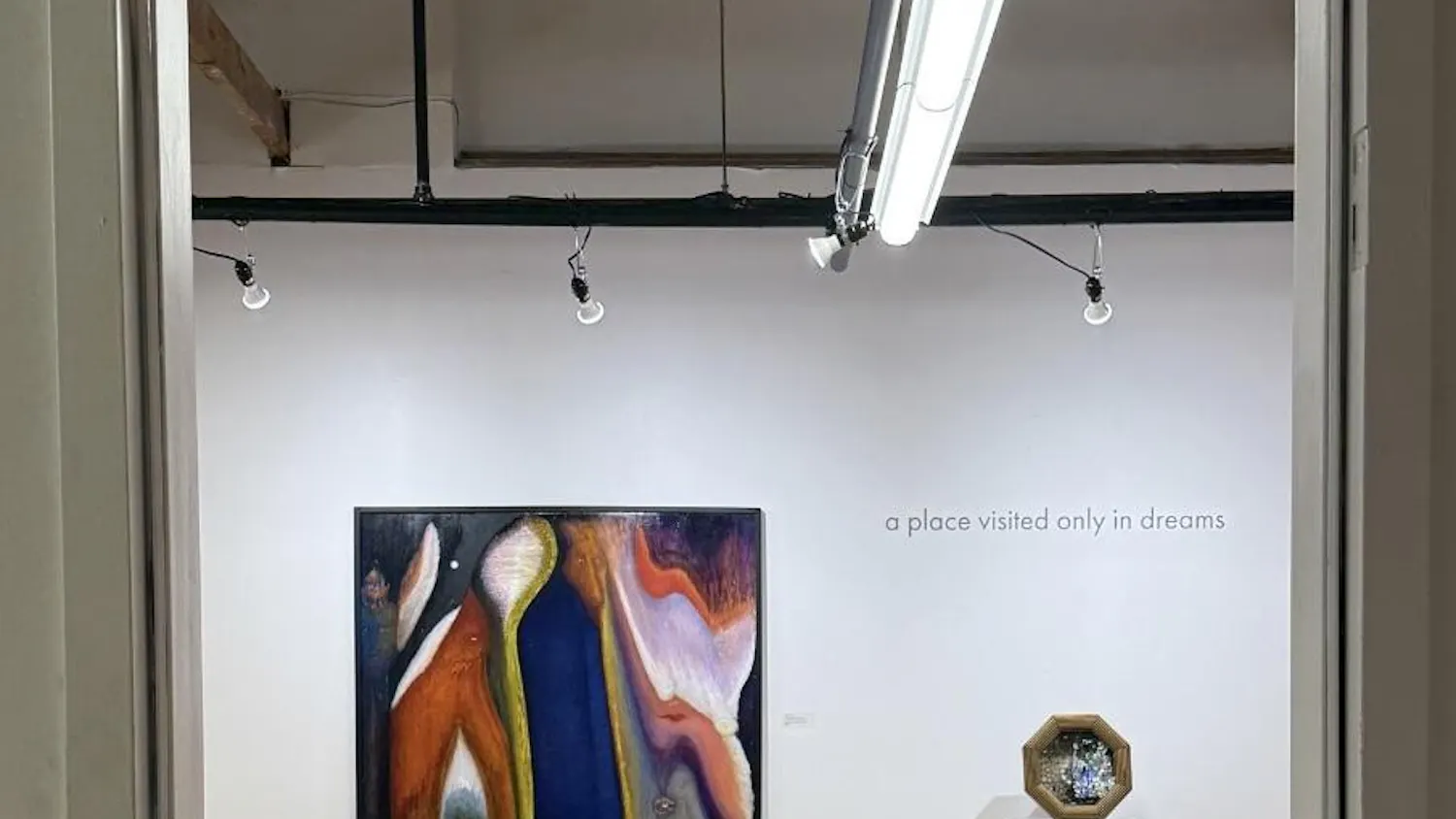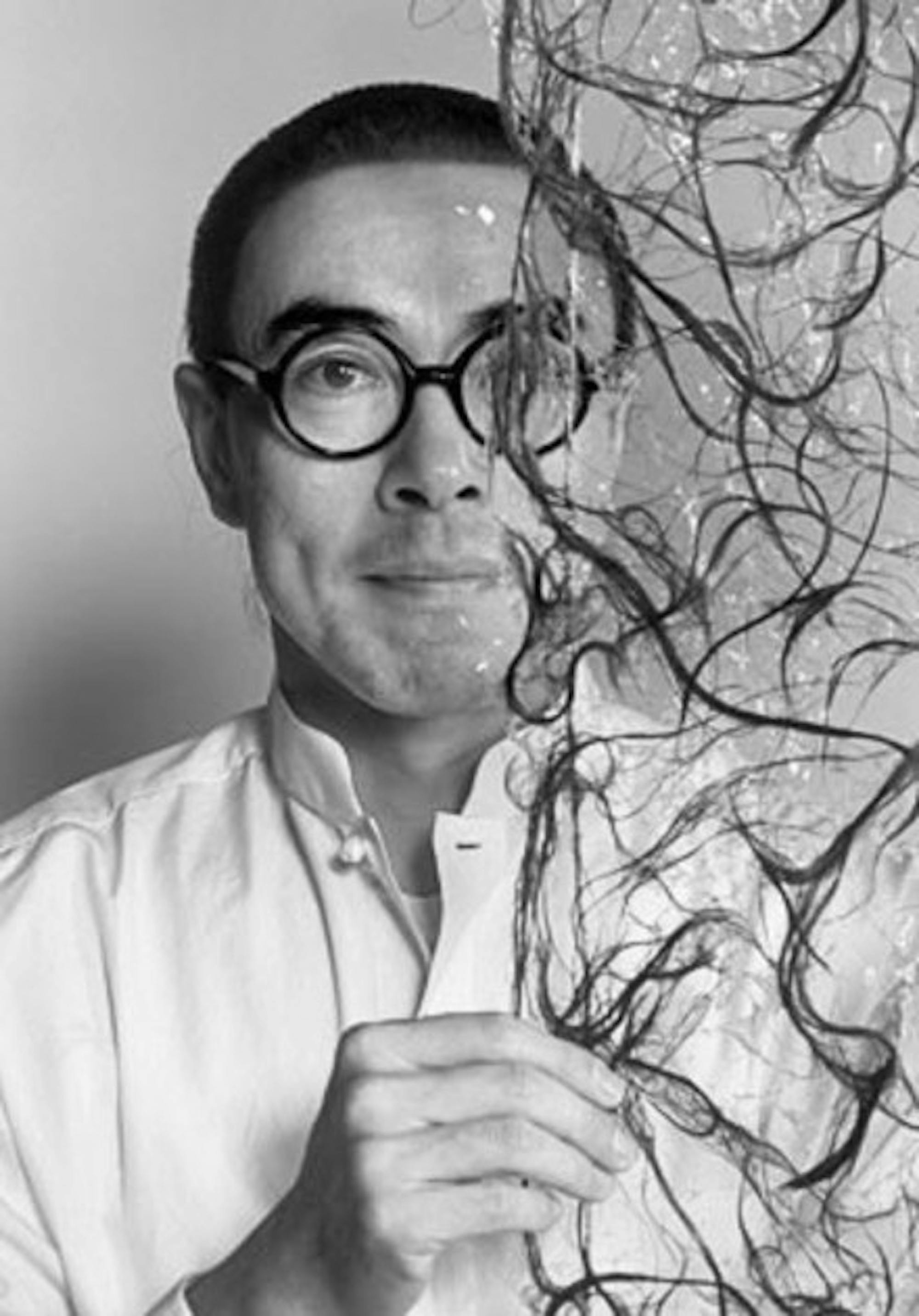
That was then. Seventy-three years later, Dartmouth is finally about to embark on its second truly epic commission of contemporary art. One floor above Orzoco's famed murals, Chinese-American installation artist Wenda Gu is about to transform the first floor of Baker library with a 40-foot curtain and over five miles of neon braid -- all made of human hair.
"Can you imagine if we had the Koons puppy on the Green?" asked Brian Kennedy, the director of the Hood Museum. Jeff Koons is a contemporary sculptor who is known for his giant silver balloon puppy sculptures, often described as "kitschy" (read: tacky).
Dartmouth isn't exactly known for its cutting-edge approach to art (Remember the Di Suvero swing sculpture, which was deposed from its position in front of Sanborn and relegated to the back of the Hood after the commotion caused by its harsh appearance?).
"But wouldn't it be amazing?" Kennedy said. "We've just never had that sort of imagination. Sure, there are people who would turn over in their graves, there are people who would stop giving to Dartmouth, but ..."
That "but" is enough to drive the installation of Dartmouth's first large-scale commission since the Orozco murals. As graduation summons the trustees, alumni and parents to campus, Wenda Gu's installation of neon human hair will glare from the windows of Baker Library.
"It's a risk," said Juliette Bianco '94, assistant director of the Hood. "If it wasn't, I would question why we're doing it at all."
Of course, the installation is temporary -- it will be on display until October. The project in the library is composed of two parts. The first, "The Greenhouse" is a 40-foot-long curtain which will hang in the main entrance hall of the library. The panels will alternate between a bright green and natural brown -- the brown being composed of hair collected from members of the Dartmouth and Upper Valley communities. The Hood estimates that over 42,350 haircuts produced the 430 pounds of hair which was shipped to the artist's studio in Shanghai. The panels will display the words "EDUCATIONS" and "ADVERTISES" imposed on top of each other.
The second part of the installation will be a part of Gu's "united nations Project." Over the past 13 years, Gu has completed installations all over the globe, using human hair to comment on national identity. Neon multi-colored braids of hair collected from various nations will be strung like bead curtains along both sides of the main hall on the first floor of Berry.
Meanwhile, within the walls of the Hood, another exhibit of Gu's work will open. "Retranslating and Rewriting Tang Dynasty Poetry" will exhibit Gu's other prominent vein of work: his use of language. Gu, originally trained as a traditional Chinese calligrapher, has often examined the translation of ancient Chinese poetry. The exhibit will be made of a series of large books. The fact that the books are being displayed in the museum and the colorful hair in the library is no coincidence.
"If ever there was an artist suited to both a museum and a library, it's Wenda," Kennedy said. A large part of Kennedy's mission as director of the Hood is to bring art outside of the museum and into the campus at large.
"Art outside of museums has a real role to play in the intellectual education of the campus. You shouldn't have to seek art out," Bianco said.
One of Gu's goals is to bring people together in a collaborative effort. Patrick Dunfey, the exhibitions designer, made it clear in a tour of the library site that the project has certainly forced collaboration. Safety and Security, the staff of the library, Facilities and Operations and Management, even student volunteers will help to prep the site for the installation. It appears the conceptual goal of collaboration ("united nations") has already been achieved. Other ideas have yet to be realized.
Whether or not the installation will really spark the kind of debate that Gu or the Hood foresees is still to be determined. Gu's use of language, which is often semantically and syntactically meaningless, may inspire several different interpretations. Bianco described some of the issues at hand: "understanding and misunderstanding, translation vs. mistranslation." But the juxtaposition of "educations" with "advertises," for example, seems provocative placed in a college library.
"The aim is not to provoke so much as to provide an opportunity to examine one's own perspective. Wenda is not a propagandist, so much as a commentator on propaganda," Kennedy said.
Hopefully, the visual impact of the installation will live up to the conceptual hype. The 73 years of anticipation haven't made it any easier, but perhaps the installation even has a chance to live up to the frescos on the floor below. In the coming weeks, we will see.