
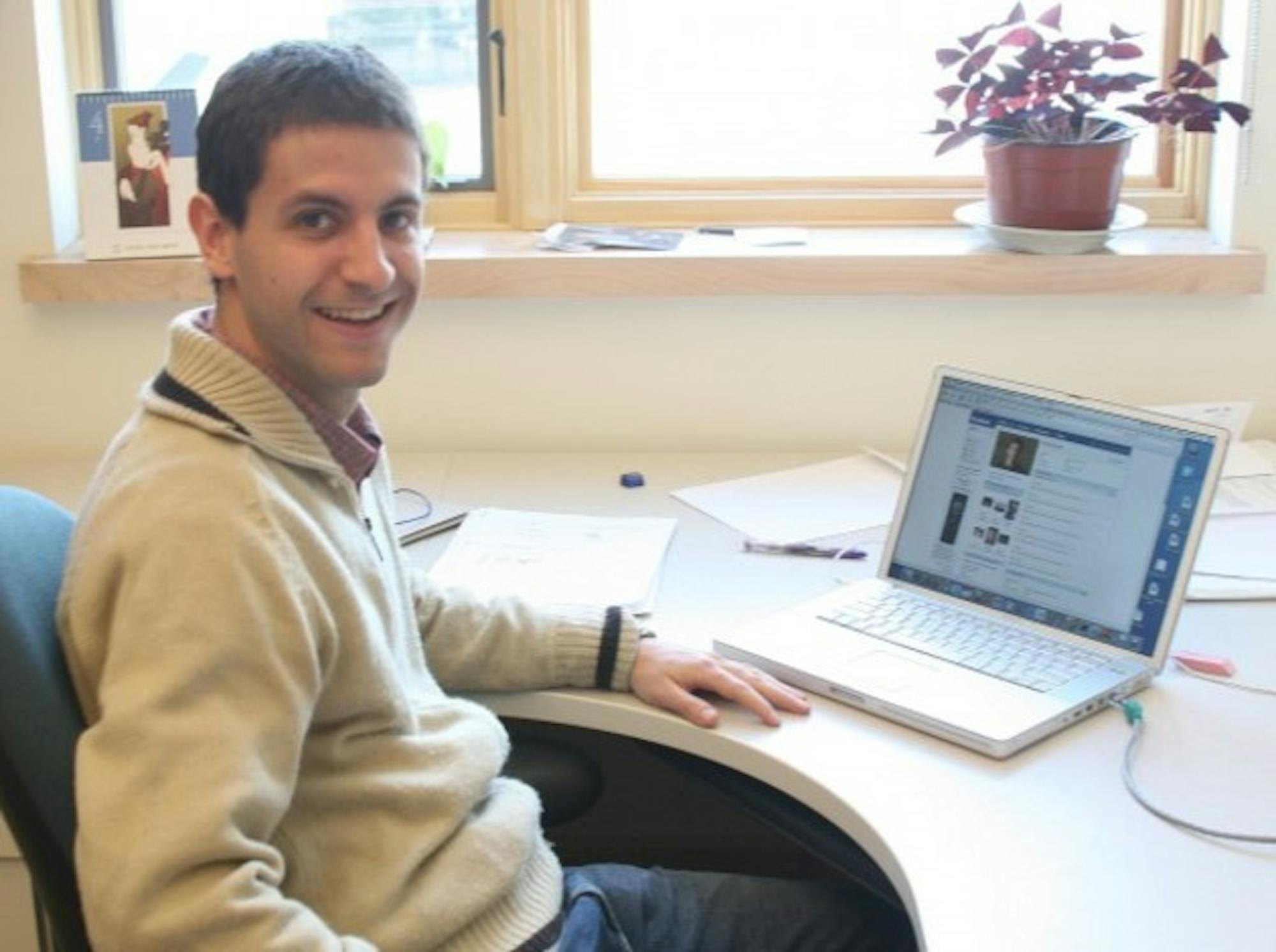
English professor Thomas Luxon, for example, who joined Facebook after receiving an invitation from a student, has maintained a profile for a number of years. Luxon said that he uses the site to share photographs and keep in touch with family members -- noting that his niece recently joined the group "Don Imus Sucks."
Luxon's profile is among approximately 200 that come up when one searches for "faculty" within the Dartmouth network. A search for "staff" yields hundreds more accounts.
Even discounting dozens of falsified profiles (including those for alleged Dartmouth faculty members Bobby Flay and Bob Dylan), Dartmouth's Facebook network contains a significant number of actual professor profiles, many of which are complete with wall posts, group memberships and photographs.
Though some professors said that they use their accounts to communicate with family, colleagues and friends, others noted that the website provides them with a unique connection to students.
"Dartmouth talks a really big and good game about students and faculty having interactions outside the classroom," said government professor Allan Stam, who boasts 54 Dartmouth Facebook friends. "I don't always see a lot of that less formal interaction."
Stam's profile lists the activities he enjoys (including rowing, gardening and brewing beer), his favorite musicians (Bob Dylan, Didi and Green Day round out the list), and a link to his personal website. The use of Facebook between Dartmouth professors and students, Stam said, is one example of creating extracurricular contact.
"Facebook has enabled me to have conversations with students that I don't think I would have otherwise," Stam said. "The professor-student dynamic is less present."
Several other professors recounted the unusual ways in which Facebook has allowed them to interact with students.
A student looking for a faculty advisor for the Argentine Tango Society, for example, contacted economics professor Katerina Simons after seeing that the professor listed tango under the interests section of her Facebook account.
Luxon uses Facebook to get a sense for the students who will be in his classes in upcoming terms. After receiving course enrollment lists, Luxon then signs on to the website to check out student profiles.
"I'll try and find out more about who my students are using Facebook," Luxon said.
The use of Facebook as a means of interaction between students and professors, however, raises issues for students who do not want professors to view their profiles.
George Oh '07 is currently "friends" with only one of his professors on Facebook.
"I would have to feel comfortable with the professor first," Oh said. "If I didn't know the prof and have a certain kind of relationship with them, it would be a tough call."
Several professors noted that students had seemed surprised to discover their profiles on the website.
Stam said that he sometimes receives messages from Dartmouth students "saying basically, 'What the hell are you doing on Facebook?'"
Simons does not wish to invade the privacy of any of her students using the website, she said.
"It seems like kind of a delicate thing," Simons said. "You don't want to be butting in and soiling anybody's fun or looking over their shoulder."
Most professors interviewed noted that, for this reason, they do not "friend" their students, but instead allow students to take the initiative.
Severina Ostrovsky '07, who is friends with two Dartmouth professors on Facebook, said that she hopes that professors who choose to have Facebook accounts will understand that the website is a student space.
"If you want to be on Facebook you have to understand that in a way that's our territory. Facebook wasn't made for professors; it was made for students," Ostrovsky said. "If professors want to join it, I guess it's fine. All I would say is that I hope you know what you're getting yourself into."
Ostrovsky added that professors should not judge students based on the website's content.
"What can you really tell from 'My interests are drinking out of my Nalgene'?" Ostrovsky asked. "That's not an informed way to find things out about your students."
Most professors, however, sought to quell student fears.
"Students have never been hesitant to discuss their personal lives with me, so there's nothing that would surprise me, nor is there anything about me that would surprise them," Music professor Jon Appleton, who also uses the site, said. "It's not an issue."
Others noted, however, that students ought to think about the content they post.
"Every now and then I do raise an eyebrow and think 'Holy moly, I wouldn't put that up there,'" Stam said. "For me, I just look at it and say 'Whatever.' But I'm certain that there are others who do not have such a liberal mind about the stuff that people put up about themselves."
"If you put up drunken, bacchanal photos," Stam cautioned, "not everyone is going to look at those and just dismiss them as college hijinks."


