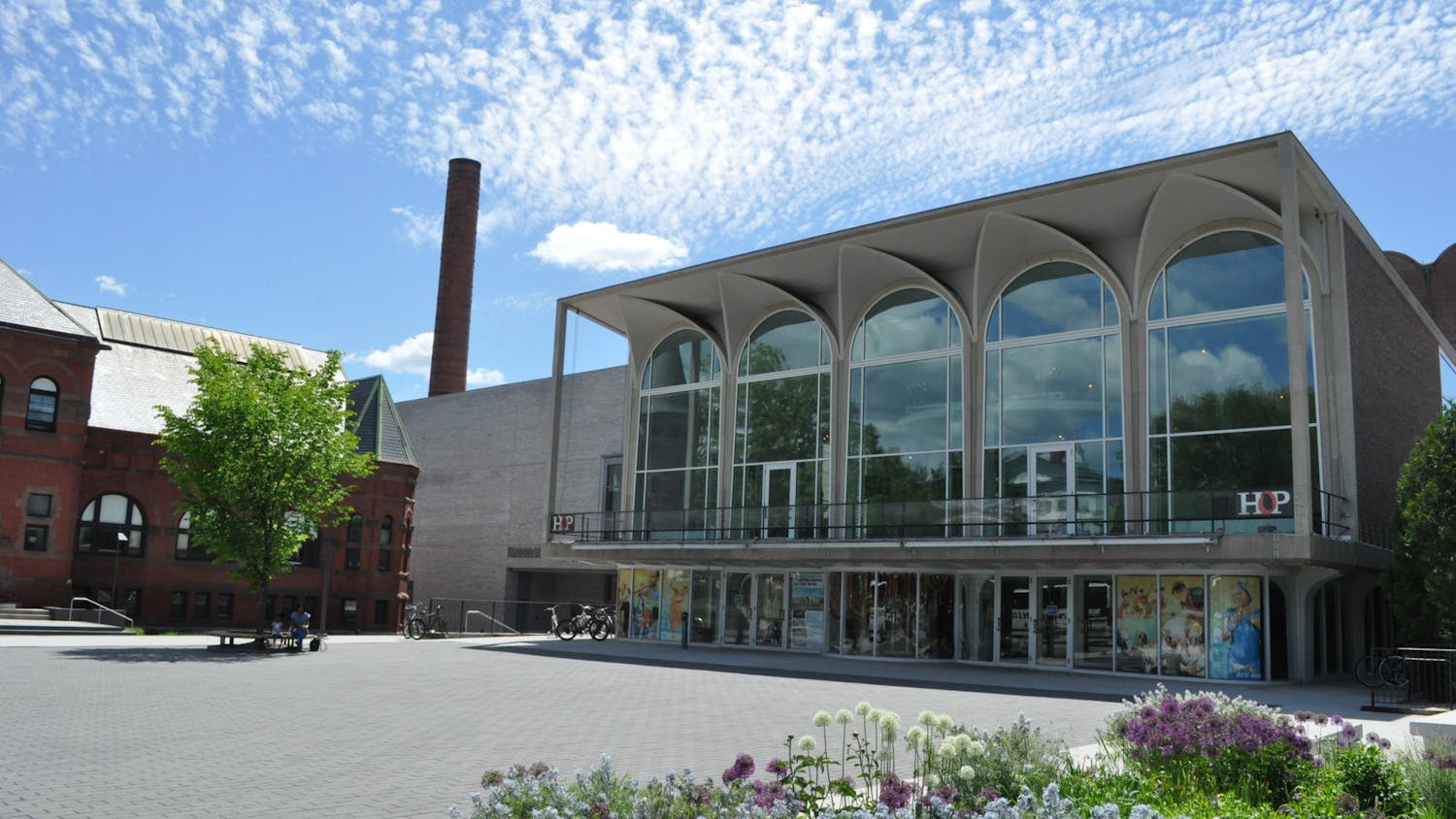
With a nod to the famed Bob Dylan song of the same name, the Dartmouth Wind Symphony will perform a set entitled "Blowin' in the Wind" Sunday at 2 p.m. in Spaulding Auditorium as part of its termly concert series.
Selected by conductor Max Culpepper, the "Blowin' in the Wind" theme showcases pieces that, either in style or title, evoke blustery weather. Opening the program is the thunderous "Cloudsplitter Fanfare," composed by Jack Stamp. A windy character, alternatively gusty and hushed, persists throughout the program, concert manager Christina Behrend '07 said.
Originally scheduled as this year's annual winter exchange concert, in which the DWS splits a program with a wind ensemble from another university or college, Sunday's show will now feature only the DWS. This follows the recent unexpected cancellation of the planned collaborator, the University of Southern Maine Chamber Winds Ensemble. As a result of the change in billing, the DWS will perform two additional pieces, and the concert will be shorter than anticipated.
One of the additions to the program is "October" by Eric Whitacre, suggested to the ensemble by clarinetist Karelle Hall '08.
"The song includes wind chimes and woodwind melodies that are reminiscent of the wind blowing. It's one of my favorite pieces of music," Hall said.
Matching the gentle quality of "October" is "In The Bleak Midwinter," one of Gustav Holst's simpler, folksier compositions. The hymn features a solo by principal clarinetist Lisel Murdock '09, who also joins Tim Noronha '06, Tom DiNapoli '10 and Melissa Ristoff '10, listed respective to their seats, for a solo clarinet quartet in Charles West's jaunty 1977 piece, "Capricious Winds."
The DWS will accompany soprano Bonnie Hennessee '08 for Ten Wu Xin's "Expecting the Spring Wind" midway through the program. Hennessee, not a native Chinese speaker, will nevertheless sing in the composer's native tongue.
The program closes with "William Tell Overture," the Gioacchino Rossini work best known as the theme to "The Lone Ranger." An operatic overture that builds to a galloping, brass-dominated end, the piece makes for a challenging but rousing program finale, according to Behrend.