
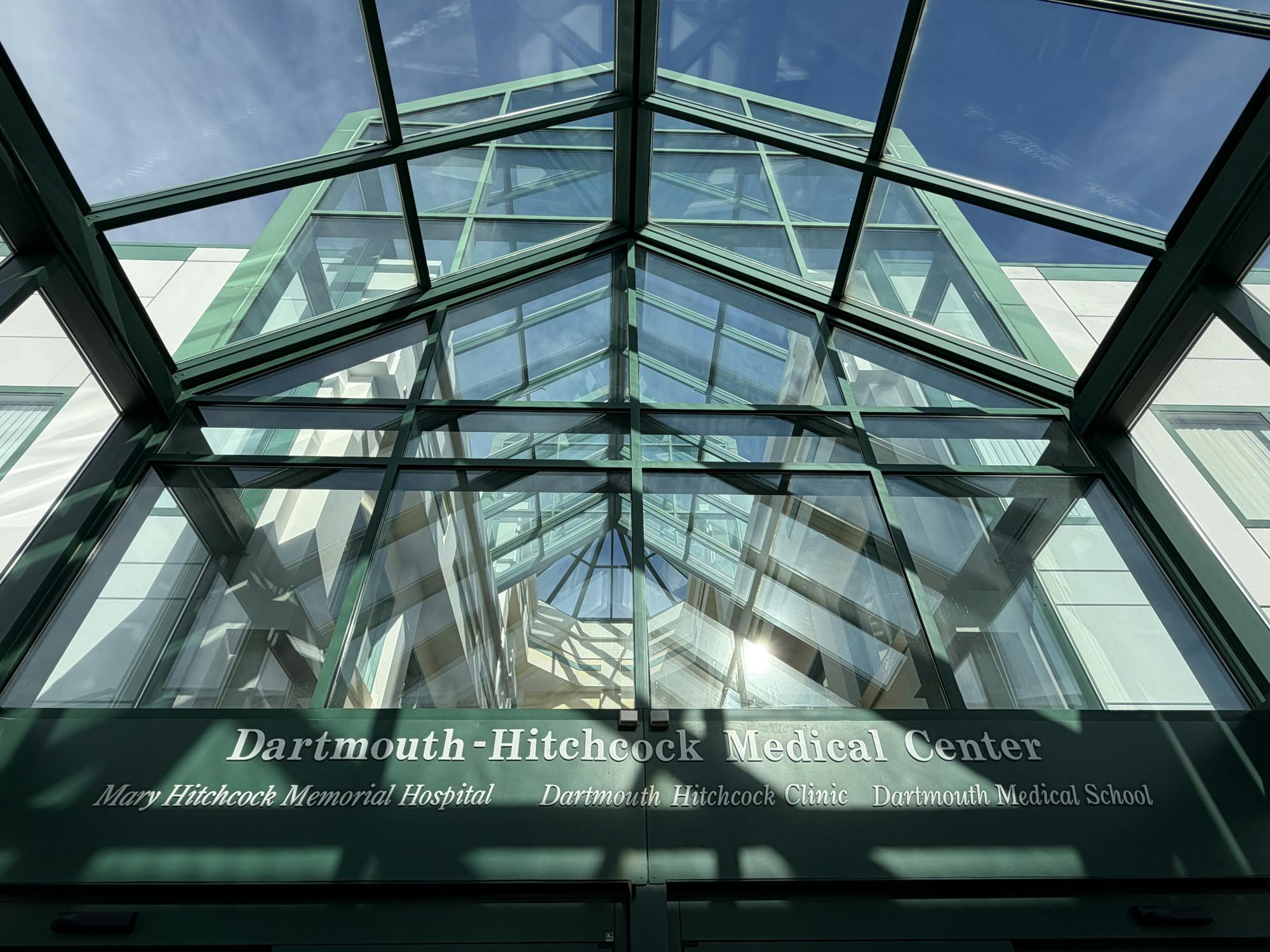
On Sept. 29, Dartmouth announced Dartmouth Health at Home, a new program that will provide primary care, palliative care and support for family members caring for aging or chronically ill patients. The program’s long-term goal is to develop a new rural healthcare model that meets patients in their homes.
Former biotechnology executive Richard Levy ’60’s $20 million gift to Dartmouth Health and the Geisel School of Medicine will fund the four-phase rollout of the initiative. $4 million has already been distributed to Dartmouth Health at Home, Levy said in an interview with The Dartmouth. The initiative is expected to begin enrolling patients between January 2027 and March 2027 through a pilot program serving patients near Dartmouth Hitchcock Medical Center in Lebanon, N.H., before eventually expanding across the Dartmouth Health’s system in New Hampshire and Vermont, according to Levy.
The gift was inspired by Levy’s experience caring for his late wife, Susan Levy, who was diagnosed with Lewy body dementia — a progressive neurological disease that affects thinking, movement and behavior — in 2016. Despite his financial resources and connections in the healthcare industry, Levy said he struggled to coordinate her care at home and began to question how families without those advantages could manage.
Within two years of her diagnosis, “I knew we couldn’t handle it,” Levy said. “More things were needed which were not available in the healthcare world.”
Although his wife ultimately survived for seven years after her diagnosis, Levy said caring for her required significant time, money and assistance that many families cannot afford.
“I could afford to hire help, and most people couldn’t do that,” Levy said. “So, I thought, ‘Isn’t this horrible? What do those people do? How do they handle situations like this?’”
The initiative’s patient and caregiver services will include three primary programs: the Family Caregiver Institute, which will provide training, care coordination and connections to community resources for caregivers, such as additional in-home assistance; Primary Care at Home, which will deliver routine medical care and chronic disease management to patients who choose to remain in their homes or have difficulty leaving; and Palliative Care at Home, which will focus on managing symptoms and improving quality of life for patients with serious illnesses.
Dartmouth Health department of medicine chair and Dartmouth Health at Home co-chief executive officer Nathan Goldstein said the program’s administrators hope to integrate the three services so patients can receive different types of care without navigating separate programs.
“I don’t want patients to know which bucket they’re in,” Goldstein said. “I just want patients to know they’re getting really great care at home no matter what their illness is.”
Levy said he approached the donation as an “investment,” reviewing several iterations of Dartmouth Health’s proposal for the Health at Home initiative and requiring detailed budget, staffing plans and performance benchmarks before he committed the funds.
“I want a budget,” Levy said. “I want a milestone chart. What are you going to accomplish by what date? I wanted to treat it like an investor in a business, so I went through all the due diligence.”
In a follow-up email statement to The Dartmouth, Levy wrote that the first two phases, which he required to be completed before he committed the donation’s first installments, stipulated that Dartmouth Health develop a detailed business plan and budgets, assess the potential market for its services, hire key personnel and establish an organizational structure for Dartmouth Health at Home.
The second phase required partnerships with local social service organizations, selecting a pilot site and launching the pilot. Although the pilot will launch in early 2027, Levy wrote he decided to release the second installment “due to the progress in defining where and how the pilot would be launched.”
Levy declined to comment on when the first two phases were completed.
The Family Caregiver Institute will serve five patients beginning in January 2027, Dartmouth Health at Home co-CEO Tammy Tarsa said. Tarsa also serves as the president and CEO of Dartmouth Health Home Care, an existing program that provides home-based palliative care and will continue under the Dartmouth Health at Home umbrella. These patients will be selected using the bridge program, an existing Dartmouth Health Home Care service that identifies patients approaching hospice eligibility. Primary Care at Home and Palliative Care at Home will also begin with small groups of patients before expanding, though neither Goldstein nor Tarsa provided initial enrollment targets for either program.
In the third phase, the pilot will be expanded to 25 to 30 families. Levy said it is expected to cost approximately $6 million of the total donation. Tarsa said the third phase has “no current timeline.”
The final $10 million will fund full implementation of Dartmouth Health at Home across Dartmouth Health’s patient base, the development of a financial plan incorporating realistic patient revenues and government reimbursement and a workbook to help other medical systems adopt the model. Levy wrote that he expects this stage to take approximately two years to complete after the third phase.
Levy added that he expects to contribute the full $20 million but said the timing may change as administrators make “changes in the business plan” and encounter “new problems and new solutions” as the initiative develops.
Levy said he wants the program to demonstrate its effectiveness within three to four years because Dartmouth Health has a “short time span to prove” that Dartmouth Health at Home is “the way to go.”
“This could revolutionize the whole healthcare industry,” Levy said. “My only concern is how long that’s going to take.”
Levy also cited Dartmouth’s national “credibility” in healthcare research as an advantage in encouraging other institutions to adopt similar initiatives.
“If Dartmouth says this is the right thing to do, a lot of people will listen,” Levy said.
The goal is for the Family Caregiver Institute and the new primary and palliative care programs to begin enrolling patients between January 2027 and March 2027, with all three operational but not yet at capacity by fall 2027. He added that the programs will expand at different rates depending on clinical and financial effectiveness.
The Health at Home initiative will also include the Vickie French Hospital at Home program, funded by a separate $10 million gift from emeritus Tuck School of Business professor Kenneth French, announced on June 25. Levy’s gift supports ongoing home-based care and caregiver assistance, while the French program, also based at Dartmouth Hitchcock, is designed to provide hospital-level treatment, postoperative care and earlier medical discharge for eligible patients receiving care at home.
Goldstein said the Health at Home initiative’s primary objective is “care quality,” not generating revenue.
The Dartmouth Institute for Health Policy and Clinical Practice — a research and education department within Dartmouth’s Geisel School of Medicine focused on improving health care delivery and policy — will conduct an ongoing review to evaluate the hypothesis that the new services will improve patient outcomes, reduce hospitalizations and lower healthcare costs. According to Goldstein, the institute’s researchers will take into consideration expenses incurred by patients, Dartmouth Health and Medicare, rather than measuring hospital savings alone.
“What you want is better outcomes, higher satisfaction, fewer complications and lower cost,” Goldstein said. “But we actually need to study that and see if our hypotheses are true.”


