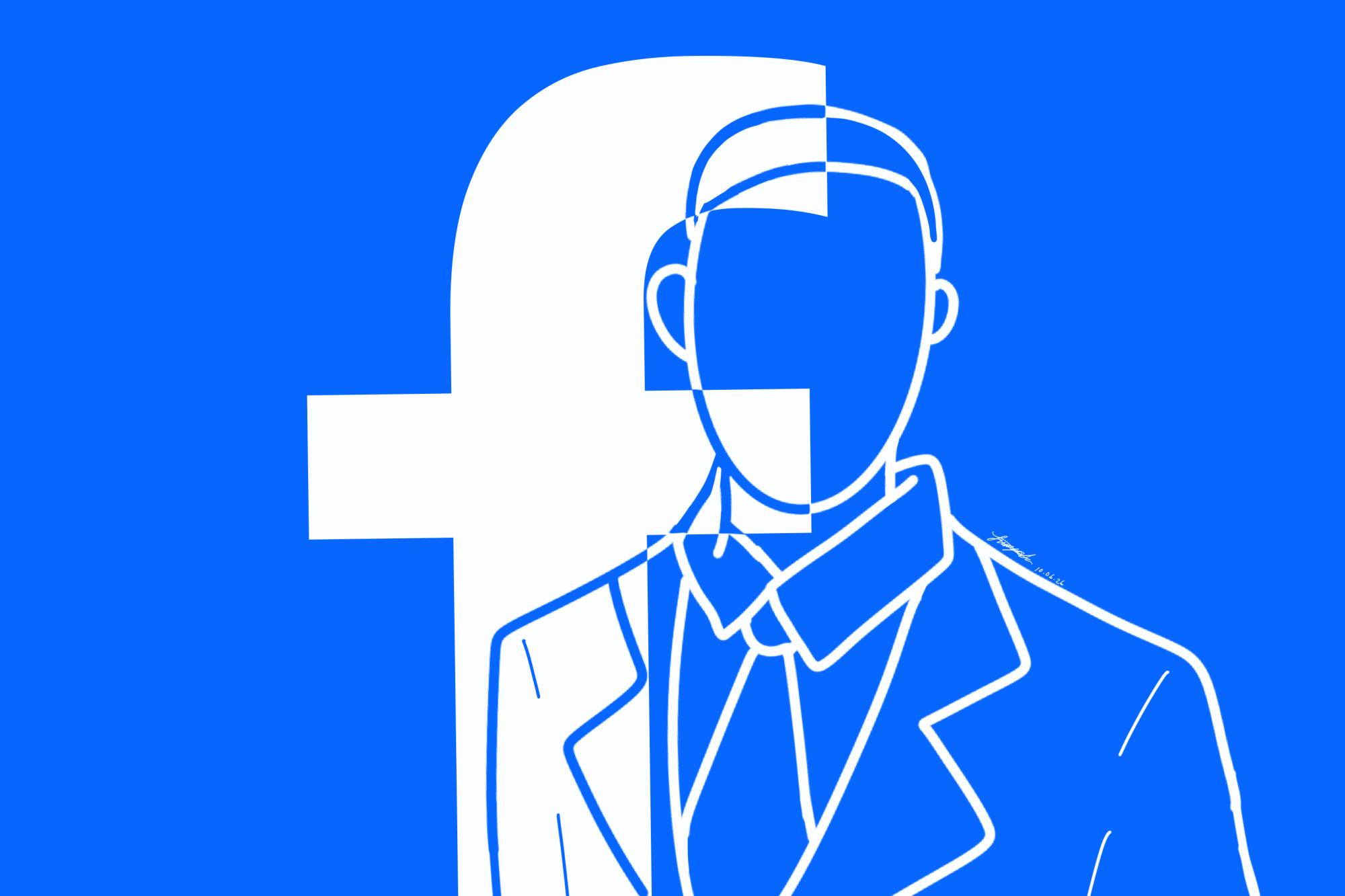
It might be tempting to judge “The Social Reckoning” purely by comparison to the David Fincher-directed 2010 masterpiece, “The Social Network.” That film chronicled the Harvard origins of Facebook as well as the legal battles that followed its founding, using depositions to explore the competing narratives behind Facebook’s creation. Aaron Sorkin, who wrote “The Social Network,” has returned to both write and direct the follow-up.
However, “The Social Reckoning” stands on its own as an absolutely awful drama devoid of any tension or compelling ideas. Typically strong actors give embarrassing performances as hollow, caricatured archetypes. The ostensible plot — though lacking any real narrative thrust — follows the real-life efforts of Wall Street Journal reporter Jeff Horwitz (Jeremy Allen White) to investigate Facebook’s internal practices, aided by whistleblower Frances Haugen (Mikey Madison).
Horwitz is portrayed as an old-school investigative reporter, skeptical of technology. The film belabors this point by letting us know he cannot operate his car’s GPS and he enjoys Old Hollywood musicals. Haugen, meanwhile, is a data scientist on Facebook’s Civic Integrity Team who grew increasingly concerned with the company’s role in amplifying misinformation and political extremism leading up to the 2020 election. She experiences a crisis of faith, torn between her sincere belief in Facebook’s mission of connecting people and her fear that its leadership is knowingly allowing it to corrupt public discourse and cause real harm to its users.
The dynamic between Horwitz and Haugen makes up the bulk of the film, with each serving as an on-the-nose analogue for a different critical perspective on social media. “The Social Reckoning” is structured like a journalism procedural, with multiple explicit references to “All the President’s Men,” but there is little investigation beyond a series of repetitive exchanges. Their meetings follow the same pattern: Horwitz asks questions; Haugen offers a piece of information while withholding others; they meet again and repeat the process. This may well reflect how the investigation unfolded, but it makes for a listless plot in a film that clearly aspires to be a thriller.
Sorkin also seems determined to suggest romantic chemistry between the two, though real-life events leave him little room to develop the implication beyond awkward insinuation. Haugen wears cocktail dresses to their clandestine meetings in Horwitz’s hotel room so that anyone who sees her will assume she is on a date. These “disguises” don’t amount to anything and end up feeling like a crude excuse to show Madison in revealing clothing.
We eventually learn that Haugen’s friend Kayleigh (Portia Doubleday) was radicalized by her time spent on Facebook. The film’s dreadful opening scene follows her accosting and eventually being arrested by two police officers, whom she accuses of persecuting her for being white. In a ludicrous moment later on, she is revealed to have become a Jan. 6 rioter.
In fact, Sorkin makes the shocking choice to frame a large portion of “The Social Reckoning” around the Capitol riot, despite having a limited factual basis for doing so. The nonlinear narrative is split between Horwitz’s investigation and a single day at Facebook as Mark Zuckerberg (Jeremy Strong) prepares to testify before Congress. It is gradually revealed that the day in question is Jan. 6, 2021, and that the Wall Street Journal’s reports on Facebook’s politically radicalizing algorithm will be published just a few days later.
In reality, Zuckerberg testified virtually in March of 2021, and the Wall Street Journal began publishing the Facebook Files in September of that year. The choice to condense these events might be warranted had it been dramatically compelling, but it comes across as a desperate attempt to add stakes to an otherwise meandering plot. Sorkin may truly view the insurrection as a direct result of Facebook and other social media platforms, but using it as a dramatic crutch only exposes the film’s inability to generate tension on its own.
Sorkin is widely considered to be a stronger writer than director; he has penned excellent scripts for films like “A Few Good Men” and “Moneyball,” but his directorial efforts have been less successful. The cinematography in “The Social Reckoning” indeed suffers from boring compositions and aimless, floaty camera movements that give it a distinct made-for-TV look. Yet Sorkin’s writing here is even more awful than his directing, with a poorly conceived story and cringe-inducing dialogue that feels ripped from the early 2000s.
Many of these lines are clearly and poorly engineered to be clever or inspiring. Haugen at one point tells Horwitz, “You guys are gonna need more ink.” When she comes to the newspaper’s office, an inspired intern approaches her reverently: “Frances… you’re cool.” Another journalist intones, “That nerd in there… she’s smarter than any of us.” In a particularly egregious moment, the newsroom erupts into slow-motion applause when Horwitz reveals how many documents they’ve obtained. The final shot of the film, involving a “Breakfast Club”-style fist pump that calls back to an earlier scene, is downright atrocious. Sorkin repeatedly reaches for these stirring, consequential moments, but his attempts at grandeur are so clumsy that they are often unintentionally laughable.
Perhaps worse than the film’s awkwardness is its pointlessness. There is nothing particularly surprising about the revelations on display. Anyone who spends time on the internet likely knows that social media can be addictive, politically radicalizing and harmful to teen mental health. President Donald Trump is, bafflingly, never mentioned by name despite the film’s sustained focus on the insurrection staged on his behalf. And while “The Social Reckoning” is highly critical of Facebook, it offers little incisive political commentary beyond a few cursory references to “the left and the right.”
Approaching two years into Trump’s second term, the film’s self-congratulatory tone is especially galling. Facebook remains a dominant force in public life, and the political effects of social media are more apparent than ever. Sorkin could have used this disconnect to underscore how much work remains to be done, turning the film into an indictment of a system that has proved remarkably resistant to accountability. Instead, he frames Horwitz’s reporting as a triumphant victory, culminating in an inspirational final shot that the intervening years have done little to justify. For all its posturing as a politically urgent drama, “The Social Reckoning” offers little more than a familiar indictment of a company that is as powerful as ever. There is no reckoning to be had here.