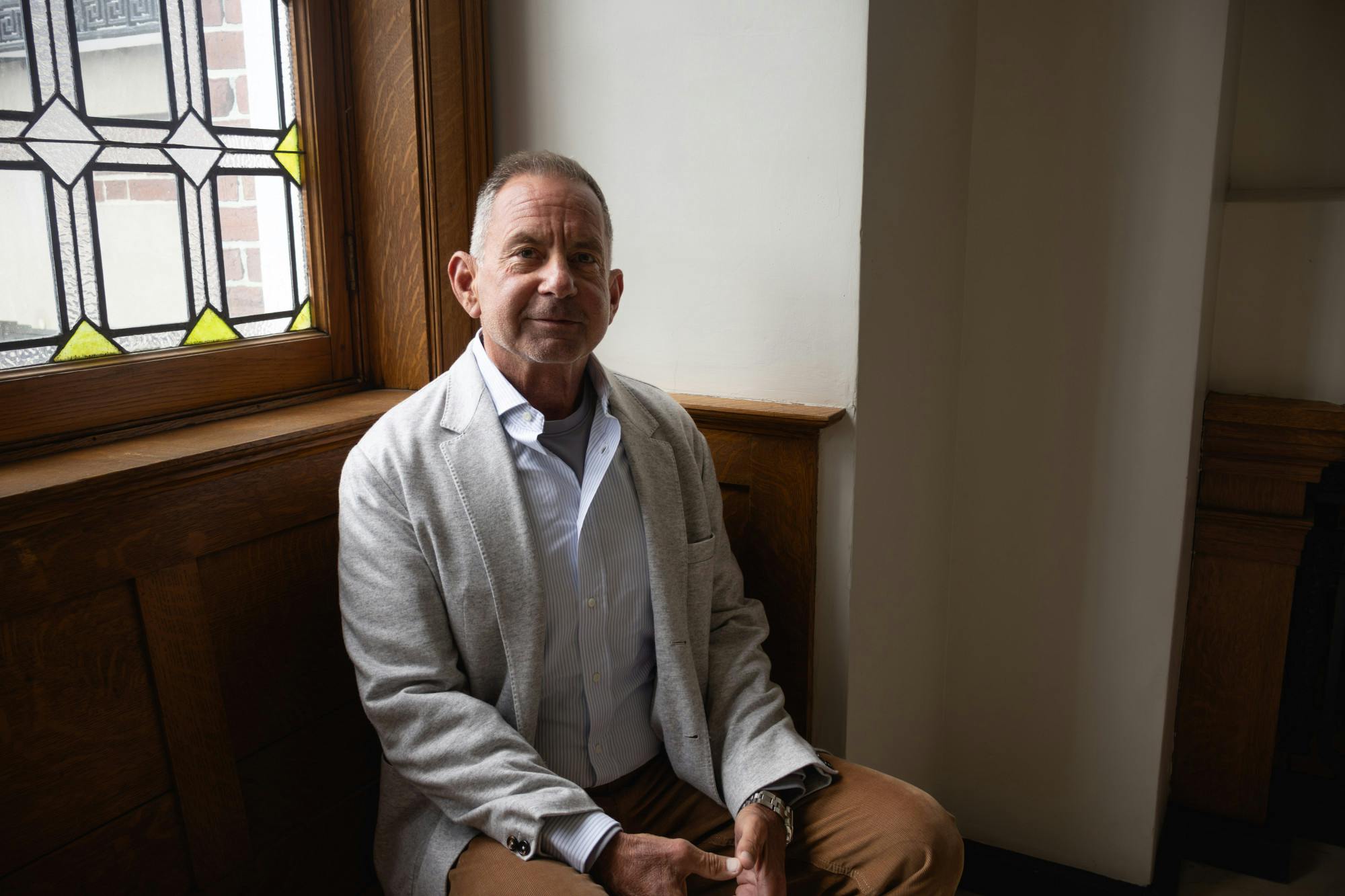
As part of The Dartmouth’s coverage of the upcoming 2026 midterm and gubernatorial elections, the paper is publishing an interview series, “A Sit-Down with The Dartmouth,” featuring in-depth conversations with candidates for statewide and New Hampshire district positions.
In this installment, The Dartmouth interviewed Anthony DiLorenzo, a Republican candidate for New Hampshire’s 1st Congressional District. The seat is open following U.S Rep. Chris Pappas’s, D-N.H., decision to run for U.S. Senate. DiLorenzo is a real estate developer and owner of the Key Auto Group, which operates 21 car dealerships and 12 collision centers in nine states, including New Hampshire. He is first-time candidate, competing in a Republican primary field that includes State Rep. Brian Cole, R-Manchester, and Hollie Noveletsky as he seeks to flip the district for the first time since 2019.
Positioning himself as an outsider to elected office, DiLorenzo has centered his campaign on lowering energy costs, addressing affordability and applying private-sector experience to government.
You are entering politics for the first time in a competitive, open-seat race. Why is now the right moment to run, and why are you the strongest Republican candidate to win both the primary and the general election?
AD: In the past, I’ve been in the background supporting other candidates, including White House press secretary Karoline Leavitt, former Gov. Chris Sununu and Gov. Kelly Ayotte. This time, I saw an opportunity. I wasn’t confident that there was a Republican candidate for the 1st District who could win the race. As I’ve traveled the state, I’ve heard from people who are struggling. I don’t feel that our current federal delegation is representing them properly.
Recent Federal Election Commission filings suggest much of your fundraising came from your own money. Why should voters read that as a strength?
AD: Fundraising is the worst part of running. I’ve normally been on the other end, giving money to charities and nonprofits. I wouldn’t ask others for money without putting my own dollars into the race. But even without that, I’ve out-raised everyone on the Republican side. I’m not taking special interest money. The only people I want to represent are people from New Hampshire.
Does self-funding risk making you look disconnected from ordinary voters?
AD: I was raised in a working-class family. I got my first job at eight years old delivering newspapers. I’ve washed dishes, waited tables and worked as a cook. I went to the University of New Hampshire, dropped out and started my own business with $7,000. I wasn’t born successful. I worked for it. I’ve lived in the state for 43 years and created over 1,000 jobs. I think I’m very connected to the people of New Hampshire.
You have emphasized affordability. What is the single biggest thing you would do first to lower costs for New Hampshire families?
AD: New Hampshire has some of the highest energy costs in the country. We have to fix that. It’s affecting families and our economy. If you want to attract business and create jobs, you need an environment that makes sense economically. Natural gas is probably the most obtainable near-term solution. Pennsylvania has some of the cheapest natural gas in the country, but pipelines are blocked by Massachusetts and New York. If we had access, our energy costs would drop dramatically.
Housing costs are a major issue in New Hampshire’s 1st District. What actions would you support federally to increase supply?
AD: Supply is the issue, and a lot of the barriers are local. But there are things the federal government can do. I’d support programs to help first-time buyers, suspending tariffs on building materials and tax credits for developers. Infrastructure costs — roads, water, electricity — are often the biggest barrier. If you can offset those costs, you can increase supply.

DiLorenzo is a real estate developer and owner of the Key Auto Group, a new car dealership. He is first-time candidate, competing in a Republican primary field that includes State Rep. Brian Cole, R-Manchester, and Hollie Noveletsky as he seeks to flip the district for the first time since 2019.
Healthcare affordability remains a top concern for Granite Staters. What would you do to lower costs?
AD: The Affordable Care Act is not, in practice, affordable. It removed transparency and competition from the system. Competition and transparency are key. I had an MRI that cost $6,000 at one facility and under $800 elsewhere. That should not happen. We need a system where people can make informed decisions and where providers compete on price.
As an auto dealer, tariffs affect your industry directly. Do tariffs help American workers more than they hurt family budgets?
AD: I don’t think it’s one or the other. Tariffs can generate revenue, encourage domestic manufacturing and open markets for American products. Those are positive goals. At the same time, tax policy matters. Lower income taxes benefit everyone, while tariffs only apply if you’re buying foreign goods.
Immigration is a central issue in this primary. What is your position?
AD: I support legal immigration and enforcing the law. You can’t have a functioning society without laws. We should focus on criminals while ensuring enforcement is professional and humane. I also think extreme cases get a lot of attention, which can distort how people view the broader system.
Iran has returned to the center of national politics. What does American strength mean to you, and what role should Congress play?
AD: I support peace through strength — having the capability to defend yourself and the willingness to use it. If you draw a line, you have to enforce it. That’s what creates deterrence. Military action should be based on national security. I don’t think a regime like Iran should have a nuclear weapon. Congress should be involved when it comes to putting boots on the ground. We shouldn’t send Americans into conflict without that oversight.
Is there anything voters should know about you that is not on your resume?
AD: I’ve done a lot of philanthropic work supporting nonprofits, universities and community organizations, often anonymously. We’ve helped groups that provide food, housing and services to people in need, including veterans. I’ve always believed that if you’re in a position to help, you should.
This interview has been edited for clarity and length.
Correction Appended (May 8, 7:53 p.m): A previous version of this article erroneously described Key Auto Group as a used car dealership. This article has been corrected.
Isabel Menna ‘29 is a reporter from Leavenworth, Wash., is majoring in economics and is a member of the Dartmouth Ski Patrol.