As Green Key rolls around again, Dartmouth Emergency Medical Services student volunteers, Dartmouth Safety and Security officers and Dick’s House medical staff are preparing for an unusually busy stretch from Wednesday night through Sunday morning to keep students safe during one of the College’s largest social events of the year.
Compared to other major campus events, Green Key is one of the busiest weekends of the year for campus safety officials, according to campus emergency manager and Dartmouth EMS staff advisor Ron Swartz. The Programming Board concert Gold Coast lawn on Friday night is a “very overwhelming” night, he said.
“We may have 10 people calling about 10 different intoxicated people,” Swartz said. “Compared to the [Homecoming] bonfire, compared to Commencement, this is by far a bigger party night.”
The preparation begins weeks before the first concert act takes the stage. In the lead-up to Green Key, Dartmouth EMS conducts safety trainings with Greek spaces, focusing this year on the use of Narcan — a spray that temporarily reverses opioid overdose — and automated external defibrillators recently installed across Greek and residential spaces, according to Dartmouth EMS executive director Alex DiCorpo ‘27.
“Last year, we did a good job,” DiCorpo said. “We did [training sessions] at every single Greek space, as well as a lot of other houses that are part of the Greek Life Council or community houses.”
Dartmouth EMS also runs internal training scenarios inside Greek spaces to simulate the conditions volunteers are likely to encounter over the weekend. The most common incidents Dartmouth EMS responds to over Green Key are alcohol intoxication, heat exhaustion and trauma from falls, according to DiCorpo. Unlike a typical weekend, during which Dartmouth EMS runs Friday and Saturday night shifts with four providers each, Green Key requires continuous coverage beginning on Wednesday at 10 p.m. and running through Sunday at 9 a.m.
For student volunteers, staffing Green Key means giving up much of the experience themselves.
“What really stuck with me is how devoted our community at [Dartmouth EMS] is to helping the campus, that people are willing to give up Green Key or a Friday or Saturday night to provide coverage when they could be going out and having a lot of fun,” DiCorpo said.
When Safety and Security officers respond to a call, Dartmouth EMS is also dispatched to the scene to investigate the situation.
“We provide the medical care and try to give as much care as we can, provide any treatment and then we’ll make a transport decision whether the patient can be released, brought to Dick’s House or to the hospital,” DiCorpo said.
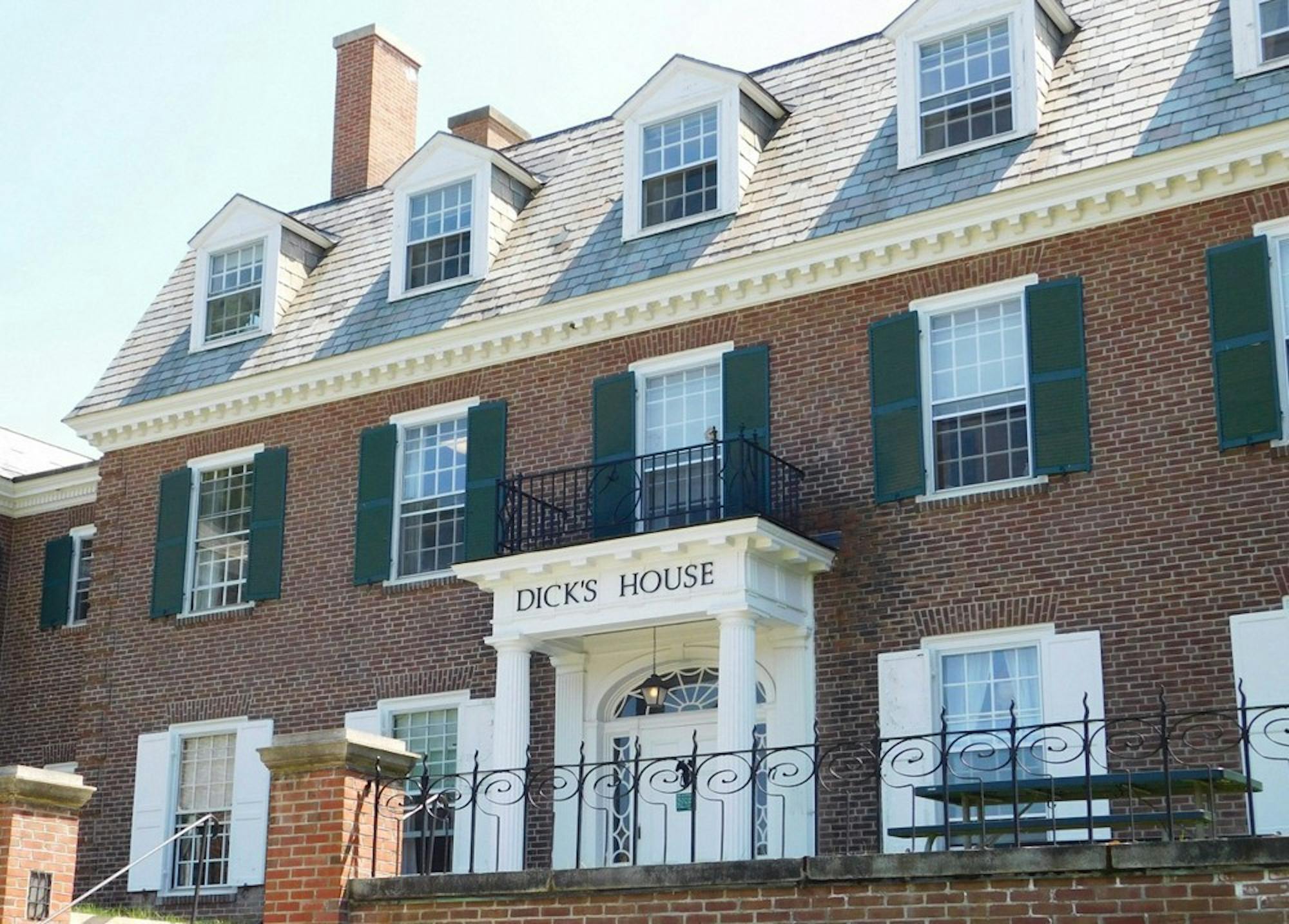
If a student requires more care than Dartmouth EMS can provide on scene, they may be transported to Dick’s House.
Dick’s House is “only one of about 12 residential college infirmaries in the whole country,” Swartz said. “We’re pretty proud of that.”
Dick’s House nursing director Lauri Gallimore wrote in an email statement to The Dartmouth that Green Key often brings an “increase in student evaluations and admissions.” Medical and mental health providers are also available for consultation and provide care for admitted students, she wrote. A medical provider will be available in the clinic on Saturday from 9 a.m. to 1 p.m. for acute care needs.
Dick’s House also takes a preventative role out in the field. At Phi Delta Alpha fraternity’s annual pre-Green Key Block Party, Dartmouth Health Services and the Student Wellness Center host a table offering water, electrolytes, snacks, sunscreen, insect repellent and foam earplugs, according to Gallimore.
Gallimore, DiCorpo and Swartz urged students to prioritize hydration and take advantage of campus safety resources. Fentanyl test strips are at the Student Wellness Center, and Narcan is carried by both Dartmouth EMS volunteers and Dartmouth Safety and Security officers.
“If you feel like you’re feeling really out of it, go inside, drink some water and stay on top of it,” DiCorpo suggested.
Gallimore wrote that the Dick’s House inpatient nursing department provides overnight admissions and after-hours evaluations at no cost when the Primary Care Clinic is closed during the fall, winter and spring terms.
Swartz said the Safety and Security Office produces a printed operations plan each spring in coordination with the Hanover Police Department, the Hanover Fire Department and relevant campus departments. The plan, which covers Block Party and the concert, includes assigned officer posts, event schedules sourced through the Council on Student Organizations and maps of Block Party locations.
“[The plans are] basically standing documents that are reviewed every spring, and we take whatever intelligence we have on what might be different this year and make the plan more relevant,” Swartz said.
During the concert, Swartz monitors the event from an emergency operations center on campus using cameras, two radios and a phone tree, a system used to route incoming calls, connecting supervisory staff across campus and Hanover Police officers, who share a visible command post near the event.
Swartz urged students to seek help if they are concerned about someone’s safety.
“In general, students should be encouraged to see something, say something,” Swartz said. “If somebody needs help, or if you’re just not sure, go ahead and call somebody in uniform.”
DiCorpo also pointed to Dartmouth’s Good Samaritan policy, which protects students who call for help and for whom help is called from alcohol-related disciplinary consequences.
“It is a lot better to have your friend minorly upset at you because they got a Good Sam than have your friend be in a very dangerous situation that could result in severe injury or even death,” DiCorpo said. “There are no downsides to calling. If you don’t know, just give us a call.”