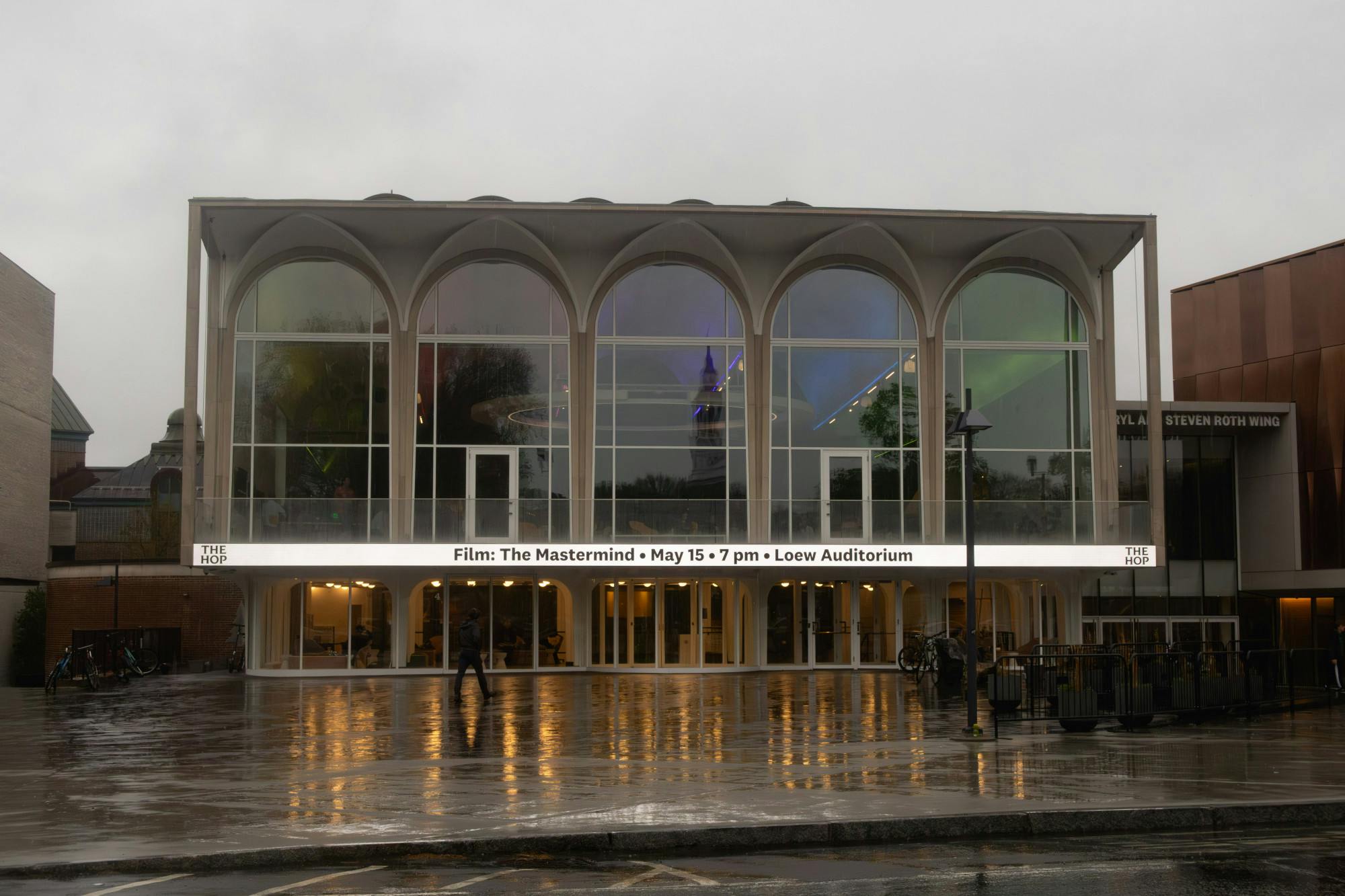
From 5 p.m. to 7 p.m. on Wednesdays, Thursdays and Fridays, part of the second floor of the Hopkins Center for the Arts — a social hub known as the Top of the Hop — welcomes the community for music, conversation, snacks and drinks. The bar hours are a new addition since the Hop reopened in fall 2025, Hop director of external affairs Michael Bodel wrote in an email statement to The Dartmouth.
All attendees are provided a drink ticket at the entrance, which allows them to grab a cocktail or mocktail free of charge as they peruse the space. Attendees gather at high-tops and comfortable couches as student bands and other invited artists perform throughout the evening, providing an ambient atmosphere defined by its energy and sociability.
Jackson Weinstein ’27, a student musician who has performed at the Top of the Hop, said that about 40 to 50 people attend on nights he performs, creating a “lively atmosphere.”
The space is a “pretty special thing that I don’t know exists at too many other schools,” he said. “I think student performers being there has been important to making sure that people come out, whether it’s our friends or just the expectation that they go for bar hours and there will be someone performing live music there.”
Jillian Brandl ’27, a student bartender at the Top of the Hop, said bartending events in the space “doesn’t even feel like I’m at work.”
“The setup is really easy and I get to hang out and talk to my friends when it’s slow and I see a bunch of people,” she explained. “I think sometimes it feels like when I’m working I’m missing out on social opportunities, but when I work [at the Top of the Hop], I get to see everyone I would probably run into anyways.”
Brandl noted that since having started working this term, she now recognizes people in the space as regulars. One time, for example, she saw her professor out with a friend at the event.
“It was really fun just to see her outside of the classroom,” Brandl said. The space allows students to “see their professors and other faculty in a more real-world scenario, which I think is really fun.”
Over the past several months, Top of the Hop events have become a consistent gathering space for the community, inviting people to return not only for drinks and music, but also for the sense of connection that it fosters across various groups on campus. The event’s appeal lies in its simplicity: it feels welcoming, open and fun.
As a member of the 11-person student band Lotus, which is contracted by the Hop to play about a show a week, and a solo pianist and singer, Weinstein said he often takes requests from the crowd. When a student band like Lotus plays, the music is typically the central focus of the open bar hours, and the singers engage the crowd, he said.
“Our singers definitely do a good job of trying to walk through the audience and get the audience involved, get people clapping their hands, et cetera,” Weinstein said.
Weinstein added that it is “really unique” that Top of the Hop events bring together “people from a variety of different age groups together.”
“Just last week, when I was playing [with] Lotus, right in front of me was my anthropology professor from last term, who was there with his wife,” he said. “We try to play songs that the young people know, but we also do a lot of oldies.”
Bodel wrote that the Hop is “planning for similar programming and bar hours to continue next year, with the exact details dependent on funding and staffing considerations.”
Part of the funding goes toward the drinks given out by drink tickets at each open bar night. Brandl said attendees are “really appreciative” of the complimentary drinks.
“If you were paying with your own money, you might get drunk and not respect the space as much,” she explained. “I would say [the free drink ticket] adds a level of respect to how people interact with the staff and the drinks themselves.”
Many people come for a drink before or after a performance, so the amount and type of alcohol catered depends on those, but others attend just to study or hang out with friends.
“They have created a really great atmosphere for people to chat with each other or just to chill around and to relax after the whole day of working,” Wenyu Zeng GR said. “The drinks and the music are great to provide the vibes here.”
Zeng first discovered the event when one of her friends recommended it to her. She now attends frequently.
“Since then, we’ve just been so in love with this place. I have already recommended this place to a lot of people,” she said.
These reactions reflect a broader appreciation among students for the atmosphere and sense of community the event creates, which Brandl echoed.
“I do think it’s a really nice change from the typical drinking scene at Dartmouth because if you want to drink, there’s way better options than just seltzers,” she said. “You’re in a beautiful room with big windows and a bunch of natural light, and it’s open, there’s no crowding. I do think it provides an outlet for drinking that isn’t otherwise available.”
Furthermore, the event highlights student talent while fostering an inclusive and accessible campus social scene, creating a space for student performers to “share their gifts with their classmates,” Weinstein said.
“It indicates buy-in directly on the school’s end — they are always trying to reach out and engage new students to find student performers,” he explained. “The indication that the school supports that and are willing to pay people, to share their gifts and to create that atmosphere, is really special.”