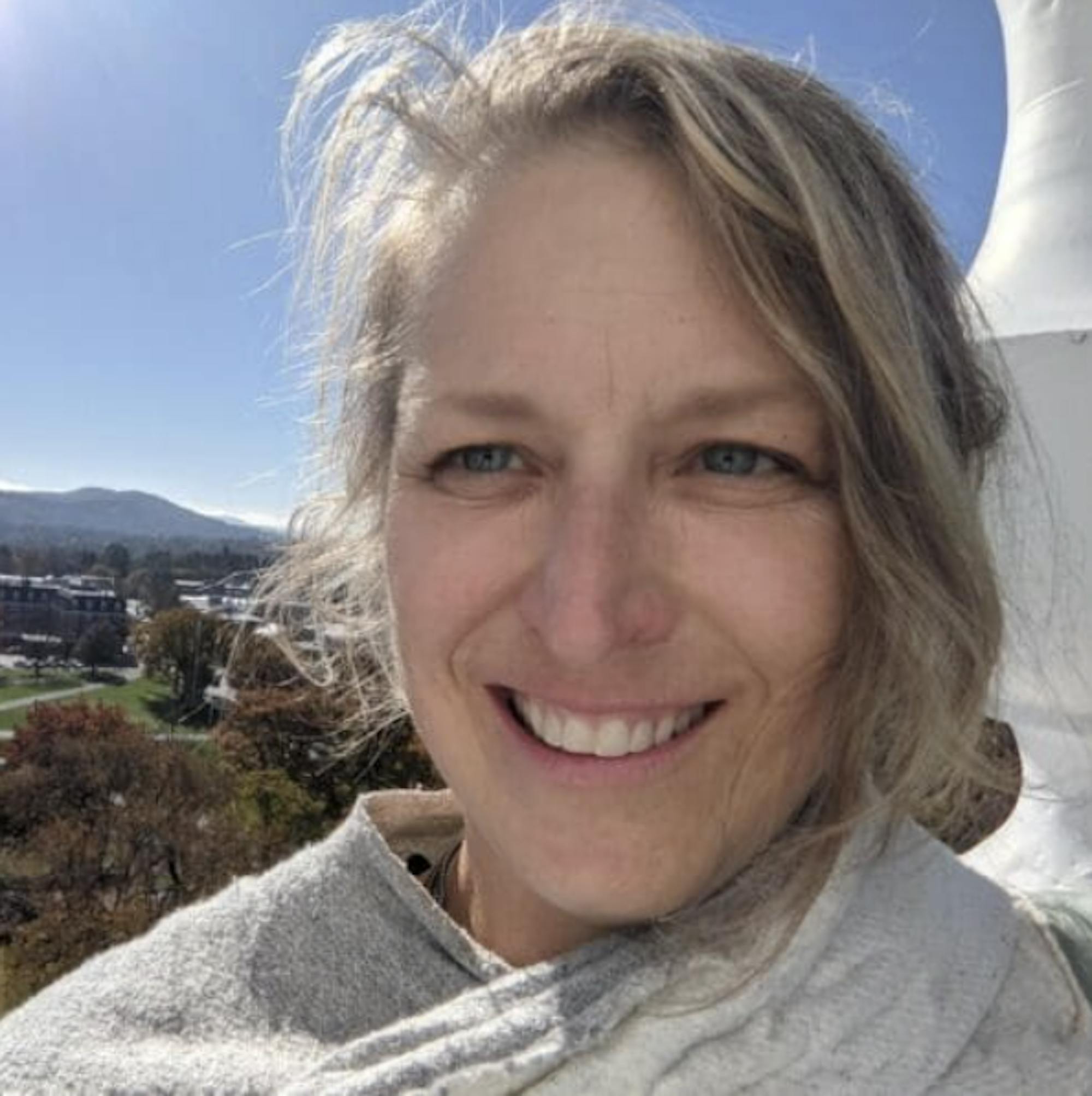
On April 7, Hanover Selectboard member and film and media studies professor Jennie Chamberlain was selected to attend the Smart Growth America’s Champions Institute, a program to help officials improve community design in their towns, according to a Town of Hanover press release. Chamberlain, who moved to Hanover in 2018, was elected to the Selectboard in 2023.
The Champions Institute prepares elected local officials to develop and implement frameworks for community development and downtown planning, according to the Smart Growth America website. Each year, 14 elected officials are selected from across the country to participate in the program.
The Dartmouth sat down with Chamberlain to reflect on her work on the Selectboard, her advocacy for developing resilient communities and her goals for the program.
Congratulations on being selected for the Champions Institute. How did it feel?
JC: Super exciting. I’ve been following Smart Growth’s work for decades, and they provide really great information and frameworks and a thoughtful understanding of the complex systems involved in creating active communities.
Tell me more about the Champions Institute. Why did you apply, and what do you hope to gain from participating?
JC: I found out about the application through a fellow advocate for active communities, and I applied because in Hanover, we are poised to amplify our good past policies and frameworks, such as our pedestrian bicycle master plan from 2013. Change is really hard — there are many connecting pieces and unknowns to overcome. To do that takes a lot of work, know-how and conversations. I thought the Champions Institute was a great opportunity to learn from how other people have approached similar challenges.
The focus, “Active People, Healthy Nation,” is really exciting to me. The Selectboard has long had these values; We want the way we develop our community to support positive physical and mental health. However, we are not set up to track health outcomes, so this is an opportunity to make more concrete, actionable plans and understand the impact of active communities on a more local level. Rather than have pie-in-the-sky aspirations, we can figure out how we can really move the needle.
Let’s backtrack a little. Tell me more about your background.
JC: I got my bachelor’s in economics at Harvard, and then my master’s in media studies and cinematic arts at the University of Southern California. While they might seem worlds apart, the commonality is that both address the way systems come together. They both have system-sinking underpinnings, whether you’re designing a story world or thinking about how you set up fees and payment systems, rewards or how you understand the narratives of paths.
All of our paths, sidewalks and communications systems have these histories that are layered on top of one another; The path from Hanover to Boston was originally a Native American trail. I think about how those histories impact our daily lives, coincidentally, both from a cost structure perspective, as well as who is being served by them. Those are deeply integrated. Providing basic mobility is often treated as an amenity. However, it is not only necessary for a high-functioning society, but it is the cheapest infrastructure you can build.
As chair of the Hanover Bike Walk committee, you’ve advocated for “mobility options that are safe and equitable.” What motivates you to advocate for safer streets?
JC: It started with a very personal experience. I was walking my double stroller with my twins across a bridge in Los Angeles and found myself deposited in the middle of seven very busy lanes of traffic with no way to safely or comfortably get to the other sidewalk. It was an eye-opening experience.
At my children’s elementary school, we worked with other advocates to eventually implement a road diet — a reduction in the number of lanes — but it was a super contested project. The seriousness of the problem and the systemic resistance to positive change is very striking, especially when you start thinking about who is left out, people who don’t have the freedom to move because they lack basic accommodations to reach their everyday destinations.
What is your vision for a “safe streets” Hanover?
JC: A ‘safe streets’ Hanover allows any community member to participate in public life, regardless of whether you’re a child who can bike independently to school or a senior who feels comfortable moving around, going out and meeting people. It means having these productive third spaces where you can have chance encounters and you can have a community naturally form. That’s really important for mental health, social capital and general happiness.
How do you think Dartmouth students and Hanover community members can be more involved in designing safer and more resilient communities?
JC: Get involved at the local level, because that’s where you start to understand how the work gets done. We have various organizations, like Sustainable Hanover and Hanover Bike Walk, where we often see Dartmouth students participating. There’s a ton of great resources available. There are also opportunities to organize your own group and publicize or communicate your findings or needs on a regular basis. In Hanover right now, there’s a lot going on with the push to build more housing. People should get involved if they’re interested by participating in town meetings. If you live here, you can also register to vote.
This interview has been edited for clarity and length.
Sahil Gandhi ’29 is a reporter from Staten Island, N.Y., and is majoring in environmental studies and government modified with philosophy and economics. He loves word searches and falling down internet and Wikipedia rabbit holes.