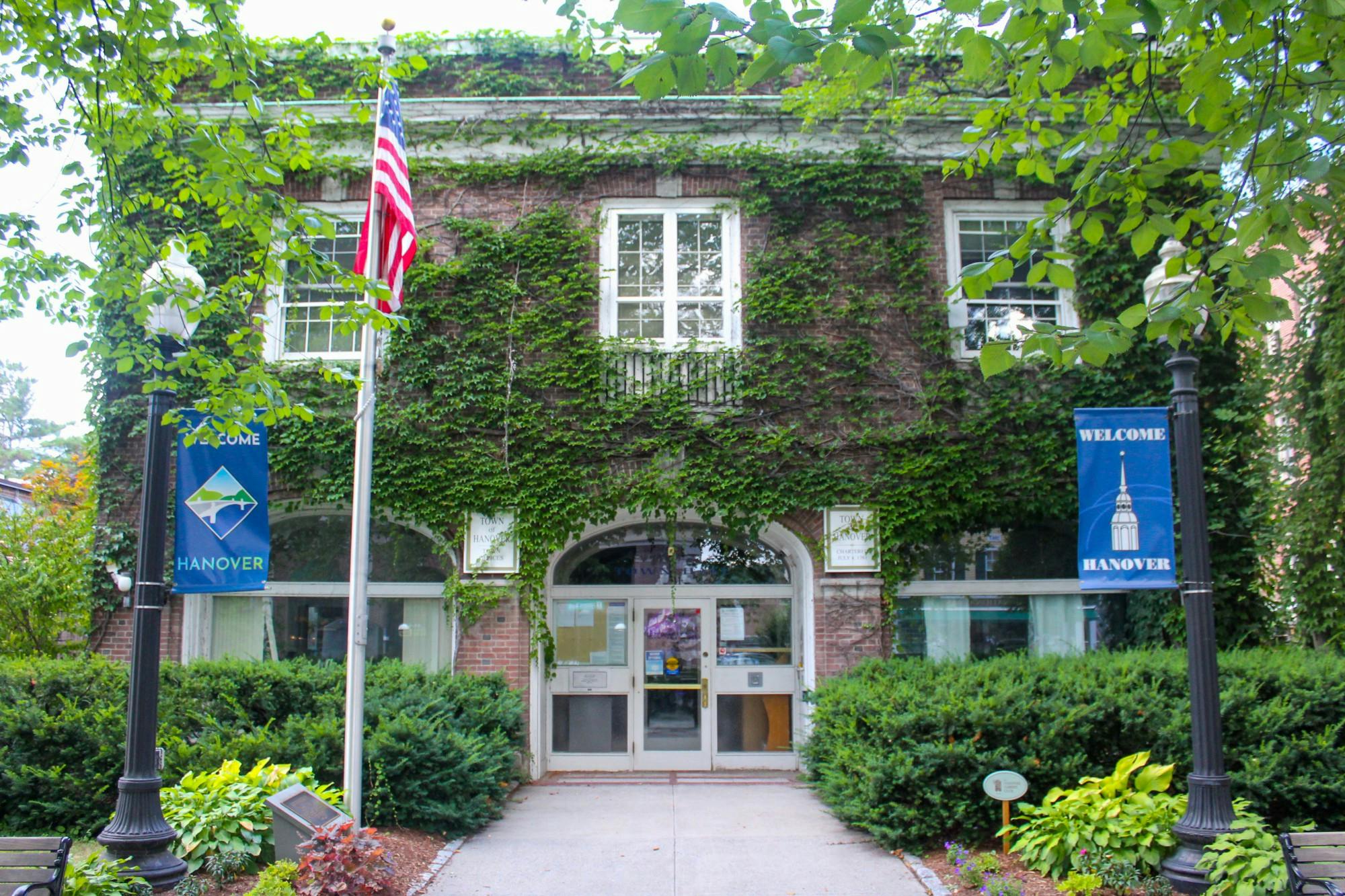
Engineering-consulting firm Toole Group presented a plan to add bike lanes to Hanover streets on Oct. 13 to the Hanover Bike Walk Committee and town residents. The Selectboard has yet to finalize any decisions about the “Hanover Shared Streets Vision Plan,” but is looking to make town more walkable.
The committee hired Toole Design in August 2022 to create an infrastructural plan, and published its vision for a safer Hanover on May 15, 2025. The town paid Toole $90,000 to create the preliminary vision, according to Hanover Selectboard member and Bike Walk committee chair Jennie Chamberlain.
Chamberlain said the town hopes to reduce car dependency and create “mobility options that are safe and equitable.”
“If you go to a place where you can walk around … it’s amazing,” she said. “We want to reduce auto dependency, which means that you shouldn’t need a car to get around.”
She added that she hoped new bike lanes would form an “interconnected network” so that people can travel “continuously.”
“Any single change, while it will help that little segment [of road], sort of pales in comparison to having it in a connected network,” Chamberlain said. “We should be thinking about serving as many people as possible.”
The presentation on Oct. 14 was the second of two presentations by the Toole Group. The project, according to Chamberlain, is still in the “planning stages” and will not necessarily be adopted.
Toole project manager Carolyn Radisch said at the meeting that the plan aims to develop separated and protected bike lanes on Hanover streets where the speed limit exceeds 30 miles per hour, such as Main Street, East Wheelock Street and the roads around the Green. Raadisch said the plan would appeal to less experienced bikers.
“As [residents who spoke at the meeting] mentioned, the bike lanes feel sort of scary,” Radisch said. “A lot of the riders that we see out there now are the more confident riders, and they’re comfortable with riding the shoulder, riding in a shared lane, but most of the riders that are out there want separation from traffic.”
Toole used bike traffic data from the fitness app Strava to determine where changes needed to be made, in addition to a survey of 230 Hanover residents. At the meeting, residents voiced concerns about getting “clipped” by drivers, and 49% of bikers felt “unsafe” while biking on the town’s roads.
The changes would be a “balancing act” between desires for greater accessibility with the practicality of high costs.
Some residents at the meeting voiced support for the plan because they said they believed students on bikes and electric scooters posed a safety threat. Hanover resident William Young said the rise in electric scooters “silently wheeling around town at high speeds” led to “near misses all the time.”
“One of the challenges is, every year, there are 1,000 more people who come here, who don’t know any of the rules or where they should be,” he added.
Hugh Mellert, committee member and Hanover resident, also complained about students disrupting traffic flow.
“On the [Dartmouth] side of East Wheelock Street, there are seemingly no rules of where you can go,” Mellert said.
Some residents raised concerns about the feasibility of the plan, including former Selectboard member Doug Daett, who called it a “pipe dream.”
“I’m a pessimist because it’s so expensive to do,” Daett said in an interview. “There’s a lot of opposition to it, because you’re really talking about changing the whole [road] structure.”
Max Hubbard '29 is a reporter from Boston, Mass., and is majoring in government and minoring in French. In his free time, he enjoys listening to music, running and watching movies.
Olivia Sapper ’29 is a reporter from Darien, Conn., and is majoring in Government.