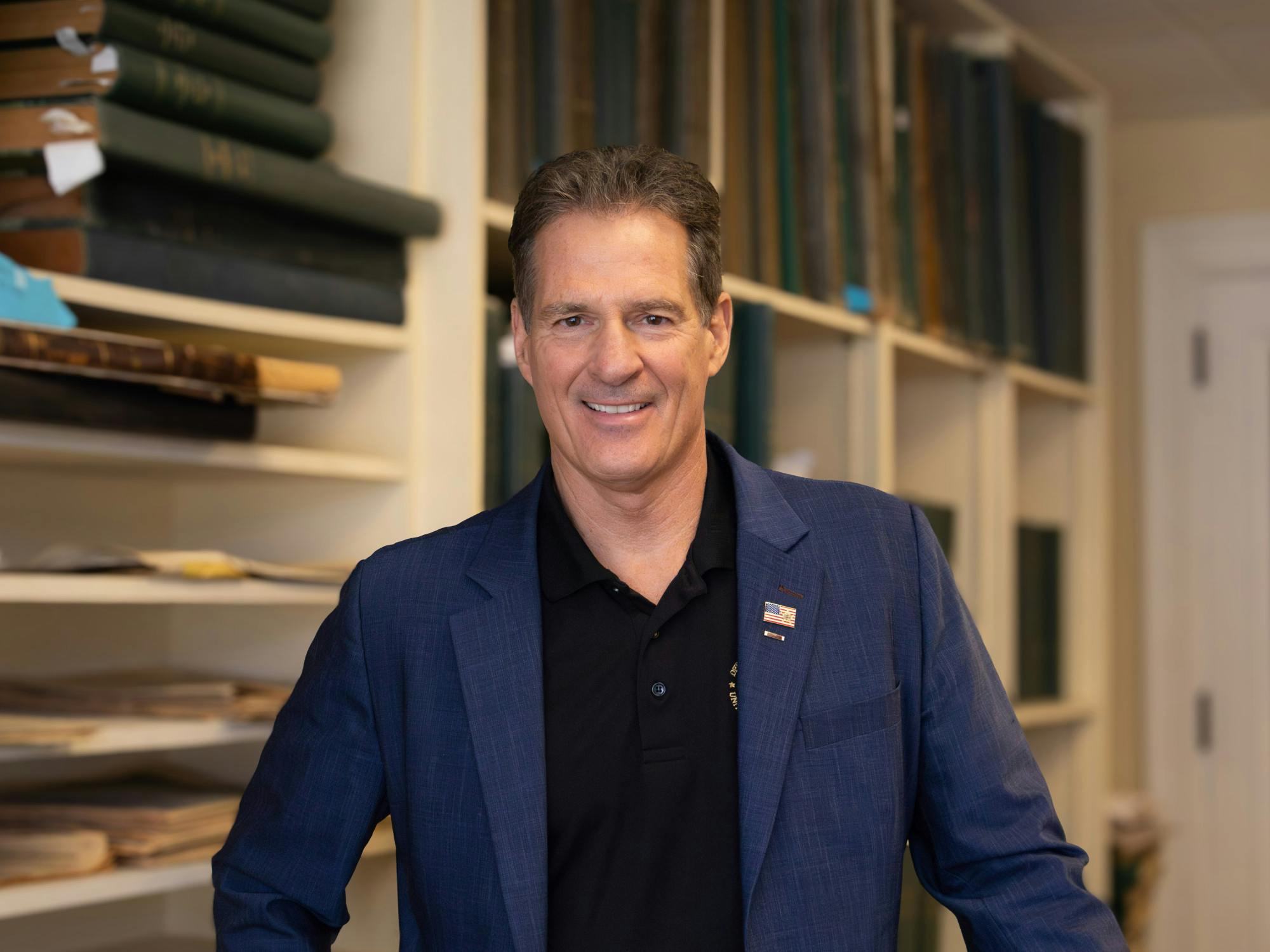
As part of The Dartmouth’s coverage of the upcoming 2026 midterm and gubernatorial elections, the paper is publishing an interview series, “A Sit-Down with The Dartmouth,” featuring in-depth conversations with candidates for state-wide and New Hampshire district positions.
In this installment, The Dartmouth interviewed Scott Brown, a Republican candidate for the open U.S. Senate seat being vacated by Jeanne Shaheen, D-N.H. Brown previously served as a senator from Massachusetts from 2010 to 2012. He moved to New Hampshire and unsuccessfully challenged Shaheen in 2014, later serving as U.S. ambassador to New Zealand and Samoa under the first Trump administration.
Brown has centered his 2026 campaign on affordability, border security and his “political independence” while facing a Republican primary challenge from former New Hampshire senator John Sununu, who was endorsed by President Donald Trump in February.
You have already served in the U.S. Senate, representing another state. Why should New Hampshire voters believe this race is about them and not simply your attempt to get back to Washington, D.C.?
SB: First, you need to know the whole history. I was born at the Portsmouth Naval Shipyard. My family here goes back to 1717. We’ve been homeowners and taxpayers here since 1990. Yes, when my parents divorced, I moved to Massachusetts, raised a family there and made a name for myself there. But New Hampshire has always been home.
When I look at this race, I see a state that needs stronger representation in Washington, D.C. We have two senators and two representatives there now who, in my view, are not adequately representing New Hampshire’s interests. I made the decision about a year ago to run because I believe I have the best qualifications in the field: nearly 40 years in the military, service as an ambassador, local office, state office and the U.S. Senate. Good people need to step up and run.
Trump endorsed former U.S. Senator John Sununu. Why should GOP voters choose you instead?
SB: We both sought the endorsement. I voted for President Trump three times and served as his ambassador. But I also told him I would always be honest with him. If I thought he was doing well, I’d say so. If I thought he could do better, I’d say that too. Independents are telling me, “You’re the independent guy. You call balls and strikes.”
Nonetheless, you have aligned yourself closely with Donald Trump, and foreign policy, especially towards Iran, has moved back to the center of national politics. What does ‘strength’ actually mean to you right now, and how do you decide when U.S. military involvement abroad is justified?
SB: I’ve spent time in that region and worked closely on foreign policy as both a senator and ambassador. Iran has been destabilizing the Middle East for decades. I believed it was appropriate to strike their nuclear facilities if they were close to obtaining multiple nuclear weapons. Strength means being willing to act when necessary. That said, if we are talking about sending 50,000 troops into a long-term conflict like Iraq or Afghanistan, Congress should declare war first. There is a difference between a targeted military action and a prolonged war.

Brown has centered his 2026 campaign on affordability, border security and his “political independence.” He is facing a Republican primary challenge from John Sununu who was endorsed by President Donald Trump in February.
You’ve centered your campaign on affordability and inflation. If you win, what is the single biggest thing you would do to lower costs for New Hampshire families, and where does housing fit into that?
SB: Energy is number one. Heating your home, turning on the lights and paying utility bills are huge burdens here. People should not have to choose between food and heat during a New Hampshire winter. We need more supply, expanded access to natural gas and support for nuclear energy at Seabrook.
Housing is also critical. But much of that problem is local. Zoning boards, permitting delays, state rules and federal guidelines all add costs. I support streamlining that process and encouraging public-private partnerships so towns, builders, states and buyers all have skin in the game.
You’ve made border security a central issue in your campaign. What specific immigration legislation would you support?
SB: First, secure the border. Every country in the world expects that, and we should too. Second, remove people who have already had due process and deportation orders, especially violent offenders. Third, fix legal immigration. I know people who tried to do it the right way and waited years. That system is broken too.
If you win, you would return to the Senate after already having served there once. What would you do differently this time?
SB: I’m older, hopefully smarter and certainly more experienced. Since then, I served decades in the military and as ambassador in the Indo-Pacific. I understand national security and global affairs at a deeper level now. I’d bring that experience and surround myself with smart people who challenge me.
Finally, what should New Hampshire voters understand about you that they may not fully see from your resume or public image?
SB: I’m doing this because I care about this state and country and believe I can help. I also coach girls varsity basketball and play in a rock band. I’m a regular guy. I’ll make mistakes, but I’ll always work to fix them.
This interview has been edited for clarity and length.
Isabel Menna ‘29 is a reporter from Leavenworth, Wash., is majoring in economics and is a member of the Dartmouth Ski Patrol.