
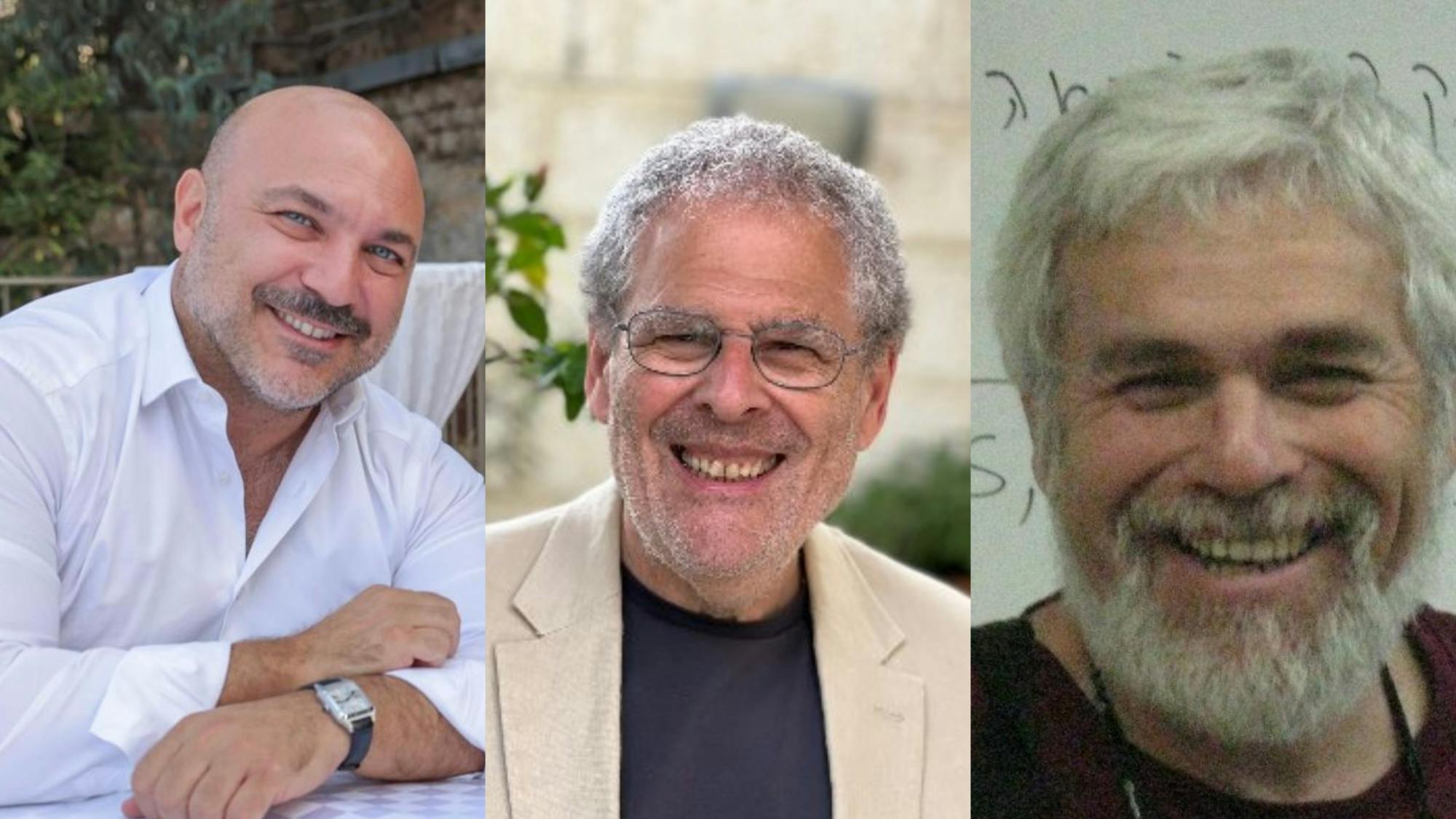
At the outbreak of the Iran war on Feb. 28, several Dartmouth professors were living and working in active conflict zones in the Middle East. Government professor Bernard Avishai, Middle Eastern studies department chair Tarek El-Ariss and sociology professor Lev Grinberg spoke with The Dartmouth about how war reshaped their daily lives abroad.
El Ariss left Lebanon for Paris on March 9, and Grinberg arrived back on campus from Jerusalem on April 13. Avishai is still in Jerusalem, where he lives during the winter and spring every year. He splits his time between Jerusalem and Hanover.
The professors said the threat of violence altered the atmospheres of their respective communities. Grinberg, who lived in Israel for decades and has taught at Dartmouth for 12 years, said the possibility of bombings was “a total interruption of life” and created a “surrealistic feeling.”
“You cannot even go outside without being ready to run to a shelter in complete surprise,” Grinberg said. “It’s difficult to understand, but people felt happy when they were in the shelter because they were protected with their community. You meet your neighbors, your friends.”
El-Ariss, who was on sabbatical in Beirut when the Iran war began, said he woke up in the early hours of March 2 to Israeli airstrikes in the city’s southern suburbs. The day before, he had a “regular Sunday lunch” with his mother and sister.
El-Ariss said he was in Beirut to organize talks, do book signings and manage the publication of the Arabic translation of his latest book “Water on Fire,” a memoir about his experience in the Lebanese Civil War. The publication was intended for March 10, a week after the strikes began, but “basically all of that stopped,” El-Ariss said. Instead, the first book signing will take place on May 2 in Rabat, Morocco.
He added that “all of the sudden,” he was having a similar experience he had as a child growing up in Lebanon during the Lebanese Civil War of the 1980s.
“As a child you don’t have a decision: if your parents stay, you stay,” El-Ariss said. “… As an adult this time, I had the decision to stay or go. It was very stressful. I was trying to support my family and preserve my mental health.”
Avishai said people in Jerusalem are “living out of time.”
“We’re not acting now as normally people do, which is [with] a sort of plan for the immediate future,” Avishai explained. “We’re not doing a lot of planning right now.”
Avishai added that he’s “constantly on edge” and “manages” the mental stress of living in a war zone by writing. He has been a contributing writer at the New Yorker for 15 years.
“Whenever things sort of go off the rails, the way I get them back on the rails emotionally is just to write something and clarify something to myself,” he said. “Somehow that gives me the illusion of gaining control over what are basically uncontrollable events.”
Grinberg taught the first two weeks of his spring class, SOCY 21: “Political Sociology” over Zoom from Jerusalem because he was unable to travel back to campus until April. The situation was “unbelievable,” he said.
“The students were very kind, they were present, but in Zoom it’s different,” Grinberg said. “I explained at the start that the place I taught class from was a protected space because if there was an alarm in the middle of class, it would be difficult to start running to the shelter.”
Grinberg said arriving at Dartmouth was a “salvation for [his] spirit” after living in the threat of war.
“I am no longer in a war mood — I entered what I call a ‘Dartmouth mood’ instead,” he explained. “The atmosphere in this incredible place, in this incredible sociology department, is so committed to the community. So this is a place where I feel very good.”
Avishai added that views on the war are varied inside Israel.
“What I always feel is not obvious outside of Israel is that Israelis, like Americans, are not monolithic,” he said. “Even though the war is ‘popular,’ all that really means is that in a time of open, violent conflict, we find it very difficult not to wish away enemies.”
News executive editor Vidushi Sharma ’27 is a student in Lev Grinberg’s class, SOCY 21: “Political Sociology.” She was not involved in the writing or editing of this article.
Max Hubbard '29 is a reporter from Boston, Mass., and is majoring in government and minoring in French. In his free time, he enjoys listening to music, running and watching movies.
Eliza Dorton '29 is a reporter from Washington, D.C. and is studying English and public policy. Outside the classroom, she enjoys reading and going on walks.


