“The Drama” is the kind of movie that both really does and really doesn’t need to be reviewed. Its impact hinges less on what you know and more on what you don’t, which makes writing about it without spoiling anything feel like a careful balancing act. Much of what makes it work depends on going in blind. What is important for moviegoers to know, though, is that it’s a tense, deeply uncomfortable experience — one that is the complete opposite of its happily-ever-after marketing.
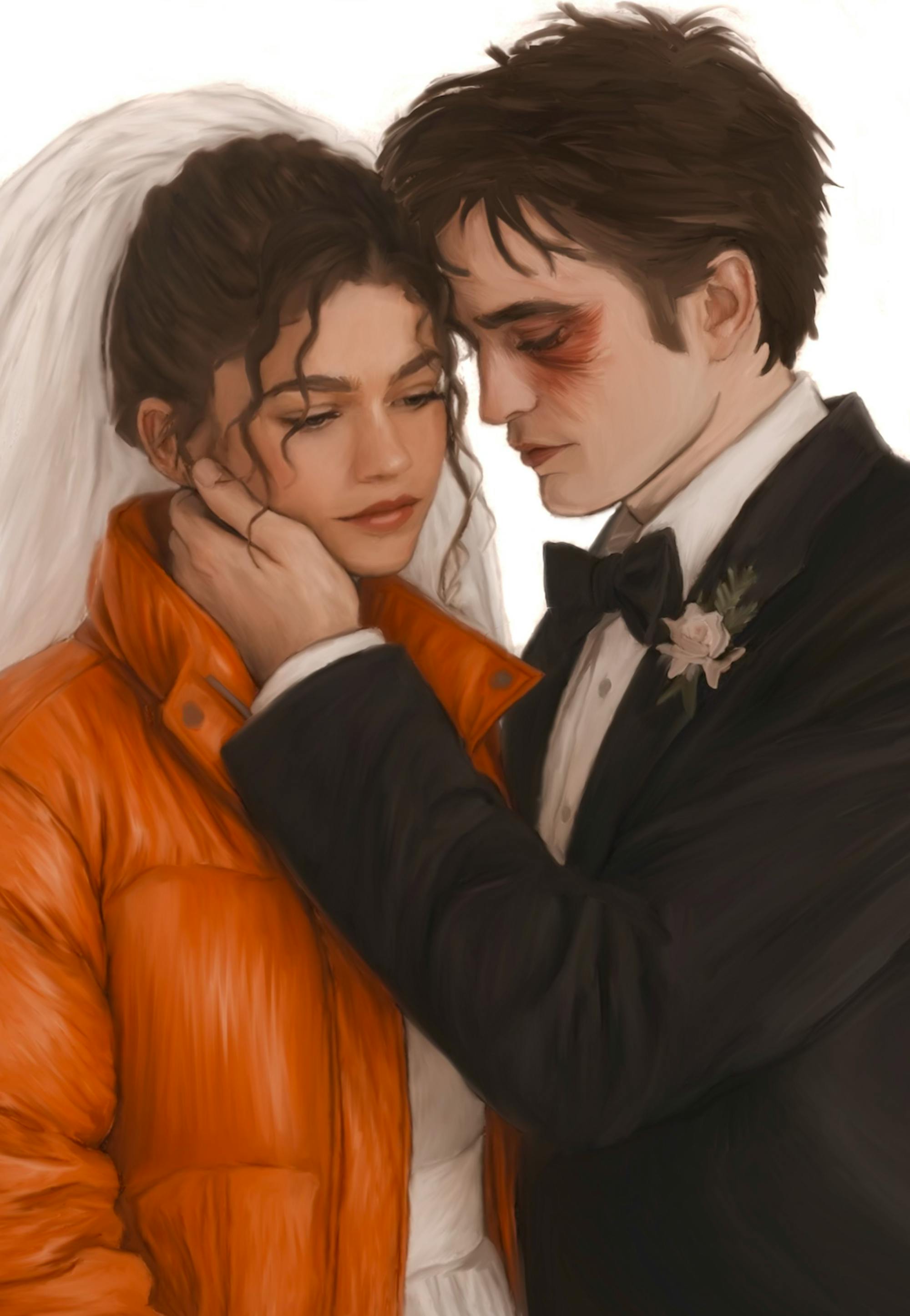
In addition to the starpower of Zendaya and Robert Pattinson, much of the buzz surrounding this film comes from how suspiciously simple its premise appears: A happy couple — Emma, a bookstore employee, and Charlie, a museum curator — prepare for their wedding in the week leading up to it. Going in with the expectation that things will inevitably go awry, you almost immediately start to notice hints of a rocky, slightly superficial dynamic between the two leads. Even the playfully romantic one-shot dance sequence to “I Want to Lay With You” by Shira Small in the opening credits feels like it’s setting up an idealized version of the relationship that the film’s creatively-twisted director Kristoffer Borgli is prepared to undermine. This intentionally shaky construction of stability becomes the film’s foundation. The real entertainment comes from watching it slowly, and painfully, fall apart.
The madness is sparked by an excellently-written dinner sequence in which Emma and Charlie, alongside their coupled friends Mike (Mamoudou Athie) and Rachel (Alana Haim), each reveal the worst thing they have ever done. The unraveling happens rapidly. Quick camera cuts throughout the film prevent viewers from sitting with any one moment before it bleeds into the next, creating a frenzied, anxious momentum that steadily builds suspense. Much of the film’s effectiveness comes from the convincing performances of both its main and supporting players. Haim plays a sanctimonious busybody with such nuance that you are never quite sure where you stand with her: She is deeply unlikeable, but she sometimes seems to have a point.
What complicates — and at times slightly dilutes — this tension is the way Borgli undercuts it with a strong dose of dark humor. Actress Jordyn Curet is key to making this balance work, offering up the film’s biggest laughs during some of its darkest, most shocking scenes. While the comedy works in isolation, it often doesn’t serve “The Drama” as a whole, making it feel like the film is constantly pulling the rug out from under its own emotional stakes. The jokes land, undeniably, but they rarely feel clean — not in a vulgar sense, but more in a deliberately tasteless way. Throughout the film, you find yourself laughing at moments that feel like they should carry more weight, which leaves the movie with a strange aftertaste.
In the vaguest terms possible, the film’s main flaw is that it feels like it’s circling something bigger without ever fully committing to it. Although it pulls from certain corners of internet culture to justify its characters and their behavior, it never quite commits to seriously unpacking the complexities or the very real effects of those spaces. Compared to films that delve into similar subject matter, like “We're All Going to the World’s Fair” — a 2021 film that carefully examines digital identity and teenage vulnerability — “The Drama” feels like it’s barely skimming the surface.
But at the same time, it’s hard to say that this lack of depth is necessarily a flaw. In a way that feels similar to 2023’s crowd-shocker “Saltburn,” “The Drama” is clearly far more invested in the volatile relationship between its two leads than in any of the bigger ideas surrounding them. The film relies heavily on the high-strung tension between Zendaya and Pattinson, and there’s definitely an argument to be made that going deeper into those larger themes would have just weighed it down. It feels clear that Borgli is far more interested in focusing on the fallout than the proverbial elephant in the room.
This choice doesn’t come without its issues. Even if the film is purposefully sidestepping elaboration on its most controversial ideas, there’s still something uneasy about how it flattens an inherently complex and sensitive topic into a backdrop. That same issue carries into the way “The Drama” ultimately tries to tie everything together neatly. Borgli relies on the payoff to a joke mentioned only once early on to wrap everything up, which feels like a cheap workaround so the film can still market itself as a romance. With just ten more minutes of screen time, the ending could have landed in a way that felt much more plausible and deserved, and far less rushed.
For all of its frustrations, “The Drama” is unquestionably effective. It’s tightly paced, consistently engaging, and even when it feels like it’s holding back from loaded topics (pun intended), it never becomes boring or predictable. If anything, its biggest strength is how committed it is to keeping you on the edge of your seat by any means necessary. It plays out like a slow-motion train wreck you can’t look away from, exposing how readily we are drawn to watching other people’s worst moments while pulling us deeper and deeper into the drama.