
In its opening scene, Maggie Gyllenhaal’s “The Bride!” announces itself as a major artistic swing and adaptation of the Frankenstein story. Stuck in some sort of purgatory, a disembodied Mary Shelley (Jessie Buckley) reveals she was never able to finish the story of her seminal novel “Frankenstein” before her death, and declares her intention to complete it by possessing the body of a woman in 1930s Chicago named Ida (also Buckley).
This framing device not only sets the plot in motion, but persists throughout the narrative: Ida suffers from a split personality that sends her into fits of verbose rambling in Shelley’s British accent. The convention reflects a broader “How did this get made?” concept that runs throughout “The Bride!,” which is full of absurd ideas and total commitment that feel ambitious for a big-budget studio production based on intellectual property and starring major actors. Unfortunately, that ambition almost never yields anything compelling, and the Mary Shelley device especially reads as a disastrous misstep that drags the entire film down with it.
Ida’s possessed outbursts quickly get her into trouble with the local mob, and she winds up dead. Meanwhile, Frankenstein’s monster, here called Frank (Christian Bale), arrives in Chicago in search of Dr. Euphronious (Annette Bening), whom he convinces to revive a corpse as his undead bride. The pair happen upon Ida in a pauper’s graveyard, and she is “reinvigorated” but left completely amnesic, allowing Frank to convince her that they were once lovers engaged to be married. After Frank brutally kills two hooligans in her defense, the pair end up on the run from authorities in a nationally publicized Bonnie and Clyde-style manhunt.
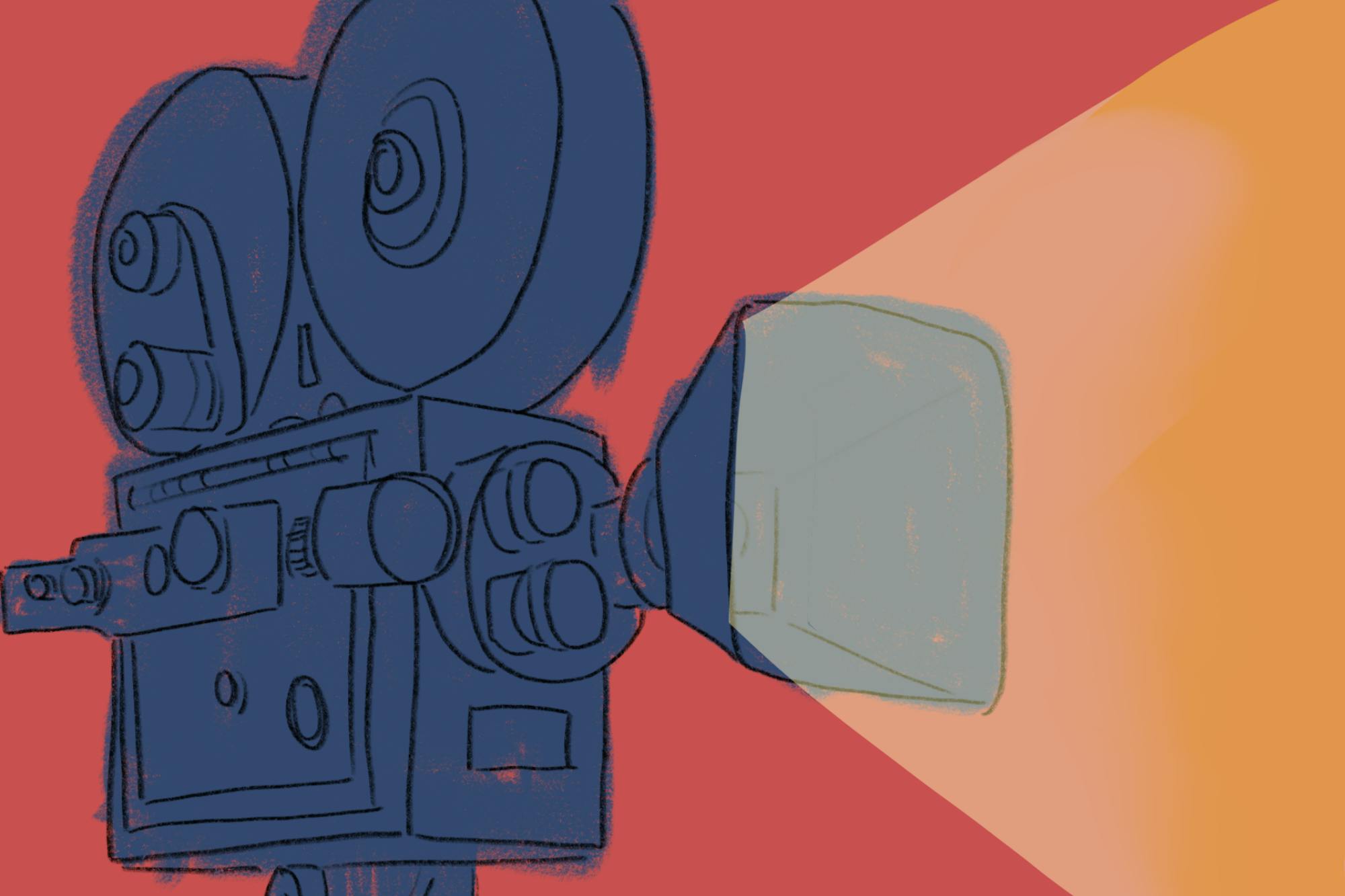
Gyllenhaal gets points for originality, and her talents as a director sometimes shine through. One particularly striking long take starts on the cadaverous couple in conversation before slowly pulling back and upward to reveal the sweeping 1930s New York skyline, culminating in a stylish location-setting title card. The world of the film is generally both epic in scope and meticulously crafted. Several clever sequences show Frank going to the movies to watch his favorite star, Ronnie Reed (Jake Gyllenhaal), and imagining himself among the performers in the elaborate dance numbers. These scenes work not only as vivid recreations of 1930s moviegoing, but also as a revealing glimpse into Frank’s inner life. For him, the cinema becomes a kind of therapeutic escape, a place where he can imagine himself into a more glamorous and coherent world. In that sense, the film’s interest in old Hollywood and the act of moviegoing becomes one of the more compelling ideas “The Bride!” has to offer.
Bale is generally strong, imbuing Frank with both tenderness and a profound longing for connection while also hinting at repressed rage. Ida, despite being the lead and eponymous character, is far less well served. Buckley — who is all but certain to win an Oscar for “Hamnet” — is saddled with such dreadful writing that it almost inevitably results in a confused, abrasive performance. The film’s constant shifts into Shelley’s persona, complete with her rhyme and sound outbursts evoking clang association, never become any less cringe-inducing. And as Ida, whose loosely defined identity is admittedly part of the plot, Buckley is left with little to play beyond a vague, chaotic zaniness. It is a fully committed performance, and in that sense perfectly matched to the material — which also means it is eye-rollingly difficult to watch.
The film’s handling of its feminist messaging is equally inept. As Ida and Frank embark on their bloody spree, “The Bride!” increasingly resembles a girlboss reworking of Todd Phillips’s “Joker,” with women across the country taking to the streets in a vague rebellion against organized crime, the patriarchy or both, supposedly inspired by Ida. The comparison is even harder to ignore given that both films share cinematographer Lawrence Sher and composer Hildur Guðnadóttir. But where “Joker” carefully establishes the economic despair and civic decay behind its unrest, “The Bride!” never does the work to make its feminist uprising feel remotely earned. Instead, the whole thing comes off as laughably silly and impossible to buy. At one point, Ida holds a room full of partygoers and police at gunpoint while literally screaming “me too” — a moment that perfectly captures the film’s absurdly heavy-handed approach to serious ideas and pushes it into self-parody.
For a film this bizarre, “The Bride!” is also a slog. A few sharp lines and isolated directorial flourishes keep it from being a total dud, but the plotting is so contrived and amateurish that the film quickly runs out of momentum. Its attempts at provocation feel less daring than dated, filtered through a strained, Tumblr-era version of edginess that makes the movie hard to watch and impossible to take seriously. Worse, the Mary Shelley framing device creates the silly and faintly disrespectful implication that this reimagining is somehow the “real” or unfinished story Shelley meant to tell, even though the film has strikingly little interest in engaging with the novel’s actual ideas. There is obvious talent here, from the production design to Bale’s performance to Gyllenhaal’s occasional visual imagination. But the film’s problems feel less like execution errors than foundational ones: “The Bride!” is built on such misguided instincts that it seems broken at the conceptual level.


