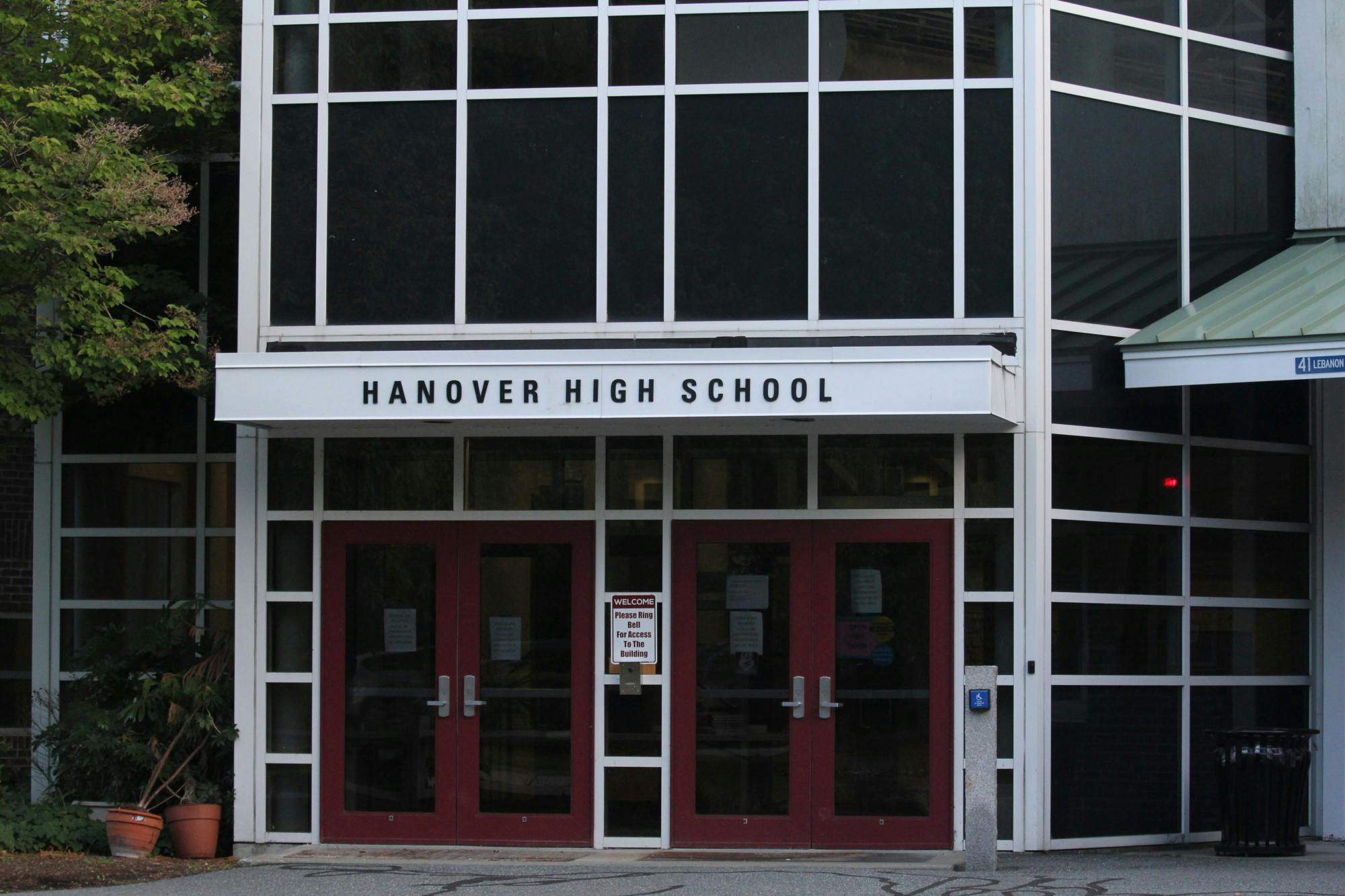
Superior Court Judge David Ruoff in New Hampshire ruled that the state’s special education funding is “constitutionally insufficient” on Aug. 18.
Ruoff wrote in his decision that underfunding special education means that “school districts must rely in part on local property tax revenues, assessed at varying rates, to bridge these funding gaps.” As recently as 2024, approximately one in five New Hampshire public school students received special education services, according to New Hampshire School Funding Fairness Project, a group of taxpayers who initiated the lawsuit in 2022.
According to government professor and N.H. state Rep. Russell Muirhead, D-Hanover, New Hampshire funds public schools “certainly less” than “most” states in New England, and “a large amount” of that funding comes from local property taxes. This puts an “enormous [tax] burden” on small towns who may have “very large special education expenses.”
“We all have a responsibility as citizens of the state to help out to educate the most vulnerable among us, including those who have certain disabilities,” Muirhead said. “Even though [special] education can be very expensive, we should band together and meet that need together.”
In July, the State Supreme Court ruled that the current level of “base adequacy aid” — funding provided to schools per student — is also unconstitutionally low.
Currently, the state provides schools with $4,266 of base adequacy aid, and $2,100 of additional funding for students who “receive special education services,” the ruling says. The Court agreed with the plaintiff’s claim that this amount “is unconstitutional.”
Judge Ruoff left the decision on how to fund schools, and by how much, to the state legislature. Muirhead said that in his experience, there is “a strong sensibility in the majority party not to heed [the Court’s] decisions and to do nothing in response to them.”
Dartmouth Student Government North Park senator Jude Poirier ’28, who has worked with the Dartmouth Center for Social Impact in the Upper Valley education community, agreed that the court is “probably not" a “quick fix” to underfunding.
“But this decision, I hope, puts a lot of momentum in the hands of parents and teachers and community members who have been pushing so long for the educational funding that New Hampshire really needs,” Poirier said.
In an email statement to The Dartmouth, economics professor Bruce Sacerdote pointed to a 2021 paper studying the impact of a reduction of special education funding in Texas school districts — which was later found to be illegal by Texas state courts.
Texas “students who lost access to special education saw 50 percentage point drops in [the rate of] high school completion and 37 percentage point drops in college enrollment,” Sacerdote wrote. “Education economists like me have concluded that the special education spending was well worth it and the increases in earnings alone for the affected students more than justified the spending.”
Muirhead said that providing adequate funding for students with special education needs can be “completely transformative” in their lives.
“An effective education helps equip them to live lives that are as independent as possible,” Muirhead said. “Lives in which they can make contributions to the larger community, [in] which they can thrive and which can make these young people so independent and productive that the parents don’t have to worry about them as they age.”
Poirier said that he believes New Hampshire residents are “finally fed up” with the “severe lack of funding in education,” and that the ruling in this lawsuit is “just the beginning.”
“Everyone deserves an education that’s of equal quality to those around them,” Poirier said. “Students with special needs often need more support, and because of that, it’s usually more expensive for the government. But I think that it’s unjust for those students not to be getting the education that they deserve.”
In June, Republican Gov. Kelly Ayotte signed S.B. 295 which expanded the state’s school voucher program by lifting the income restrictions, allowing every family to access funds to send their children to private schools. The new law allows families with special education students to receive up to $9,676 annually.
The voucher program's expansion is extremely costly, according to Muirhead.
“The program is a massively expensive new entitlement, and … is decreasing the state’s ability to help towns and cities meet their burden of educating these very needy and deserving young people,” Muirhead said.
Tierney Flavin ’28 is a reporter and editor. She is from Kansas City, Mo. and plans to major in Government and Sociology.