
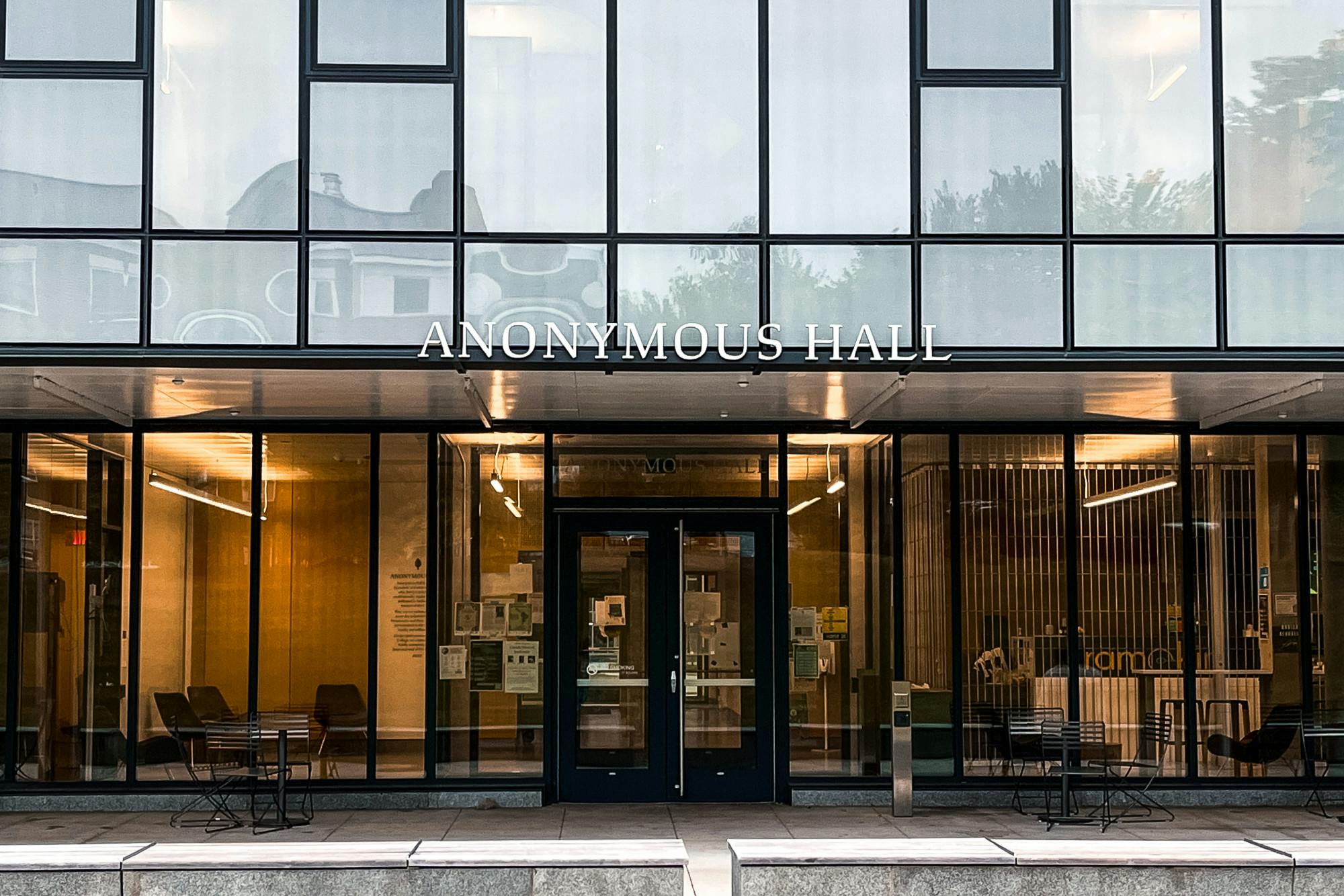
The department of Asian societies, cultures and languages has launched a Korean language program, according to ASCL and history professor Soyoung Suh.
Starting with KOR 1: “First Year Course in Korean language 1” in the fall, the introductory language sequence will be available to all students regardless of previous level of study. All three classes will be taught by ASCL professor Eun Ha Hwang, who was hired by the College this year. Dartmouth was the last college in the Ivy League to offer Korean language courses, according to Hwang.
Suh, who teaches several classes on Korean history, said that the department has received “consistent” requests to create a Korean language program since she began instructing in 2011. She noted that ASCL has already established programs in other areas of Korean studies.
“[The College] prioritize[d] Korean history, Korean art, [and] Korean literature first, instead of going directly to Korean language programs, given the limited resources at the time,” Suh said.
Students and faculty have also advocated for more Asian American studies courses and for an Asian American studies department. Dartmouth is the only college in the Ivy League to not offer a formal Asian American studies program.
ASCL and art history professor Sunglim Kim, who teaches several classes on Korean art and culture, said her “goal” is to train students to become “Korean specialists.”
ASCL’s “initiatives have not only raised Dartmouth’s profile in the field of Korean art, but also significantly strengthened the foundation for Korean studies on campus,” Kim said. “They have created opportunities for students [and] fostered institutional partnerships.”
Hwang said her class focuses on “building community” along with learning to speak Korean. She recently organized an extra credit scavenger hunt where students in her class selected their favorite Korean-language books available within Dartmouth’s libraries. According to Hwang, the goal was to “increase motivation and interest” in Korean culture for students.
Emma Hwang ’28, who is taking Korean this fall, recalled her “disappointment” as a freshman upon learning that Dartmouth lacked any Korean language programs.
“Dartmouth has a lot of cultural diversity and awareness built within its curriculum, so it felt very odd that Korean was missing,” Hwang said.
Having taken CHIN 1-3: “First-Year Courses in Chinese,” Hwang said she knew that the College has “really robust” language programs.
“I was very pleased to see that Korean’s language program is no different,” Hwang said. “It’s also challenging, it’s also lots [of work], but I feel that I’ll learn a lot.”
Hwang added that when her mother attended Dartmouth in the 1990s, Korean Students Association members vocally advocated for the College to add Korean language classes.
“It finally happened just this year, so it feels like it’s coming full circle, and [I’m] very glad that Dartmouth has it now,” Hwang said.
KSA president Jenna Jeon ’27 noted that there are now “two avenues” through which Korean students can “keep their heritage” — the “social aspect” via the KSA and the “academic” path through KOR 1-3.
ASCL is considering expanding to include intermediate and advanced Korean language classes, Hwang said, as soon as “next year.”
“If there was upper-level Korean, I would definitely take that,” Jeon said.
Suh said the College’s Yonsei Exchange Program in Seoul, South Korea, is a “good way to get involved” with Korean studies. Six to nine students are accepted to the program in Seoul every year, while one to two students from Yonsei enroll at Dartmouth, according to Kim. Suh added that a language study abroad program in Seoul is “definitely” going to happen in the next “two or three years.”
“We are also trying to establish another exchange program in addition to Yonsei,” Suh said. “We receive more than 25 applications per year.”
Suh noted that many scholars in Asian studies have begun to “recognize the significance” of Korea, and added that understanding the country is “very crucial” because of its “geopolitical location.”
“Whether it’s trade, or security, or more involvement in Asia, South Korea and North Korea are there,” Suh said. “I hope Dartmouth students are equipped to discuss those critical topics with other people confidently.”
Kim said the program’s launch was a “celebratory moment.”
“For many years, our students have asked for Korean language instruction,” Kim said. “Its establishment marks a new chapter in the growth of Korean studies at Dartmouth.”
Sahil Gandhi ’29 is a reporter from Staten Island, N.Y., and is majoring in environmental studies and government modified with philosophy and economics. He loves word searches and falling down internet and Wikipedia rabbit holes.


