When I sat down to watch the latest film set in the Marvel Cinematic Universe, I felt long detached from it. Though once a diehard fan, I lost interest in following the convoluted multiversal plotlines, multiple miniseries and hosts of new characters following “Avengers: Endgame.” However, “The Fantastic Four: First Steps” — a standalone film within the MCU — boasts a unique aesthetic, some good acting and strong themes despite featuring plenty of the typical “Marvel-isms.”
Director Matt Shakman takes his second stab at a major motion picture after an esteemed TV career, including directing credits in episodes of “Succession,” “Game of Thrones” and Marvel’s own “WandaVision.” Under his directorial vision, “The Fantastic Four” differentiates itself from other movies in the MCU with its stylistic choices and emphasis on family relations.
As more dedicated fans will know, most movies in the modern Marvel canon take place on Earth-616, but Fantastic Four is set on Earth-828. Not only does this Earth seem to lack the cast of iconic characters comprising the typical MCU, but the technological Marvel aesthetic has also been supplanted by futuristic mid-century modernism. The cars are flying, the robots run on cassette tapes and the computers are bulbous. Like the retro aesthetic in the “Loki” TV series, this stylistic choice adds a compelling and quirky charm to the film.
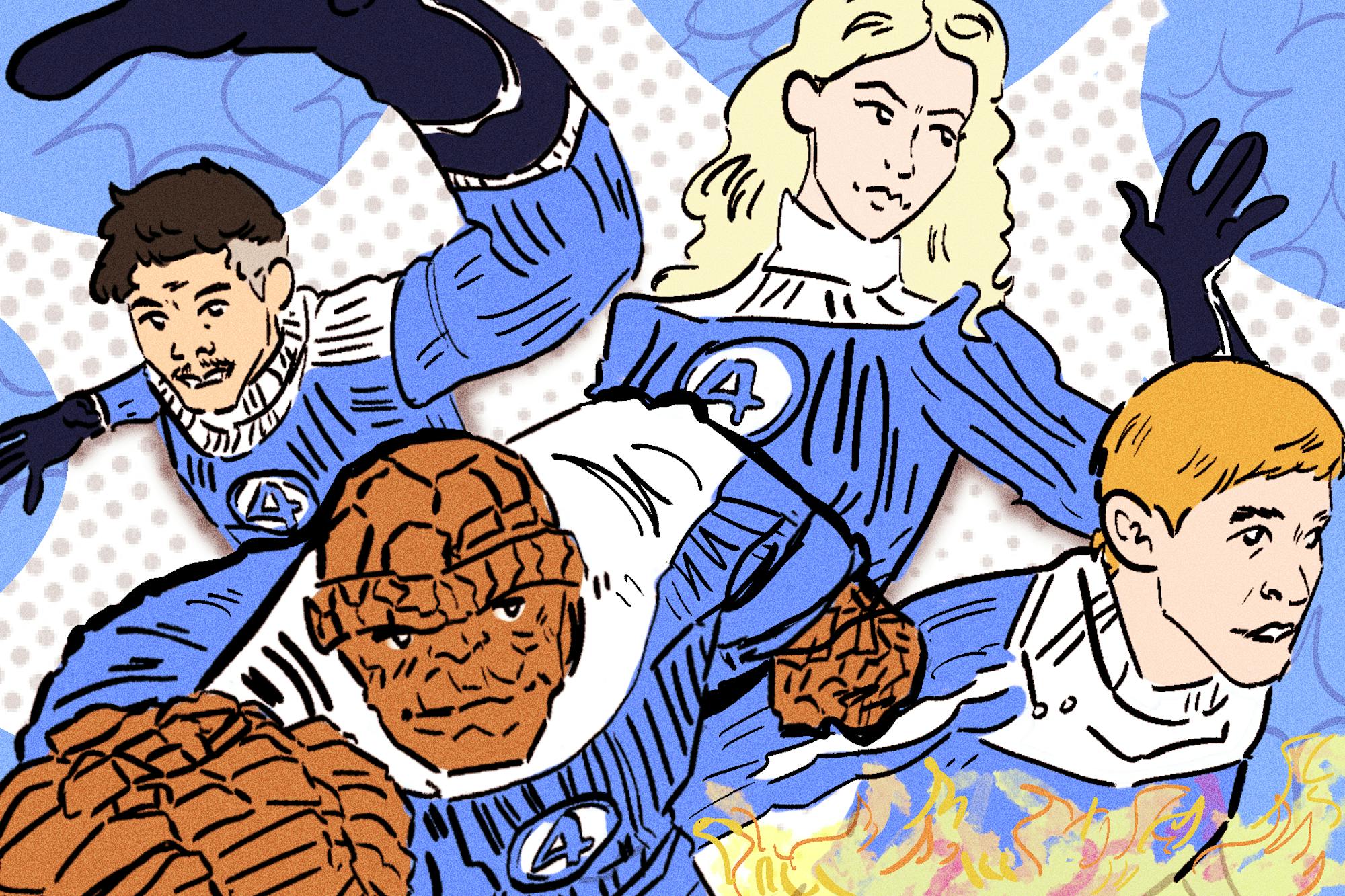
Despite what the name suggests, the film does not follow the Fantastic Four’s “first steps”; instead, the origin story of the superhero squad — featuring Ben Grimm (Ebon Moss-Bachrach), Reed Richards (Pedro Pascal), Johnny Storm (Joseph Quinn) and Sue Storm (Vanessa Kirby) — is succinctly recapped in the first fifteen minutes of the film without a needlessly deep exploration of the sci-fi physics responsible for their superpowers. Perhaps more appropriately, the initial exposition serves to introduce the film’s emotional focus: Sue Storm and Reed Richards’s miracle baby, Franklin Richards.
The four superheroes and the world are joyously preparing to welcome the baby boy when their revelry is crushed by an enigmatic figure Shalla-Bal (Julia Garner) — this universe’s “Silver Surfer” — who delivers a harrowing warning that Galactus (Ralph Ineson) is coming and will destroy Earth. When all evidence seems to confirm her warning, the Fantastic Four set out to find Galactus and negotiate with him, ultimately refusing to accept his terms — giving up Franklin Richards — and narrowly escaping back to Earth.
The film takes an unfortunate turn after the first act, rushing multiple subplots to arrive at a very mediocre climax. The strongest point is when Sue Storm defends her refusal to relinquish Franklin to Galactus in a rousing speech that most likely would not quell an angry mob in real life, but does showcase Kirby’s talents as an actor.
That said, my biggest issue with the film is the ridiculous imbalance in the acting. Pascal plays a troubled genius well, and his chemistry with Kirby stands out as the otherwise doting couple clash over their son’s role in stopping Galactus.
The other main characters’ acting leaves something to be desired, although this is at least partially because of the use of CGI for their portrayals. Quinn and Moss-Bachrach struggle to keep up with their castmates. Quinn lacks the snark, hot-headedness and sex appeal that made prior iterations of his character Johnny Storm (a.k.a. the “Human Torch”), such as Chris Evans’ portrayal, entertaining. Moss-Bachrach’s unengaging performance, however, is more understandable because his character Ben Grimm (a.k.a. the “Thing”) is literally stone-faced.
Alongside the “Thing,” the “Human Torch” spends half the movie wreathed in CGI fire that masks more emotional moments and, frankly, looks half-baked. With him and Moss-Bachrach alongside both antagonists — Shalla-Bal and Galactus — struggling to broadcast human expressions through layers of CGI, the emotional depth of the cast’s acting is effectively muted beyond Pascal and Kirby.
Ironically, when it came to action, I often felt there was not enough CGI. Compared to other Marvel movies, the characters — especially Mr. Fantastic — used their powers sparingly. We see more feats of power in the exposition than in the middle half of the movie.
Although flawed, this is still one of the better Fantastic Four movies — there are now four — out there. The setting, stylistic choices and familial theme evoke a more hopeful time in American history — one when global cooperation, orchestrated by progressive-minded Americans, could achieve monumental tasks. Still, if I had to recommend a film with four superheroes in a retro-futuristic world where family relationships are tested yet ultimately prevail, I would recommend “The Incredibles.”