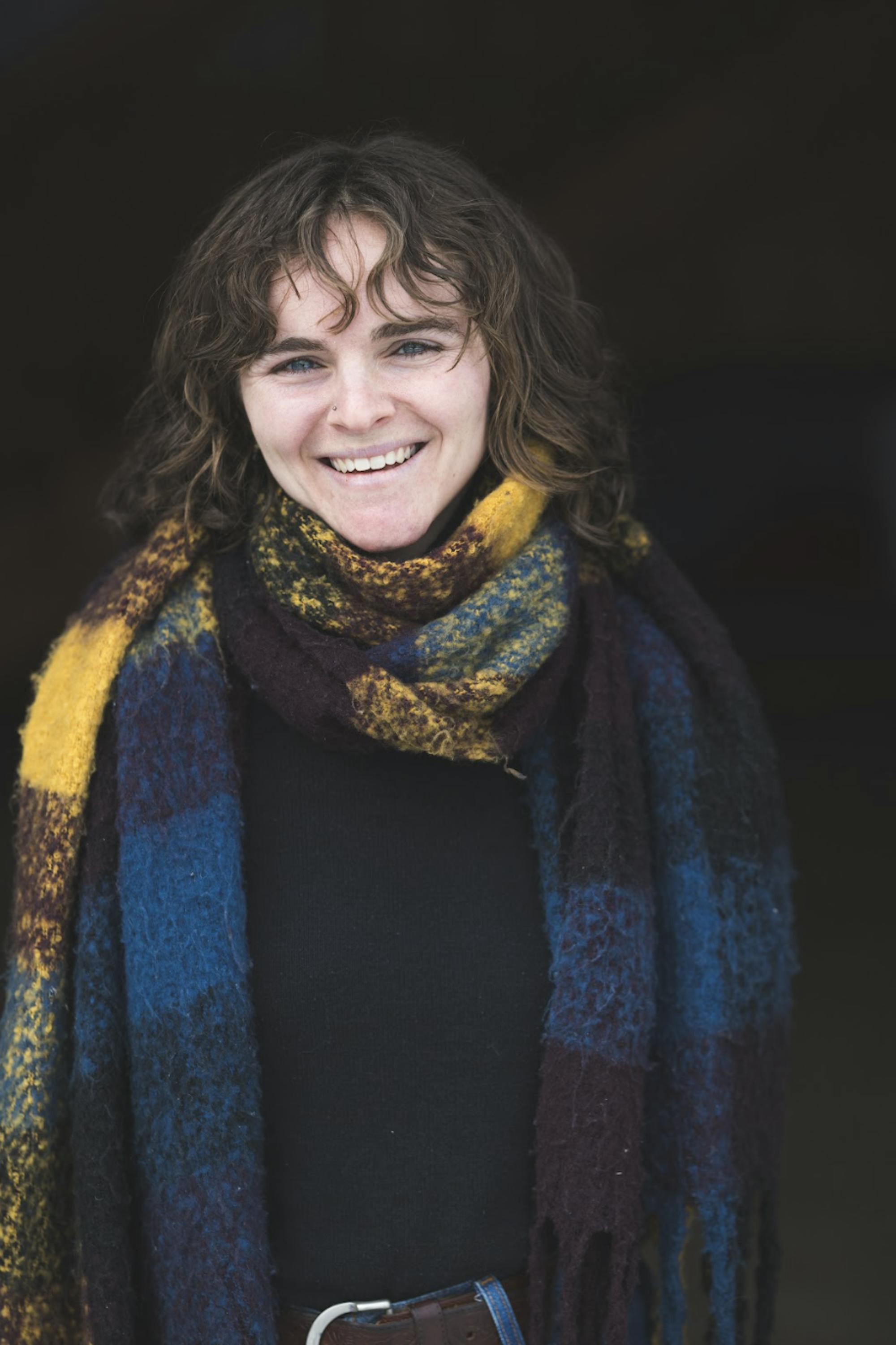
Both New Hampshire and Vermont have experienced heat waves and flooding in the last few months. The College is working on “adaptation,” including creating bigger bridges and managing stormwater. The Dartmouth spoke with Sustainability Office program coordinator Rachel Kent ’21 to talk about the effects of extreme weather on the region and the steps forward.
What is your background with sustainability and extreme weather events?
RK: I really found my way to my current passion — and what I really feel like is my life’s calling, to be doing this work in climate resilience and sustainability — primarily through the different experiential learning opportunities with the Sustainability Office, when I was an undergrad. I graduated and did a fellowship abroad for a year, but then came back to the Upper Valley and to Dartmouth.
What extreme weather events caused by climate change do you think are most relevant to Dartmouth and the local community?
RK: In the amount of time that I’ve been in the Upper Valley, since 2017, even in that relatively short amount of time, I’ve observed some of these weather changes that have been impacting us. I’ve certainly seen the snowpack lessening and the window of snowpack shortening. In addition, the summers are also getting warmer. When I was a student, we didn’t really think about air conditioning that much because there were maybe a couple of days, or even just a week or two in the summer, where it was in the 90s when you would really need it. Now every new dorm that we’re building is being built with air conditioning.
Our winters are shortening, and they’re becoming warmer. The shoulder seasons, which are the spring and the fall, are shrinking. We’re seeing more precipitation, and that precipitation isn’t necessarily equally distributed. It’s often coming in these intense deluge events with larger volumes of precipitation, whether that’s snow or sea or rain — and on occasion that can move to flooding. In 2023, Vermont in particular experienced some pretty extreme floods that devastated farmland, houses and businesses. Finally, extreme heat. A lot of our infrastructure here in New England is not built to deal with that. Many of our buildings still don’t have air conditioning, which really is a wellbeing issue. Our bodies don’t function well when the temperature gets above a certain threshold. Vulnerable communities like the elderly, sick and houseless face those impacts disproportionately.
What steps has the College taken in order to mitigate the impacts of these extreme weather events?
RK: A lot of what we need to work on is adaptation: managing stormwater on campus or at Second College Grant, creating bigger bridges and larger culverts and putting in air conditioning. In our decarbonization plan, we are drastically increasing our energy efficiency, including more efficient light bulbs or appliances, but also major infrastructure changes. Formerly, energy was transmitted from the central heating plant via steam, which is very inefficient — only about 55% of the heat potential remained by the time it reached a building. You can see this in winter when melted snow strips trace the steam tunnels. These outdated tunnels are being replaced with hot water transition lines, which are vastly more efficient. Once the campus-wide transition is complete, we’ll have decreased our energy consumption by 20%.
The other big piece is geo-exchange, which uses the subsurface of the earth as a thermal battery. In winter, fluid is warmed underground and pumped to a heat pump plant, where it’s condensed and circulated through the new system. In summer, the process reverses to cool buildings. Geo-exchange is both a mitigation and adaptation strategy — providing summer cooling and helping decarbonize our energy system. While Dartmouth contributes a small portion of global emissions, if we are going to commit to climate scholarship and teaching, we also need to walk the walk on campus.
What research is occurring at the College and at the Sustainability Office on extreme weather and its relationship to climate change?
RK: There is a good bit of research going on. Justin Mankin in the geography department is a climate modeling researcher with published work on climate impacts and weather patterns. Jonathan Winter studies the interplay between climate change and agriculture. Klaus Keller in the engineering school looks at climate change risk and impacts. Erich Osterberg and Carl Renshaw in Earth Sciences work with community partners to build climate resilience. Charis Boke in anthropology and Sarah Kelly in geography, affiliated with the Irving Institute for Energy and Society, lead the Culvert Crawlers project, which assesses and improves stormwater infrastructure in Vermont and includes community education. And this isn’t an exhaustive list — there’s so many more.
What should students take away about extreme weather?
RK: It’s easy to think of climate change as something far off, with goals set for 2030 or 2100 — but it’s here, it’s happening and we’re in the midst of it. Every fraction of a degree of warming we can prevent will have a positive impact. Extreme weather is already becoming more likely. These disasters, which I call “unnatural,” often impact marginalized communities most. While we have government tools like the Federal Emergency Management Agency, strong community ties are among the most important predictors of resilience. Social infrastructure really matters. I always try to leave people with a note of agency. There’s still so much that can be done to mitigate and prevent what’s to come.
This interview has been edited for clarity and length.
Jeremiah Rayban is a reporter and editor for The Dartmouth from Wilmington, Del., majoring in economics. Outside of The D, he enjoys reading, art and trivia.