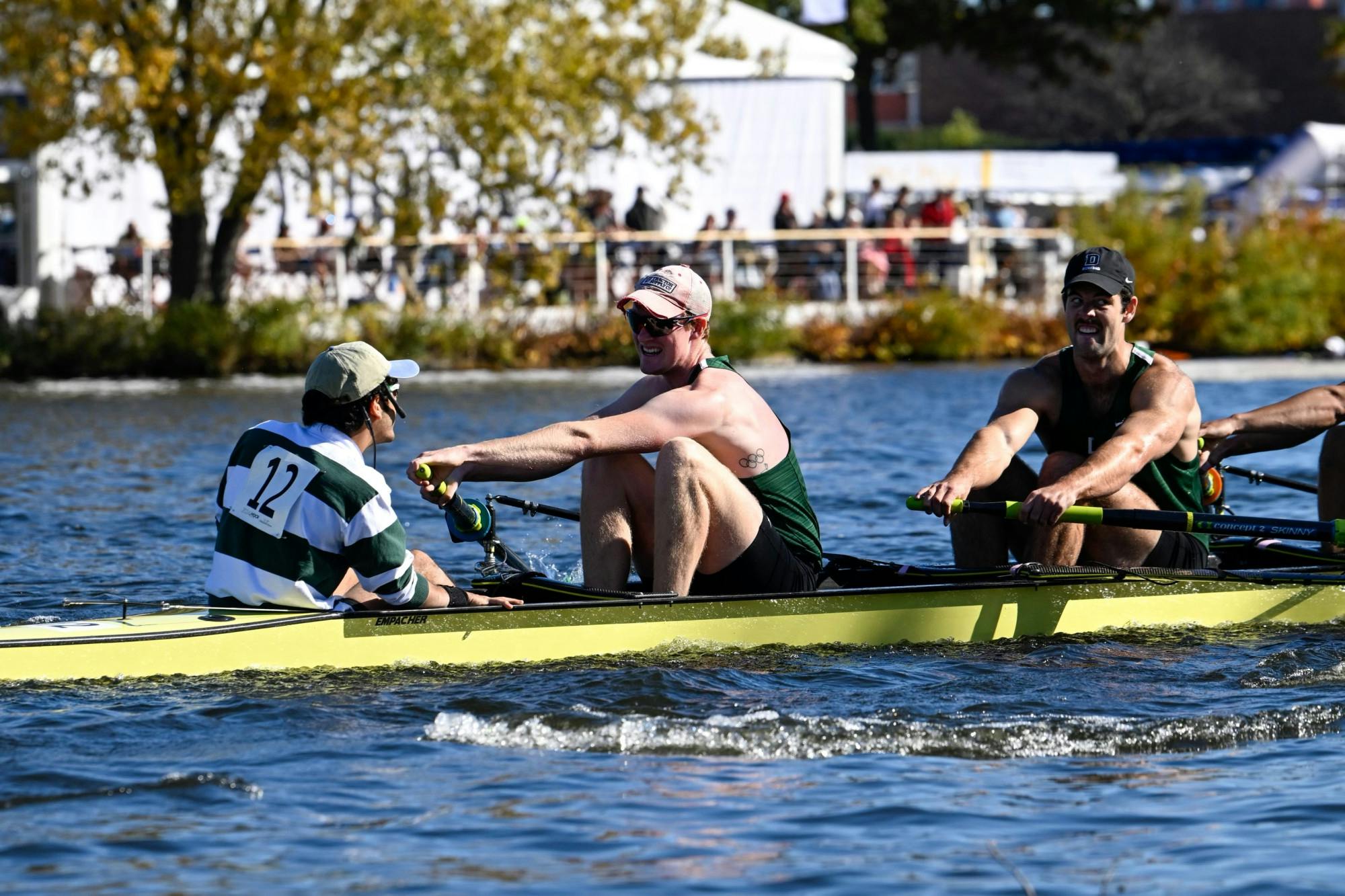
The Dartmouth men’s heavyweight rowing team recently returned from the iconic Henley Royal Regatta in England, marking the culmination of an incredible season filled with hard-fought victories and silverware. The crew captured their first Olympic Axe against Yale in the first weekend of the spring season and ended the season with a bronze medal in the Intercollegiate Rowing Association national championships. Captaining the exceptional varsity eight was Billy Bender ’24, whose leadership helped bring the Big Green to new heights. A standout athlete who represented the United States at the 2024 Paris Olympics in the men’s pair event, Bender spoke with The Dartmouth about what it takes to compete at the highest level in men’s rowing and what’s next for him and the team.
How did Henley go, and what was the overall experience like?
BB: Henley is different because it doesn’t have strict placings like national championships. We lost in the semifinals to the eventual winners by less than their final win margin, so maybe second place is fair, but it’s not official. Of course, we want to win, so there’s some disappointment. But it was great to spend more time with the team, especially the seniors, before moving on. Henley is nice because there’s less pressure, no set expectations and it brings together crews we don’t normally race. It was fun to race again after nationals.
After such a strong season, you were nominated for the newly created Oarsman award, which is presented to the national rower of the year. What does that nomination mean to you personally and for the team?
BB: Rowing is probably the ultimate team sport — it’s pretty impossible to separate one person’s performance from the crew’s overall effort. Still, it’s cool to be nominated, especially alongside talented guys like Logan Ullrich, who’s an Olympic medalist. I’m proud to be nominated, but I think it really reflects the whole team’s work.
You also represented the United States in the Paris Olympics last year. Tell me about that. How did it impact your approach at Henley?
BB: It was a great honor and it was really special. You’re wearing the flag and being selected as, theoretically, the best that the country can offer. That brings a different kind of pressure than when you represent your college. I felt like I had an obligation to the people that I beat at Trials who hoped to race one day and I wanted to represent myself well for those people.
You raced alongside Oliver Bub ’20 in Paris, someone you also rowed with at the California Rowing Club. How meaningful was it to share that experience with a fellow Dartmouth alum?
BB: Bub’s awesome. We’ll be lifelong friends, and he’s really fun to race with. Nowadays, it’s pretty rare at the Olympic level to have a boat with two, four, or eight guys from the same school; the last time it happened in the pair was the Winklevoss twins [in 2008]. We were also coached by Dartmouth Head Coach Wyatt Allen, who was himself an Olympian who won gold and bronze medals, so it was a really fun and special time.
Speaking of Coach Allen, he recently won the Intercollegiate Rowing Coaches Association’s National Coach of the Year. How has he impacted your development, and what does this recognition mean for you and the program?
BB: Wyatt is a fantastic coach — if I could vote, I’d give him that award every year. Dartmouth can’t offer scholarships like some schools, so we often recruit less-polished athletes. Wyatt’s gift is developing these “diamonds in the rough” into elite rowers. When I was recruited, I was the slowest 2K in my class. Thanks to Wyatt’s coaching — technical, mental and physical — I’m a vastly improved athlete and an Olympian. This award really honors his ability to make us better.
You served as captain of the varsity eight crew during an incredibly successful season. What did that role mean to you, and what about the team’s culture resonated the most?
BB: I was actually off for the Olympic year when I was elected captain, so being chosen was humbling and a big responsibility. This team feels like family — it’s deeper than the national team because here, you’re always part of the team, whether you race varsity, JV or 3V boats. Nobody gets cut, so the bonds run deep. Coming back with a chip on my shoulder after the Olympics, I pushed for hard training, better recovery and smarter lifestyle choices. The team responded well, stayed healthy and the season’s success was a great payoff.
What are your plans after Dartmouth, both professionally and athletically? How do you envision staying connected to the program?
BB: I’m at senior national team camp now and hoping to race at the World Rowing Championships in Shanghai this fall. Professionally, I work as a civil engineer in Boston, but I keep rowing seriously. As for Dartmouth, I want to stay connected — help underclassmen, keep up with the team, maybe coach someday. Alumni support is vital to the program, and I hope to give back so others can have the same experience I did.
This interview has been edited for clarity and length.
Sid Singh ’27 is a sports editor and reporter. He is from Bethesda, Md. and Singapore and is majoring in Economics and Quantitative Social Science. Sid is also an engagement manager for Consult Your Community and a member of the Raaz dance team.