
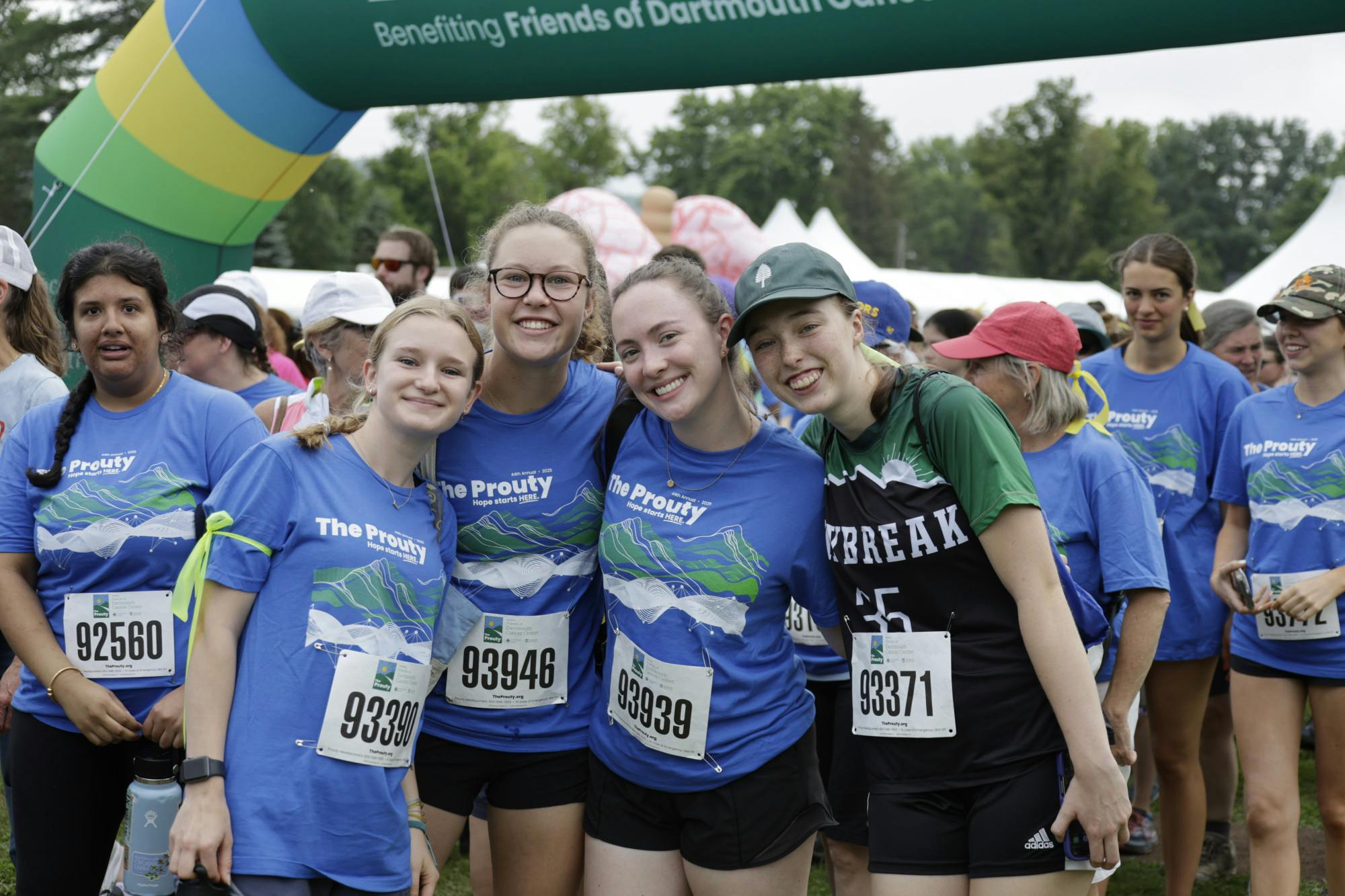
On July 14, Dartmouth students, faculty and community members participated in the 44th Annual Prouty, a fundraising event for cancer-related healthcare such as research, patient treatment and family support services. The event was organized by the Dartmouth Cancer Center, a cancer treatment and research center that is part of Dartmouth Health.
Senior director for community engagement at Dartmouth Health Olive Isaacs said the Prouty was “northern New England’s largest family-friendly fundraiser.” Isaacs said the event raised a total of $10.2 million through corporate sponsorships and participant donations.
Isaac said that the Dartmouth Cancer Center is one of only 57 designated National Cancer Institute centers in the country, as well as “the only one in a rural area.”
According to Isaac, the Prouty started in 1982 after four DHMC nurses – inspired by their cancer patient Audrey Prouty – “rode 100 miles through the White Mountains” to “recognize her bravery.”
“From four nurses in 1982, [the Prouty] this year had over 4,400 participants and 750 volunteers,” Isaac said.
Senior managing director of athletics fundraising Pat McBride said the Prouty impacts community members in a variety of ways.
“[Because of] the breadth of people affected by cancer, you have a lot of participants there talking about their own family members or friends,” McBride said. “I think it’s something that’s really beautiful.”
Marina Cascini ’27 said competitions occurred between Greek organizations over both “who could raise the most money” and “who could sign up the most participants.” Kappa Delta Epsilon sorority won the former, and Chi Delta sorority won the latter, she said.
Cascini said her sorority, Sigma Delta, incentivized members to participate in the Prouty by offering philanthropy credits — which are requirements set by sororities and fraternities to participate in philanthropic programs before attending events.
“I think it’s great. It’s a way to bond and have fun while also representing Dartmouth and representing Greek life,” Cascini said.
Isaac added that Dartmouth students are important to the Prouty and that they participate in all of its events.
“Some ride bikes, some walk, some mountain bike, some golf, some row – and we have a huge volume of student athletes that join us as volunteers,” he said.
Isaac added that the Prouty has “over 150 corporate partners” who “really help to create the atmosphere and the fun.”
“Red Kite Candy gives the most amazing ice cream to our participants, McNamara gets chocolate milk, Boloco comes with burritos,” Isaac said. “Things like that that cut our costs.”
Isaac said that the funds from the Prouty fuel both patient care and research.
“You can apply to the Cancer Center … for grants that might not otherwise be funded [because] maybe they’re not far enough along to get big national funding,” she said. “There’s many examples of how small grants [that] have come out of Prouty fundraising have helped researchers turn their labs into [ones with] more than a million dollars of funding from the National Institute of Health.”
McBride said that the need for cancer research fundraising is “not going away,” and that the Dartmouth Cancer Center is focused on expanding the impact of the Prouty.
“We’re looking now at how we can bring the success of the Prouty and the fundraising dollars … and ensure that those dollars are having an impact within the Upper Valley and beyond the Upper Valley,” McBride said.
Isaacs added that for the first time this year, the Dartmouth Cancer Center “expanded their footprint to Southern New Hampshire” with a Manchester outpatient clinic.
“We’re opening our doors on a radiation oncology facility there so that those patients who live in southern New Hampshire don’t have to travel up to Lebanon to receive their radiation therapy,” Isaacs said.
Devan Amin ‘27, who participated in the Prouty, said that he “really enjoyed the event and he “appreciated” how many participants “wore yellow ribbons [with] the name of the person they’re running or biking for.”
Isaacs said that she was not prepared for the “volume of ribbons” and that it “took [her] breath away.”
“When you see the ribbons, you really see the power and the reason why we have to do this,” she said.
Jeremiah Rayban is a reporter and editor for The Dartmouth from Wilmington, Del., majoring in economics. Outside of The D, he enjoys reading, art and trivia.


